
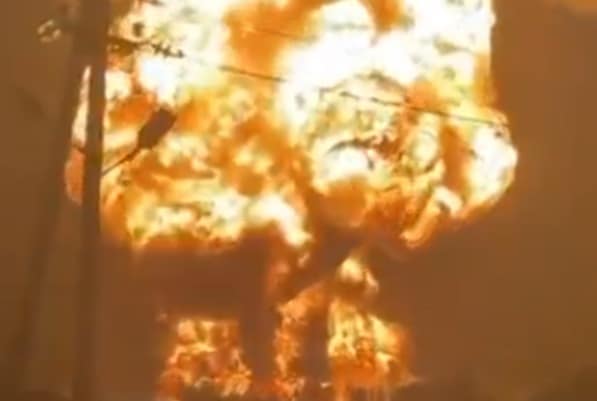
Russia is testing how far it can pressure Europe without triggering a direct military confrontation, as drone incursions, sabotage and cyber operations increasingly blur the boundary between peace and war.
The pattern of incidents has prompted European officials and security experts to reassess whether Moscow’s activities should be viewed as isolated acts of hybrid warfare or as part of a sustained campaign designed to probe the limits of Europe’s response.
Recent allegations have included Russian-linked sabotage, cyberattacks and violations of European airspace. Germany has warned of an intensifying Russian “shadow war”, while EU foreign policy chief Kaja Kallas has accused Moscow of putting lives at risk through hybrid operations across Europe. Russia has denied such allegations.
The concern is not necessarily that Moscow is preparing an immediate conventional assault on NATO. Rather, European officials increasingly fear that Russia can exert pressure through actions that fall below the threshold at which governments would consider a military response.
Read more related news:
Two commercial vessels attacked by drones, sinking a ship in NATO’s maritime zone
Europe on red alert as Russia’s sabotage campaign raises fears of catastrophic miscalculation
Royal Navy chief delivers damning warning to Burnham over Britain’s defences
Britain to get £10bn ‘Iron Dome’ as Badenoch warns ‘the threat is here’
Olena Davlikanova, a security policy expert, describes the pattern as a “sub-threshold war” against Europe.
The distinction matters because traditional deterrence is easier to apply when an attack is unambiguous. A missile strike against a NATO country would create a clear basis for collective defence. A cyberattack, suspected act of sabotage or drone incursion presents governments with a more difficult calculation over attribution, proportionality and escalation.
Leopold Schmertzing, a strategic foresight and security and defence policy expert, argues that Moscow’s campaign aims to weaken the European political model as well as its physical infrastructure.
“Russia is waging a war against the European model of freedom, equality, and solidarity, and against the institutions that sustain it, especially the EU. This is a war fought in small steps,” he said.
“I struggle to see it ending without a fundamental change in either the current Russian model or the European one.”
European governments have nevertheless strengthened their defences substantially since Russia’s full-scale invasion of Ukraine in 2022. The EU has identified air and missile defence, drones and counter-drone systems, cyber capabilities, communications, intelligence and command structures among its key capability gaps.
Air defence has become particularly important as European countries confront the proliferation of relatively inexpensive unmanned systems. Recent Russian drone activity has prompted NATO countries to scramble aircraft and accelerate investment in cheaper counter-drone technologies.
Ukraine’s battlefield experience has provided an unusually direct demonstration of the changing economics of warfare. Drones can conduct reconnaissance, identify targets and attack military infrastructure at a fraction of the cost of many traditional weapons systems.
Kateryna Mykhalko, managing director of the German-Ukrainian defence industry consortium New Age Defence, argues that European spending has yet to fully reflect that transformation.
“That is how the modern war looks like,” she said. “At the same time, the technology delivering 80% of battlefield results receives only roughly 2% of European defence budgets.”
Europe is attempting to close part of that gap through industrial co-operation with Ukraine. The EU-Ukraine Drone Alliance, formally launched in July, brings European and Ukrainian companies together to develop drones and counter-drone systems, with the stated aim of combining Ukrainian battlefield experience with European industrial capacity.
The challenge extends beyond hardware. Europe must also improve the communications, intelligence, surveillance and command systems required to operate military capabilities collectively. EU assessments have identified persistent shortfalls in strategic collective capabilities and command-and-control structures, potentially limiting the ability of European states to sustain a prolonged military response.
For Schmertzing, the central danger is that Europe could underestimate the cumulative effect of incidents that individually fall short of conventional warfare.
“My fear is that we will only fully wake up when our own capitals are attacked and our citizens are killed. By then, it will be too late to prepare,” he said.
That creates a difficult strategic problem. Europe must strengthen deterrence without turning every act of sabotage or airspace violation into a trigger for uncontrolled escalation.
The result is an increasingly contested space between war and peace, in which Moscow can test European resilience while European governments attempt to demonstrate that the threshold for coercion is not infinitely low.
The question for Europe is therefore not simply whether Russia will launch a conventional attack. It is whether the continent can close the vulnerabilities exposed by the conflict in Ukraine quickly enough to make the incremental pressure of a shadow war less effective.
As Schmertzing puts it: “Russia is a hard nut to crack because it is deeply vulnerable in some respects and remarkably insulated in others.”
“We have a great deal to learn from Ukraine about where pressure works and where it doesn’t.”
Last month NATO’s Secretary General Mark Rutte said he will not publicly disclose the precise circumstances that could trigger its collective-defence commitment, he warned, saying revealing the alliance’s threshold would allow adversaries to calculate how far they could escalate without provoking a response.
“Article 5 is deliberately ambiguous, so we will never exactly tell anyone when Article 5 is exactly triggered or not,” Rutte said during a discussion on the future of NATO and the alliance’s importance to US security.
The comments come as NATO faces growing concern over Russia’s use of cyberattacks, sabotage, disinformation, drone incursions and other forms of hybrid activity aimed at testing the alliance without crossing an obvious conventional military threshold.
Rutte said NATO had “all the response options we need” to deal with hybrid threats, but stressed that some measures could remain secret.
As Russia continues to probe the boundaries between peace and conflict, the alliance is deliberately keeping its most important red line unwritten.


Leave a Comment