
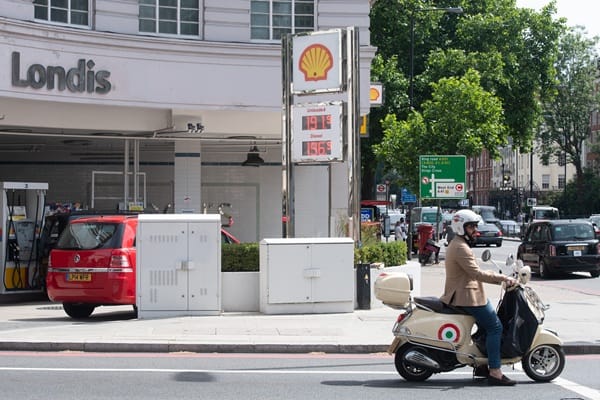
The campaign group is calling on ministers to force faster price reductions at the pumps as falling oil costs fail to translate into meaningful savings for motorists. It argues cheaper fuel could also provide a much-needed boost to household budgets, business costs and economic growth.
British motorists are being denied the full benefit of falling oil prices, according to campaign group FairFuelUK, which is demanding an immediate reduction of at least 10p a litre in pump prices and a sharper correction in the cost of diesel.
The group says the gap between declining international oil costs and prices displayed on forecourts is becoming increasingly difficult to justify, with diesel still hovering close to £2 a litre despite a modest weekly decline.
The latest official figures, for the week beginning 2 November, put average petrol prices at 172.78p a litre and diesel at 198.58p. Diesel was therefore 25.8p more expensive than petrol, a premium that is placing a particularly heavy burden on businesses and workers dependent on road transport.
Petrol prices fell by 1.29p over the week, while diesel declined by just 0.64p.
For FairFuelUK, the pace of that adjustment is the central issue. The campaign argues that motorists have experienced rapid increases when wholesale costs rise and should now expect falling costs to be passed through with comparable urgency.
Howard Cox, founder of FairFuelUK, said drivers should not have to wait indefinitely for lower prices to reach the pumps.
“Enough waiting. Oil prices have fallen sharply and Britain’s motorists must now see the benefit at the pumps,” he said.
The organisation wants at least 10p a litre removed from pump prices as lower costs move through the supply chain. It says diesel should fall further where wholesale movements justify it.
Cox acknowledged that crude oil prices do not translate directly into retail fuel prices. Refining costs, wholesale petrol and diesel prices, sterling, distribution, taxation and retailer margins all influence what drivers pay.
But he argued that those factors should not become a justification for delays in passing on savings.
“When underlying costs fall, drivers have every right to demand that the savings reach the forecourt rapidly and fully,” he said.
Diesel is a particular concern. At 198.58p a litre, its average price remains close to a psychologically significant £2 threshold, with consequences extending well beyond private motorists. Hauliers, farmers, tradespeople, delivery companies and small businesses all rely on diesel to move goods, reach customers and keep operations running.
The Competition and Markets Authority has previously raised concerns about the speed at which wholesale diesel price reductions are reflected at the pumps. In its August road-fuel monitoring work, the regulator said its analysis indicated that some retailers had not immediately passed on reductions during the period examined. It also said it expected wholesale price falls to be passed on to drivers “rapidly and fully”.
Cox said the diesel premium required particular scrutiny from ministers and competition authorities.
“Why is it still sitting at nearly £2 a litre? Why is the gap with petrol so enormous? And as wholesale diesel costs fall, exactly how quickly will those savings appear at the pumps?” he said.
The campaign is seeking to turn the issue into a broader economic argument, urging Chancellor John Healey and Transport Secretary Heidi Alexander to treat lower road-fuel costs as part of the Government’s growth strategy rather than simply a matter of motoring policy.
Fuel prices have a direct bearing on household spending, but their impact also travels through the wider economy. Higher transport costs can feed into the price of moving goods, providing services and supplying businesses. The Office for Budget Responsibility has identified several channels through which energy-price shocks affect economic activity, including the costs ultimately paid by firms and households.
Meanwhile, Office for National Statistics data for the third quarter of 2026 showed transportation and storage services making the largest upward contribution to the change in annual services producer-price inflation.
FairFuelUK argues that reducing fuel costs could therefore help ease pressure on businesses while leaving households with more money to spend elsewhere.
“Britain’s motorists and road-dependent businesses don’t need another lecture about growth. They need the cost of getting to work, delivering goods, visiting customers and running their businesses brought down,” Cox said.
He called on ministers to put pressure on the fuel supply chain to pass on falling wholesale costs, improve competition and transparency at forecourts, and examine what the Government could do to reduce the burden further.
The proposed 10p reduction would have a tangible effect on individual motorists. A driver filling a 55-litre tank would save £5.50. For someone buying that volume every week, the saving would amount to £286 over a year.
The sums become more significant when applied across businesses operating fleets of vans and lorries, where fuel is a substantial and recurring expense.
FairFuelUK is also calling for ministers to convene major fuel retailers and other parts of the supply chain to demand clear answers about how quickly lower wholesale costs will be reflected in retail prices.
There is a recent precedent for direct government intervention. In March 2026, ministers met petrol retailers and energy suppliers and said the industry would face pressure over how quickly forecourts responded when costs eased, and whether changes were being passed on fairly.
Cox wants that approach renewed, with the Chancellor and Transport Secretary asking the industry three questions: when will drivers see the reductions, why does diesel remain so expensive, and how quickly will falling wholesale costs appear on forecourt price boards?
The campaign is also challenging Alexander to put motorists and road-dependent businesses at the centre of transport policy. It argues that cars, vans and lorries are not an economic inconvenience but essential infrastructure, connecting workers to jobs, tradespeople to customers and goods to businesses and homes.
“Transport Secretary, if transport is vital to economic growth, start with the people and businesses actually paying to keep Britain moving,” Cox said.
The argument presents ministers with a political as well as an economic challenge. Fuel prices are highly visible to consumers, and diesel costs in particular affect a wide range of industries whose expenses ultimately influence prices across the economy.
But the extent to which pump prices can fall will depend on movements in wholesale markets and the other costs involved in supplying fuel. A fall in crude oil prices alone does not guarantee an equivalent reduction at the forecourt.
For FairFuelUK, however, that is no reason for the Government to remain on the sidelines. It wants ministers to demand greater transparency, press retailers to pass on justified reductions and consider further action to ease the cost of road transport.
“Britain’s drivers aren’t asking for favours,” Cox said. “They want a competitive fuel market, transparent pricing and falling costs passed on.”
His message to ministers is that cheaper fuel should be treated as an opportunity to support families and businesses, not simply as a welcome development for motorists.
With diesel still close to £2 a litre, FairFuelUK says the Government should act now to ensure that falling oil costs translate into a meaningful reduction in the price of keeping Britain moving.


Leave a Comment