
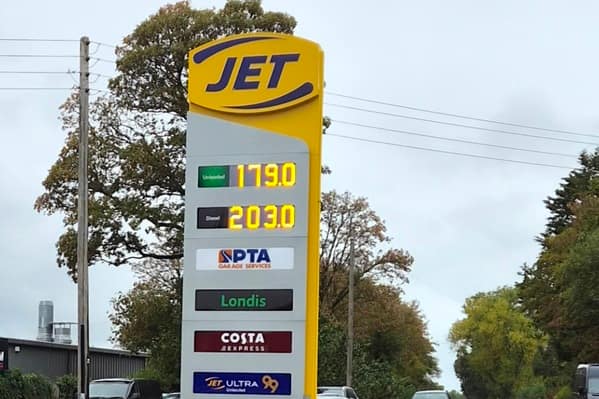
The Government’s decision to freeze Fuel Duty may have prevented another blow to motorists, but it has done little to ease the pressure of soaring petrol and diesel prices on households and businesses, FairFuelUK has warned.
Howard Cox, founder of the campaign group, welcomed the decision as a victory for drivers after years of campaigning. But he accused ministers of confusing the avoidance of further pain with meaningful relief, arguing that high fuel costs are threatening economic growth across the country.
“Thank goodness a smidgeon of common sense has prevailed,” Cox said. “Freezing Fuel Duty is a victory for drivers, businesses, and sustained campaigning. But let’s be absolutely clear: a freeze is not a cut.”
His intervention comes as pressure mounts on the Government to address the wider economic consequences of expensive road transport, from the cost of moving goods to the impact on farmers, hauliers, tradespeople and small businesses.
Cox argued that motorists were already being squeezed by high pump prices and that simply declining to increase fuel taxes further was the minimum ministers should do.
“Drivers are not cash cows,” he said, warning that diesel costs ripple through haulage, farming, manufacturing, construction and deliveries before ultimately feeding into prices paid by consumers.
The campaign group is calling on the Prime Minister, Chancellor and Transport Secretary to meet Cox to discuss a proposed 20-year transport and mobility strategy aimed at supporting economic growth.
FairFuelUK also points to the International Energy Agency’s 2026 Energy Crisis Policy Response Tracker, which it says shows that 113 countries and the European Commission had introduced measures to support consumers and businesses facing higher energy costs by June 2026. Fifty-five countries had adopted taxation measures, according to the figures cited by the group.
“If governments around the world can intervene to cushion their citizens and businesses against an energy-price shock, why isn’t Britain doing much more?” Cox asked.
He argues that the Government cannot credibly prioritise growth while leaving businesses exposed to persistently high transport costs.
“You cannot get Britain growing while making it increasingly expensive to move virtually everything Britain produces, sells and consumes,” he said.
The Treasury, however, faces a competing calculation. The Institute for Fiscal Studies has estimated that permanently retaining the full 5p Fuel Duty reduction would cost about £2.3bn a year by 2029-30, relative to the forecasts it was assessing.
For ministers, the challenge is balancing pressure on household budgets against the cost to the public finances.
For FairFuelUK, the freeze is a reprieve, not a solution. Its central argument is that if the Government wants stronger growth, it must look beyond preventing fuel taxes from rising and consider how to make road transport more affordable.


Leave a Comment