
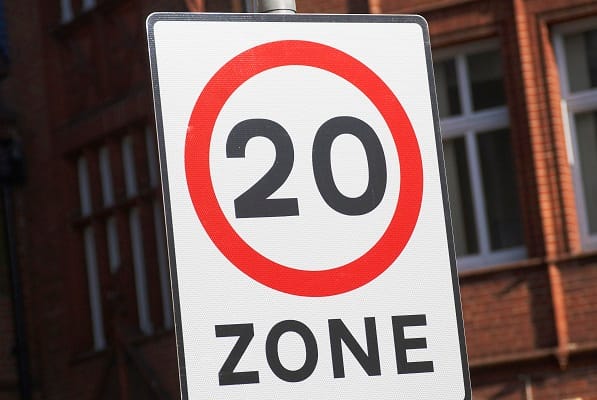
Plans to expand 20mph speed limits across Britain are facing mounting public opposition, with new polling suggesting a majority of drivers believe the policy is too slow and out of step with everyday motoring.
A survey by Quotezone.co.uk found that 66 per cent of respondents were not in favour of reducing key 30mph roads to 20mph, while 67 per cent said they believe 20mph limits are simply too slow for normal driving conditions.
The findings highlight a growing divide over one of the most contentious road safety policies being rolled out across parts of the UK, as councils and devolved administrations push ahead with lower urban speed limits in the name of reducing casualties.
The debate comes amid wider government efforts to overhaul road safety standards. In January, ministers launched a new strategy aimed at cutting deaths and serious injuries on Britain’s roads by 65 per cent by 2035, alongside updated guidance on the setting of local speed limits.
Officials have indicated that future revisions could significantly influence the default 30mph limit in built-up areas, raising the prospect of further expansion of 20mph zones in towns and cities.
Supporters of the policy argue that lower speeds save lives, reduce the severity of collisions, and improve conditions for pedestrians and cyclists in densely populated areas.
Research cited in Wales, where a default 20mph limit has already been introduced on residential and built-up roads, suggests a reduction in serious incidents in the first year of implementation, with estimates pointing to around 100 fewer people killed or seriously injured.
Authorities also note that even modest reductions in average speed can have a measurable impact on safety outcomes, with studies indicating that a 1mph decrease in average traffic speed can reduce crash frequency by around 5 per cent.
Despite this, resistance to the policy remains strong in many quarters, particularly among motorists who argue that widespread 20mph limits make journeys slower, more frustrating and less efficient.
Wales has led the way in adopting the lower limit, while Scotland and parts of England have begun rolling out similar schemes in urban areas. In London, more than half of urban roads now carry 20mph restrictions, with further expansion under consideration.
In the North West, uptake has also increased significantly, with reports suggesting that more than 45 per cent of roads in some areas now operate under reduced limits.
Critics argue that the rapid spread of 20mph zones risks alienating drivers and creating a patchwork of inconsistent speed limits that are difficult to navigate, particularly in densely populated urban areas.
Campaigners, however, insist the policy is being driven by clear safety data and argue that public resistance often softens once schemes are fully implemented.
With more local authorities expected to consider further rollouts, the political and cultural battle over Britain’s urban speed limits shows little sign of easing.
For drivers, the changes already underway mean increased vigilance on local roads — and a growing need to adapt to a new driving landscape where 30mph is no longer the default assumption in many urban areas.
Greg Wilson, car insurance expert and CEO at Quotezone.co.uk said: “With changes to speed limits continuing to be discussed across the UK, our research suggests many motorists remain unconvinced about reducing key 30mph roads to 20mph, with concerns likely centered around journey times and practicality.
“That being said, evidence from Wales, for example, demonstrates that lower limits can have a positive impact on road safety, with data from the first year of implementation showing fewer people killed or seriously injured.
“Ultimately, decisions around speed limits sit with local authorities, and they must balance public sentiment with safety outcomes, congestion, and the needs of different road users when assessing what’s appropriate for their communities.
“With lower limits appearing on more roads, it’s important drivers watch for signage and adapt their speed to make sure they stay safe and avoid fines.
“From an insurance perspective, any measure that successfully reduces collisions is positive news for premium prices. Fewer accidents could lead to fewer claims, and over time that has the potential to ease the pressure on car insurance costs.”


Leave a Comment