
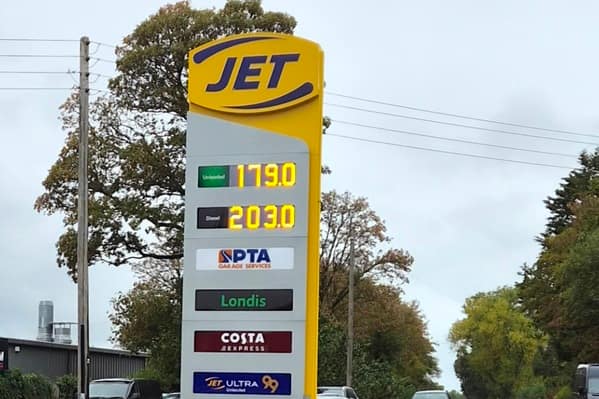
Britain’s petrol retailers are facing renewed pressure to cut prices at the pumps after a sharp collapse in international oil prices, with motoring campaigners warning that they will be watching closely to ensure motorists benefit from the latest fall.
Brent crude dropped by more than 8 per cent to below $95 a barrel, extending its decline for a third consecutive session and reaching a two-month low, according to Trading Economics. The sell-off marks a significant reversal in the oil market and has prompted FairFuelUK to demand that fuel retailers pass on lower costs quickly rather than allow margins to absorb the benefit.
The campaign group has put the industry on notice with a blunt warning: “The clock starts now.”
The intervention renews a familiar dispute between motorists and fuel retailers over how rapidly movements in wholesale oil prices are reflected in forecourt prices. Drivers have frequently complained that petrol and diesel prices rise quickly when crude becomes more expensive but fall more slowly when international markets move in the opposite direction.
The latest decline in Brent creates an opportunity for retailers to demonstrate that lower commodity costs are being passed through to consumers, particularly at a time when household budgets remain under pressure.
But the relationship between crude prices and the cost of filling a car is not immediate or one-for-one. Oil is only one component of the final pump price. Retailers and wholesalers also face the costs of refining, transporting and distributing fuel, while exchange-rate movements can affect the sterling price of internationally traded oil and refined products.
There can also be a delay between a fall in crude prices and cheaper fuel reaching forecourts. Retailers generally sell fuel purchased through supply arrangements made before the latest market movement, meaning the impact of a sudden decline may take time to work through the distribution chain.
That distinction, however, is unlikely to satisfy campaigners if pump prices remain elevated while the oil benchmark continues to fall.
FairFuelUK’s demand puts retailers under pressure to explain how quickly they adjust prices when wholesale costs ease. The group is effectively challenging the industry to demonstrate that reductions are being passed on rather than retained as additional profit.
The scale of the latest move makes the issue particularly sensitive. A decline of more than 8 per cent in a single day is substantial enough to attract attention from motorists, businesses and policymakers, even if the full effect on retail fuel prices cannot be measured immediately.
For households dependent on cars for commuting, shopping and family commitments, petrol and diesel costs are a visible and recurring expense. For businesses operating vans, delivery fleets and other commercial vehicles, fuel prices also feed into operating costs and can influence the price of goods and services.
A sustained reduction could therefore provide some relief beyond the forecourt, although the eventual benefit will depend on how long crude remains at lower levels and whether the fall is reflected in wholesale fuel prices.
The oil market’s retreat also highlights how quickly sentiment can change when investors reassess geopolitical risks. Brent’s latest decline has been attributed in the supplied market report to a receding geopolitical risk premium, suggesting traders are demanding less protection against potential disruption to global supplies.
Oil prices are particularly sensitive to fears that conflict or political instability could interrupt production, exports or shipping routes. When those concerns ease, the premium built into crude prices can unwind rapidly. Conversely, any renewed escalation could reverse the decline and restore upward pressure.
For fuel retailers, the challenge is to respond to lower input costs while navigating a market that remains vulnerable to sudden changes. Cutting prices too quickly when wholesale costs are still adjusting can squeeze margins; delaying reductions for too long risks intensifying accusations that consumers are not receiving a fair share of falling costs.
The industry will also face scrutiny over differences between retailers. Supermarkets, independent forecourts and larger fuel chains have different purchasing arrangements, operating costs and pricing strategies, meaning the speed and extent of reductions may vary.
Nevertheless, FairFuelUK’s intervention makes clear that the campaign group intends to treat the latest oil-price fall as a test of the industry’s willingness to act in motorists’ interests.
The central question is no longer simply whether crude has become cheaper, but how much of that decline will reach drivers — and how quickly. With Brent below $95 a barrel after three consecutive sessions of losses, fuel retailers are under pressure to show that the benefit of a weaker oil market will not stop at the wholesale level.


Leave a Comment