
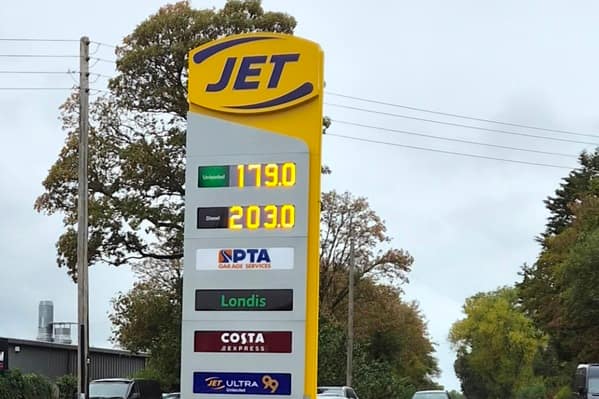
Government-backed Fuel Finder data is being integrated into Google Maps and Waze, giving motorists a new way to compare pump prices as pressure on household budgets intensifies.
Britain’s motorists will be able to compare nearby petrol and diesel prices directly through Google Maps in a move designed to make it easier to avoid the most expensive forecourts as fuel costs continue to squeeze household finances.
The new feature, introduced in October, integrates data from the government’s Fuel Finder scheme into Google’s navigation services, including Google Maps and Waze. Drivers can search for “petrol” or “fuel” to view price information for nearby filling stations and compare options before setting off.
The change builds on Fuel Finder, launched earlier this year to require fuel retailers to publish up-to-date pump prices. The information had already been made available to third-party services, including apps from the RAC, AA and PetrolPrices. Its arrival on Google Maps brings the data into a platform many motorists already use to plan journeys.
For drivers facing higher costs, the potential benefit is practical rather than revolutionary: finding a cheaper filling station without having to search across multiple apps or make unnecessary detours.
Polly Billington, the energy consumers minister, said improving access to price information was part of the government’s effort to tackle affordability pressures.
“Tackling the affordability crisis is our first responsibility and for so many families and businesses, petrol and diesel are essential goods, not luxuries,” she said. Making near-real-time prices available through Google Maps for the first time in the UK, she added, was a “gamechanger” that could help drivers find better deals.
The update arrives amid renewed volatility in energy markets. Disruption in the Middle East has pushed wholesale oil prices higher, while reports earlier this month indicated that diesel prices had exceeded £2 a litre, surpassing a previous record.
Government officials estimate that comparing prices before filling up could save motorists as much as £40 a year. The scale of any individual saving will depend on local price differences, driving habits and whether cheaper stations are conveniently located.
Fuel Finder’s reach has also expanded substantially: previous analysis suggests the scheme now covers 99 per cent of petrol and diesel sold in the UK.
Sarah-Jayne Williams, Google’s director of global product partnerships for Geo, said integrating Fuel Finder data into Maps and Waze would help drivers make more informed choices as costs rise.
The technology will not lower wholesale fuel prices or guarantee the cheapest pump every time. But by making comparisons easier, it gives motorists another tool to manage a recurring expense — at a time when even modest savings matter.


Leave a Comment