
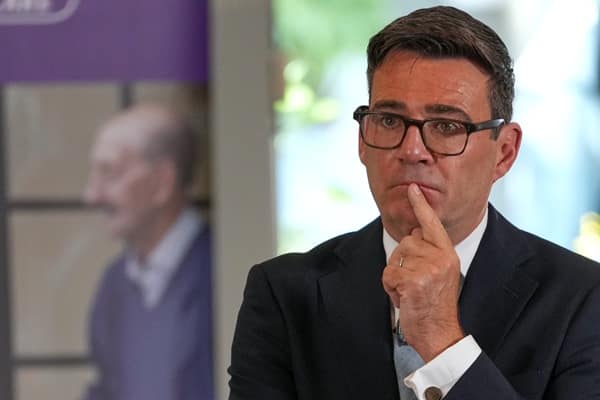
Labour has been accused of showing a staggering lack of sensitivity after using Remembrance Sunday to announce Britain’s return to a major European Union youth exchange programme, prompting a furious backlash from opposition politicians and military veterans.
Culture Secretary Lisa Nandy announced that the UK would rejoin the EU’s Erasmus+ scheme, which allows young people to study, train and gain work experience across participating European countries, just hours before the nation gathered at the Cenotaph to commemorate those killed in conflict.
The timing of the announcement, and particularly Ms Nandy’s accompanying remarks about Britain’s post-war history, provoked accusations that the Government had turned one of the most solemn occasions in the national calendar into an opportunity to promote its European agenda.
Conservative Party chairman Kevin Hollinrake demanded that the Culture Secretary withdraw her comments and apologise, accusing Labour of using the sacrifices of Britain’s Armed Forces to justify closer relations with Brussels.
He said: “Remembrance Sunday is a day for the nation to stand together in silence and honour those who gave everything for our country.
It is not a day for a Labour minister to try to make an EU membership pitch.
Our veterans did not fight for a student exchange scheme.
“Using their sacrifice to clear a £570million cheque to Brussels is tone deaf and frankly shameful.”
The row centres partly on Ms Nandy’s assertion that Britain had enjoyed 80 years of peace following the Second World War, suggesting that today’s generation was about to become the first for whom fighting a war would be little more than a historical memory.
In a statement released ahead of the commemorations, she said: “This Remembrance Sunday, we come together to reflect and honour the sacrifices that our Armed Forces made in the First and Second World Wars, and continue to make today.
“We are about to raise the first generation for whom fighting a war really is part of history. Our future generations must know the significance of those who served in our national story, that they forged a path for friendship and cooperation that meant no one in our country has had to fight a war since.”
Her comments were seized upon by Reform UK, whose Treasury spokesman Robert Jenrick accused the Culture Secretary of overlooking thousands of British servicemen and women killed in conflicts since 1945.
Taking to social media, Mr Jenrick said both Ms Nandy and Greater Manchester mayor Andy Burnham had “failed so badly to meet the moment.
He said: “On Remembrance Sunday, Lisa Nandy has claimed that no one in Britain has had to fight a war since the Second World War.
What about the 7,193 British soldiers who have sacrificed their lives in conflicts ranging from the Korean War to Afghanistan?
“While she erases their service, the country will never forget their bravery.”
Mr Jenrick added that Remembrance Sunday was “a sacred day, not to be cynically used by Labour to justify closer ties to the EU”.
He continued: “Whatever the merits of their argument – and I believe reopening the Brexit wars is both a colossal waste of energy and a strategic disaster when national sovereignty is more important than ever – this is not the day for it.
The criticism has extended beyond Westminster, with senior military figures questioning why the Government chose such a sensitive occasion to publicise its European ambitions.
Colonel Richard Kemp, the former head of British forces in Afghanistan, told The Telegraph: “On Remembrance Sunday, it is not about Erasmus or anything like that – it is all about remembering and commemorating the people who made the supreme sacrifice. The focus of that should not be taken away by the Government.”
Major General Timothy Cross CBE, a retired British Army officer and military logistics expert, also accused Ms Nandy of using the occasion for “political point scoring”.
Their intervention adds to concerns that the Culture Secretary’s comments risked overlooking the experiences of British personnel who served and died in conflicts including Korea, Northern Ireland, Iraq and Afghanistan.
Defending the announcement, Ms Nandy insisted that remembering the fallen should mean building a more peaceful and cooperative future.
She said: “It is our duty to ensure that the immense courage of those who have served our country is never forgotten. They went to war to give us 80 years of peace.”
She added: “In that spirit, this Government is building stronger, better ties with our EU neighbours. After six years away, the UK rejoining the Erasmus Plus programme is a clear symbol of our ambition and intent.”
Under the agreement, the Government will provide up to £400million through the British Council to support schools, youth groups and sports organisations. More than £30million is earmarked for youth projects in communities where participation in international opportunities has historically been low.
Labour also says it has negotiated a 30 per cent discount on participation costs for 2027, which it estimates will save taxpayers approximately £240million.
Britain withdrew from Erasmus+ in 2020 under Boris Johnson’s Brexit arrangements, replacing it with the Turing Scheme. That programme is now being scrapped as the UK prepares to return to the European initiative.
The Government argues that rejoining will open up opportunities for young Britons while strengthening educational, cultural and professional links with European neighbours.
But the political controversy threatens to overshadow the practical benefits of the agreement.
For critics, the issue is not necessarily whether international educational exchanges have merit, but whether Remembrance Sunday was an appropriate moment to announce them.
At the heart of the backlash is a fundamental objection: that the sacrifices of those who fought in Britain’s post-war conflicts should not be overlooked when politicians speak of decades of peace.
As the country pauses to remember its fallen, Labour now faces uncomfortable questions over whether its attempt to link military sacrifice with European cooperation crossed a line between commemorating history and exploiting it for political advantage.


Leave a Comment