
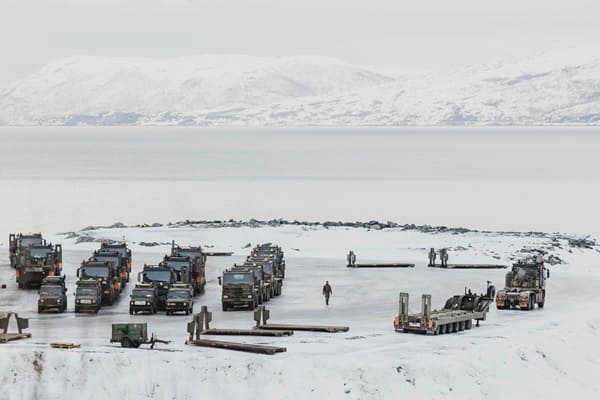
Finland is studying Ukraine’s battlefield defences as it prepares to strengthen its 1,340-kilometre frontier with Russia, amid warnings that Vladimir Putin is rebuilding his military capabilities and could pose a renewed threat to Europe.
The Nordic country is examining how Kyiv’s extensive defensive lines and anti-tank obstacles have slowed Russian advances, but its army chief has warned that copying Ukraine’s fortifications will not be straightforward.
“Conditions in Finland are more challenging,” Lieutenant General Pasi Välimäki told Bloomberg.
“If we build fortifications and dig anti-tank ditches or obstacles as deep as those in Ukraine, how long does it take before our environment turns them into artificial ponds?”
Finland’s terrain and climate present a different set of engineering problems, meaning military planners must adapt Ukraine’s experience rather than simply reproduce its network of trenches and barriers.
The urgency is being driven by concerns that Russia is already replenishing its military stocks following heavy losses in Ukraine. Välimäki said Moscow had begun rebuilding its forces, with T-90 tanks and BMP-3 infantry fighting vehicles being delivered to storage facilities.
Helsinki cannot prevent Russia from rearming, but it hopes to construct a defensive “barrier” that would make any further advance towards Finnish territory, or Nato, more difficult.
Finland shares one of Europe’s longest borders with Russia and joined Nato in 2023 following Moscow’s full-scale invasion of Ukraine. Its membership transformed the alliance’s northern frontier and increased the strategic importance of the region.
The defensive preparations come amid a separate diplomatic controversy over attempts by Finland and Norway to engage directly with Putin.
Finnish President Alexander Stubb and Norwegian Prime Minister Jonas Gahr Støre held what they described as “frank and substantive” discussions with the Russian leader, prompting criticism from other European governments.
The two leaders said their conversation lasted about 90 minutes and was intended to influence Moscow’s position ahead of planned peace discussions involving Russian, Ukrainian and US officials in Abu Dhabi next month.
They subsequently spoke with Ukrainian President Volodymyr Zelensky, while Ukrainian Foreign Minister Andrii Sybiha confirmed Kyiv had coordinated the initiative.
“We welcome such active support for our diplomatic efforts and peace process,” Sybiha said, adding that he hoped a local ceasefire around the Russian-occupied town of Oleshky could “pave the way to other steps in the peace process.”
Stubb defended the decision to speak directly to Moscow, arguing that geography made engagement unavoidable.
“The discussion was frank and substantive,” he said. “We are neighbouring countries to Russia. The outcome of this war will have a direct impact on our and the broader European security. Ending the war requires direct discussions.”
Støre said the leaders had “stressed the importance of de-escalation” and reaffirmed their strong support for Ukraine.
But the initiative exposed divisions over how Europe should approach the Kremlin. Danish Prime Minister Mette Frederiksen criticised the decision, saying she saw no evidence that Russia genuinely wanted peace.
“I think Europe should stick together rather than going solo,” she said.
The contrast captures the dilemma facing countries on Russia’s border: they must prepare for the possibility of renewed military aggression while weighing whether direct diplomacy can help prevent it.


Leave a Comment