
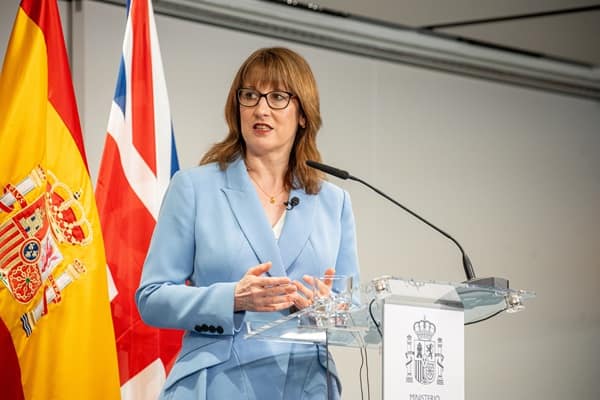
Rachel Reeves has reignited Britain’s bitter Brexit debate by declaring that the country’s future lies inside the European Union, delivering a sharp rebuke to the political settlement her own Labour government once promised to preserve.
In her first major intervention since leaving the Treasury, the former chancellor said Brexit had made Britain “poorer, weaker and less secure”, aligning herself with Prime Minister Andy Burnham’s decision to reopen discussion about the country’s long-term relationship with Brussels.
Her remarks challenge Labour’s 2024 election commitment to make Brexit work while stopping short of a formal pledge to rejoin.
“No-one in the Treasury ever doubted where my instincts were,” Reeves wrote in The Sunday Times. “I do believe Britain’s future lies in the European Union.”
The intervention places fresh pressure on a government attempting to reconcile its desire for closer economic and security ties with the political sensitivities of reopening one of the most divisive questions in modern British politics. It also gives opponents of closer integration an opportunity to portray Labour as preparing to revisit a decision voters made in the 2016 referendum.
Reeves acknowledged that advocates of rejoining would need to make their case carefully. Supporters must “make the argument, demonstrate tangible benefits and to get the next steps right”, she wrote, signalling that a European future would require more than a declaration of political preference.
The immediate test is likely to be practical rather than constitutional. At a UK-EU summit scheduled for November 20, Reeves wants progress on a youth mobility scheme and British participation in the bloc’s Security Action for Europe (SAFE) defence programme. The latter forms part of European efforts to expand defence capacity following Russia’s full-scale invasion of Ukraine.
Closer cooperation could offer British businesses and defence manufacturers greater access to European opportunities. But neither initiative, on its own, amounts to a decision to reverse Brexit. The distinction is central to Labour’s attempt to improve relations with the EU without reopening the terms of membership during the current parliament.
Emma Reynolds, chief secretary to the Treasury, insisted that the government would maintain its existing red lines. Labour would not return to EU membership, the customs union, the single market or free movement during this parliament, she said.
“It’s 10 years since the Brexit referendum, and I think it’s right that we open up a conversation with the British people about what the options are,” Reynolds told Sky News.
She argued that the immediate priority was to improve what she described as the “botched Brexit deal” inherited from Boris Johnson. Border frictions had imposed costs on exporters, she said, claiming that one in seven businesses exporting to the EU had abandoned those sales altogether.
The Conservatives have rejected the prospect of rerunning the Brexit debate. Kemi Badenoch argued that Britain should concentrate on improving the existing arrangements rather than reopening the question of membership.
“We have now settled that debate. We’ve left the EU. We need to be making the best of it,” she said.
Badenoch also warned that Britain would not necessarily recover its previous membership terms if it sought to rejoin. She urged Burnham to focus instead on reducing welfare spending, funding defence and growing the economy, accusing the government of diverting attention from domestic challenges.
Nigel Farage, the Reform UK leader, has likewise argued that there is no mandate for closer EU integration. For Conservatives and Reform, the prospect of reopening Brexit offers a route to mobilise voters who regard departure from the bloc as a settled democratic decision.
For Labour, the political calculation is more complicated. The party’s 2024 manifesto ruled out a return to free movement, single-market membership and a customs union. Any substantial shift would therefore require a new electoral mandate, with a general election due by 2029 at the latest.
Reeves’s comments also form part of a broader defence of her record in government. She has called for ministers to be more ambitious in delivering infrastructure projects and more clear-eyed about the opportunities and risks posed by artificial intelligence. Her argument is that Britain needs both economic reform at home and a more effective relationship with its largest nearby trading bloc.
Yet the economic case for closer European ties will need to be demonstrated, not simply asserted. Rejoining would entail negotiations over membership terms, regulatory obligations and the movement of people; closer cooperation short of membership would offer narrower benefits while leaving some barriers intact.
That leaves Labour navigating between two risks: allowing Brexit-related trade and investment frictions to persist, or reviving a constitutional argument that could consume political attention for years.
Reeves has now made her preference explicit. Whether that becomes a credible programme for government will depend on the tangible gains Labour can secure from Brussels — and whether voters believe those gains justify reopening a debate the country has spent a decade trying to settle.


Leave a Comment