
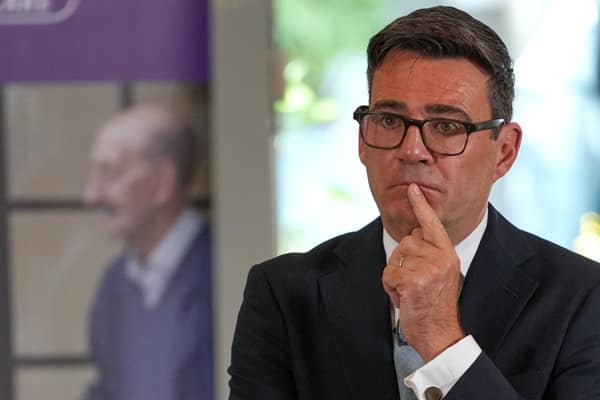
Andy Burnham’s government is facing growing pressure to accelerate defence preparations after Poland warned that Russia could seek to test NATO’s resolve with missile or drone attacks against countries supporting Ukraine.
Polish Prime Minister Donald Tusk said intelligence from several sources was “very consistent and convincing” and warned that Moscow could attempt to disguise an attack as an accident.
“We know he is plotting something bad. However, for us the most important task is to prepare for various scenarios,” Tusk told parliament.
“We will certainly not naively accept such messages that Russia has goodwill and will start behaving properly. There is no indication of this.”
Read more related news:
Fico will ‘do everything’ to keep Slovakia out of war with Russia and reject NATO’s Article 5
Chilling Putin missile warning sends NATO into red alert
Military chief warns UK to prepare for long war as Russia ‘raises the stakes’
Britain prepares high-readiness forces to deploy if Suwałki Gap is cut by Belarus and Russia
He added: “There is a real risk that drones or other types of missiles could penetrate the territory of one or more countries on the eastern flank and even cause damage, while the official explanation will be that there was an accident.”
The warnings came after Poland temporarily closed airports and scrambled military aircraft during a major Russian missile and drone assault on Ukraine. Reuters reported that no Polish airspace breach was confirmed during the incident.
In Britain, security correspondent Deborah Haynes said the developments “would surely require the UK to be part of any response – collective or otherwise”, while political commentator Tim Shipman asked: “Time for the government here [in the UK] to say something?”
Former Conservative MP Simon Clarke said the government could not continue delaying a detailed defence-spending plan.
“Things may be about to become very serious indeed – much more so than is widely appreciated,” he said.
NATO Secretary-General Mark Rutte has repeatedly argued that allies need credible plans to increase defence investment. Nato has committed members to reaching 5 per cent of GDP on defence and security by 2035, with Rutte stressing the need for concrete spending paths.
The warnings coincide with renewed concern within Britain’s armed forces over Russia’s activity around critical infrastructure.
First Sea Lord General Sir Gwyn Jenkins has described Russia as “the greatest threat to our security today”, saying Moscow was “probing, testing and mapping” critical undersea infrastructure. The Royal Navy has separately warned that Russian interference with infrastructure and activity beneath the sea is becoming increasingly persistent.
For Britain, the debate is increasingly shifting from supporting Ukraine to preparing for the possibility that Russia’s confrontation with the west could extend directly into NATO territory.


Leave a Comment