
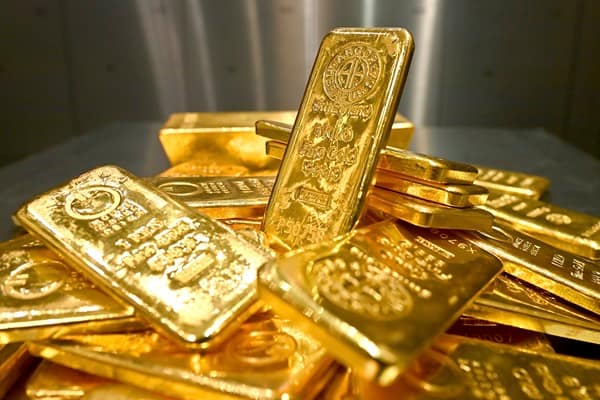
In the July 13 session, gold recorded its second consecutive decline. Prices returned to the key psychological area around $4,000 per ounce as tensions in the Middle East unexpectedly escalated again.
The resurgence of geopolitical risk failed to generate sufficiently strong safe-haven demand for gold.
Following missile and drone attacks involving the United States and Iran, markets remained concerned that shipping activity through the Strait of Hormuz could be disrupted.
Oil prices surged at the beginning of the week, pushing both WTI and Brent crude to their highest levels in around one month.
Rather than simply increasing demand for safe-haven assets, the risk of energy supply disruptions has also raised concerns that higher fuel, transportation, and production costs could continue to drive inflation upward.
This strengthens the possibility that the Federal Reserve may need to maintain a restrictive monetary policy for longer or even raise interest rates further if price pressures fail to ease.
At its June meeting, the Fed maintained its target interest rate range at 3.50%–3.75% and continued to assess inflation as remaining above its 2% target, partly due to supply shocks and higher energy prices. The meeting minutes also showed that the Fed had revised its inflation outlook upward because of rising energy and input costs related to the conflict in the Middle East. Several policymakers indicated that monetary policy might need to be tightened further if inflation remained persistent. Rising interest-rate expectations are directly weighing on gold because the precious metal does not provide a fixed yield.
The US dollar has also benefited from both expectations of higher interest rates and increased safe-haven demand. The US Dollar Index advanced at the beginning of the week and is currently holding around 100.9–101.0. A stronger dollar makes gold more expensive for buyers using other currencies, placing additional pressure on demand and limiting the metal’s ability to recover.
The $4,000 area remains an important psychological threshold. Gold slipped below this level several times in June and during the first half of July but quickly rebounded on each occasion. This indicates that buying interest continues to emerge at lower price levels, although the market’s ability to defend this support is being increasingly tested.
Gold’s repeated retreats toward the $4,000 level suggest that its recovery momentum remains relatively weak, particularly as oil prices rise, interest-rate expectations continue to shift in a more hawkish direction, and the US dollar maintains its strength. If gold once again falls below $4,000 and remains under sustained pressure beneath this level, selling momentum could intensify, opening the possibility of a deeper decline toward $3,900 and, further below, the $3,600–$3,700 area.
In the immediate term, gold’s next direction will depend heavily on the US June Consumer Price Index report, Producer Price Index data, and signals from the Fed Chair. Markets currently expect core CPI to rise by around 0.2% month-on-month. If the actual figure exceeds forecasts, concerns about persistent inflation and the possibility of further Fed rate hikes could be reinforced, placing additional pressure on the $4,000 support level. Conversely, weaker-than-expected inflation data could help ease the US dollar and Treasury yields, creating conditions for a technical rebound in gold.


Leave a Comment