
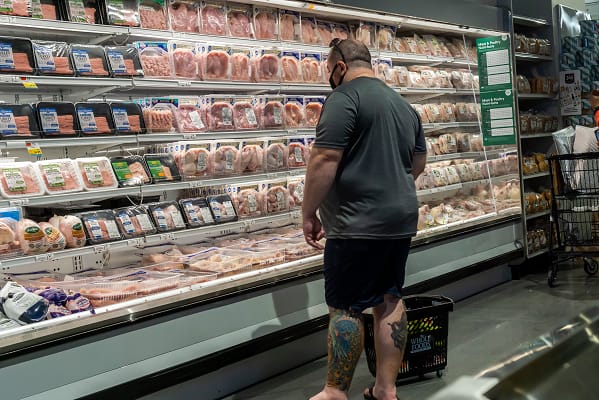
Britain’s biggest supermarkets were forced to close refrigerated aisles and discard food during June’s record-breaking heatwave, highlighting the growing economic cost of climate-related disruption to the UK’s retail infrastructure.
Tesco, Sainsbury’s, Marks & Spencer and Waitrose were among the retailers affected after refrigeration systems struggled to cope with what became the three hottest June days ever recorded in Britain.
Stores across the country temporarily closed chilled and frozen sections, leaving customers unable to purchase products including meat, dairy and frozen foods as operators prioritised food safety.
Reports of refrigeration failures emerged from locations stretching from Essex and Bristol to Newcastle, Carlisle and the Isle of Man, with shoppers encountering empty freezers, cordoned-off aisles and staff removing stock for disposal.
According to Rupert Ashby, chief executive of the British Frozen Food Federation, the disruption exposed a structural weakness in much of Britain’s supermarket estate.
Many large stores continue to rely on centralised refrigeration systems installed decades ago, with banks of refrigerators connected to cooling units located on rooftops or in external compounds.
While highly efficient in Britain’s traditionally moderate climate, these systems become significantly less effective during prolonged periods of extreme heat.
“When outside temperatures become exceptionally high, the systems have to work much harder, and their efficiency falls sharply,” Ashby explained.
In older stores, the failure of a single central cooling unit can turn off entire refrigeration networks simultaneously, forcing retailers to remove products that can no longer be guaranteed safe for consumption.
Although some customers were reportedly told high electricity costs had prompted fridge closures, industry experts insist the underlying issue was food safety rather than energy prices.
Retailers are legally required to maintain strict temperature controls throughout the food supply chain, leaving little option but to withdraw products whenever refrigeration systems cannot meet regulatory standards.
The disruption has also renewed questions over the resilience of Britain’s food infrastructure as climate change increases the frequency of extreme weather events.
The Cold Chain Federation has warned that distribution warehouses could also face operational challenges if prolonged heatwaves become more common.
Ashby said he had previously raised concerns with ministers about the need to modernise cold-storage infrastructure and has now proposed reviewing the UK’s long-standing frozen food standard of -18 °C.
The current benchmark dates back more than a century to the pioneering work of Clarence Birdseye and has remained largely unchanged despite significant advances in refrigeration technology.
Ashby argues that increasing freezer temperatures by three or four degrees would remain safe for consumers while substantially reducing energy demand and easing pressure on cooling systems during extreme weather.
For Britain’s supermarket industry, the recent heatwave has demonstrated that climate resilience is becoming not only an environmental issue but an increasingly important commercial and operational priority.


Leave a Comment