
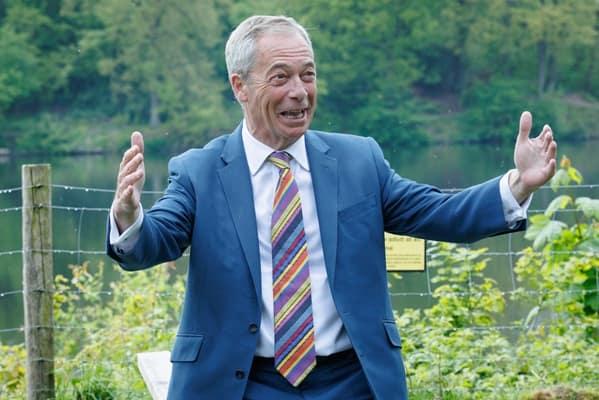
Nigel Farage’s decision to resign as MP for Clacton has triggered one of the most unusual by-elections in recent British political history, with the contest expected to take place on August 13 after Parliament formally approved the writ without opposition.
The vote will serve as an early test of Reform UK’s electoral strength while exposing the increasingly unconventional dynamics shaping British politics.
The House of Commons approved the writ after Reform UK Chief Whip Lee Anderson formally requested that a new election be held following Mr Farage’s appointment as Steward and Bailiff of the Manor of Northstead, the constitutional mechanism used by MPs wishing to leave Parliament.
Although electoral administrators will confirm the final timetable, statutory deadlines mean polling is expected on Thursday, August 13.
The by-election follows Mr Farage’s decision to seek a fresh mandate from voters while facing scrutiny over financial declarations.
The Reform UK leader is being investigated by Parliament’s Standards Commissioner over whether a £5 million donation linked to cryptocurrency entrepreneur Christopher Harborne should have been declared differently under parliamentary rules. Mr Farage has consistently denied any wrongdoing and argues the electorate, rather than Westminster, should judge his conduct.
His strategy reframes the contest as a direct confrontation between Reform UK and what he describes as the political establishment.
The political significance of the by-election has been heightened by the decision of Labour, the Conservatives, the Liberal Democrats, the Green Party and Restore not to field candidates.
That unprecedented move leaves the contest largely dominated by smaller parties, with satirical candidate Count Binface emerging as Mr Farage’s highest-profile challenger.
While unlikely to threaten Reform UK’s electoral dominance in the Essex constituency, the unusual candidate lineup reflects the increasingly fragmented nature of Britain’s political landscape.
Senior ministers have criticised Mr Farage’s decision to resign, arguing the by-election represents an unnecessary political exercise.
Prime Minister Sir Keir Starmer accused the Reform leader of creating a political “stunt”, claiming he had “run himself into a cul-de-sac” while attempting to shift attention away from questions surrounding his financial affairs.
Chancellor Rachel Reeves confirmed she had approved the formal resignation process, describing the by-election as “a farce and a desperate distraction” before adding that if Mr Farage wished to “spend the summer arguing with a bin”, the Government would not stand in his way.
Unlike general elections, parliamentary by-elections rarely generate direct financial market volatility. However, investors will monitor the result as another indicator of the evolving balance of political support ahead of future national polls.
A convincing Reform UK victory would reinforce the party’s electoral momentum and underline its growing influence over the UK’s political debate.
For businesses and financial markets, the contest offers another signal of the country’s increasingly unpredictable political environment, where traditional party loyalties continue to weaken and anti-establishment movements retain significant electoral appeal.
While the immediate economic impact is likely to be negligible, the Clacton by-election could provide valuable insight into the direction of UK politics at a time when investors remain sensitive to domestic political uncertainty alongside persistent geopolitical risks.


Leave a Comment