
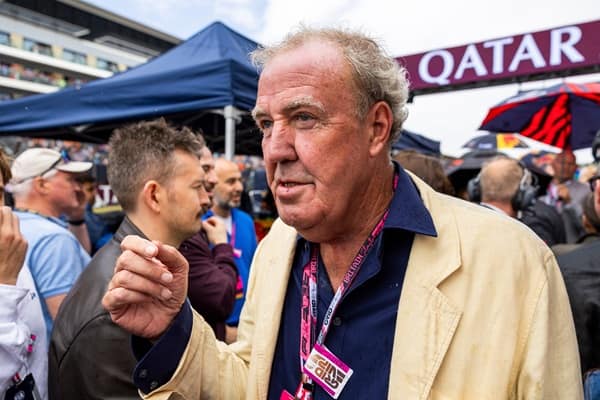
Jeremy Clarkson has delivered a withering assessment of Andy Burnham’s prospects as Britain’s next Prime Minister, suggesting Labour’s impending change of leadership offers little reason to expect a change in direction.
With Sir Keir Starmer having announced his resignation and Burnham widely expected to secure the Labour leadership in the coming weeks, attention is already turning to what a new administration would look like.
For Clarkson, however, the answer appears straightforward.
Responding to a question on social media asking whether Burnham would prove “worse than Starmer”, the broadcaster and farmer replied with a single word: “Yes.
The intervention is significant not because it alters the political arithmetic, but because it reflects a broader scepticism among critics who believe Labour’s leadership transition risks becoming one of personality rather than policy.
Clarkson has been among Starmer’s most outspoken detractors throughout the outgoing Prime Minister’s time in office. He has repeatedly criticised the Government’s inheritance tax proposals affecting family farms, accused ministers of undermining the countryside, attacked new driving regulations and questioned Labour’s foreign policy decisions.
His latest comments suggest he sees little evidence that Burnham intends to break with that approach.
The Greater Manchester mayor used his first major speech since entering Westminster to unveil an ambitious vision for what he described as a “rewired Britain”. At its heart sits a proposal for a “No 10 North” based in Manchester, alongside the largest transfer of powers away from Whitehall in modern times.
Burnham argued Britain has become trapped by an over-centralised state since the financial crisis and pledged to rebuild the economy through deeper devolution, greater regional investment and an expanded role for government in economic renewal.
His programme also includes the largest council house building programme since the post-war era, reforms to utilities and transport, and increased public intervention to stimulate regional growth.
Supporters present the agenda as a long-overdue attempt to rebalance the economy away from London and give communities greater control over local decision-making.
Critics, however, argue that many of Burnham’s proposals rely heavily on expanding the role of the state without answering fundamental questions about funding, productivity or private sector investment.
Business groups have already questioned how an ambitious council house building programme would be financed, while opponents contend that further layers of devolved government risk creating additional bureaucracy rather than delivering faster economic growth.
Burnham insists his model of “Manchesterism” is rooted in practical experience, pointing to Greater Manchester’s record on investment and regeneration. Yet translating that approach to the national stage would require substantial public spending at a time when the UK’s finances remain under pressure.
For Clarkson, the verdict has already been delivered. His terse response captures a wider concern among Labour’s opponents that replacing Starmer with Burnham may amount to a change of leadership without a corresponding change of economic philosophy.
Whether Burnham can convince voters that his programme represents genuine renewal rather than simply a different version of Labour’s existing agenda is likely to become one of the defining political questions of the months ahead.


Leave a Comment