
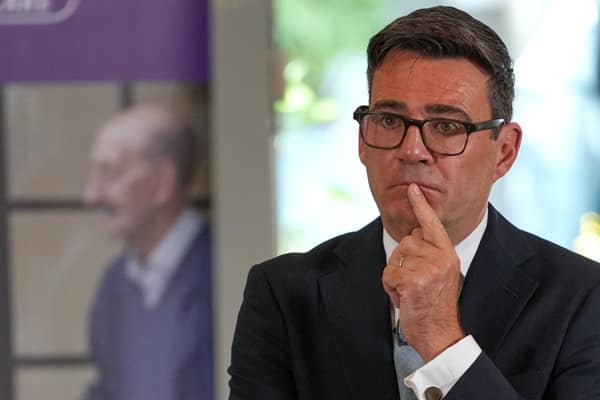
Andy Burnham has been warned against gambling his premiership on a snap general election, with Labour MPs fearing an early poll could wipe out dozens of the party’s newer MPs and leave the Government fighting for its political survival.
The Prime Minister is understood to have considered bringing forward the next general election by as much as two years as his first month in Downing Street produces a bounce in Labour’s polling.
The calculation is straightforward: Labour could seek to exploit the division of the right-wing vote between Reform UK and the Conservatives before that split is resolved.
Survation has Labour and Reform neck-and-neck on 26 per cent, with Labour’s support having recovered for the first time since the 2025 general election.
But MPs are warning that translating a modest polling recovery into an election victory could prove disastrous for Labour’s parliamentary party.
One backbencher who is at risk of losing their seat invoked the fate of Theresa May, who called a snap election in 2017 expecting to strengthen her position but instead lost the Conservative majority.
“May tried this and look where it got her,” the MP told the Mail on Sunday.
“Don’t get carried away by the opinion polls and the Burnham bounce.
“Presuming that you’re going to win a general election in May is a fool’s game.
“Get on with the job of governing now – don’t plunge us into election uncertainty.”
Another Labour MP warned that an early contest could leave a “bitter taste” among newer politicians if “carnage” followed simply to give Burnham a personal mandate.
The stakes are particularly high because Labour currently holds a majority of 165 MPs, inherited from Sir Keir Starmer’s landslide victory in 2024.
Electoral Calculus modelling suggests Burnham could still command a majority of 50, with 350 Labour MPs, if the party reached an eight-point lead in the polls and secured 31.6 per cent of the national vote.
Even that relatively favourable scenario would see Labour lose around 90 MPs, with 85 of those having entered Parliament only in 2024.
Jonathan Brash, the Hartlepool MP who previously called for Starmer to resign, would be among those projected to lose his seat to Reform UK.
Justice Minister Jake Richards is another Labour newcomer considered vulnerable to Nigel Farage’s party.
The electoral arithmetic becomes dramatically more precarious with even a small deterioration in Labour’s support.
A 1.5-point fall in the party’s vote share would, according to the modelling, leave Burnham with a Commons majority of just two.
The consequences would extend to the Cabinet, with Home Secretary Shabana Mahmood projected to lose Birmingham Ladywood to the Greens under that scenario.
Martin Baxter of Electoral Calculus said Labour would need to lift its current polling position by “six or seven per cent” to secure a comfortable majority.
“Even a win would be painful for dozens of Labour backbenchers who would lose their marginal seats,” he said.
The dilemma has uncomfortable echoes of Burnham’s own political history.
He was a Cabinet minister under Gordon Brown in 2007 when Brown succeeded Tony Blair as prime minister and considered, but ultimately rejected, the option of calling a snap election.
Brown remained in Downing Street until 2010, when David Cameron’s Conservatives emerged as the largest party and entered coalition with Nick Clegg’s Liberal Democrats.
Burnham now faces a different political landscape, with Reform threatening Labour’s vote in constituencies across England and the Conservatives attempting to recover from their historic defeat.
The temptation for Downing Street is therefore clear: strike while the opposition remains divided and convert an early polling recovery into a fresh mandate, but the electoral calculations reveal the danger.
A comfortable Labour majority would require a substantial improvement in the party’s current position. A relatively small reversal could instead produce parliamentary paralysis and sweep experienced ministers and newly elected MPs out of Westminster.
For Labour MPs staring at the electoral map, the message to Burnham is blunt: the early honeymoon may be real, but it is nowhere near large enough to make a snap election a safe bet.
“Get on with the job of governing,” one warned.
For a Prime Minister with a majority of 165, the question is why risk it.


Leave a Comment