
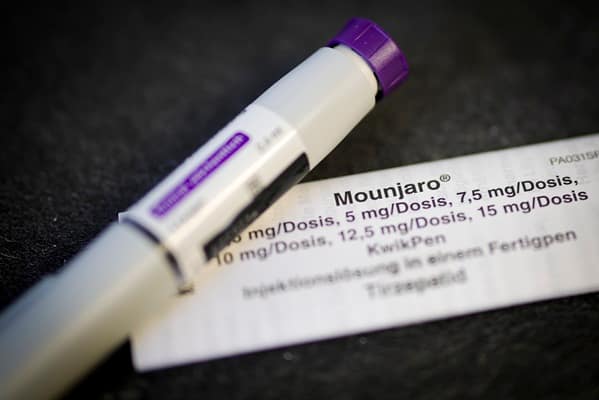
Searches for “Mounjaro and alcohol” have surged by 56 per cent over the past year, highlighting growing concern among people taking the popular weight-loss drug about whether they can safely drink.
Google search analysis commissioned by Curely and conducted using Glimpse estimates that around 6,000 searches for “Mounjaro and alcohol” were made in the past month.
Separate searches for “Mounjaro stomach pain” reached approximately 7,000, while “Mounjaro heartburn” generated around 4,000 searches, with interest in the terms increasing by 13 per cent and 15 per cent respectively.
The figures measure search interest rather than confirmed side effects, and do not establish that alcohol caused the symptoms being searched for.
But Sobia Qasim, superintendent pharmacist at Curely, warned that people taking Mounjaro should not automatically assume severe symptoms after drinking are simply the result of a hangover.
“People often ask whether they can still have their usual drinks while taking weight-loss medication. The more useful question is how their treatment, symptoms and other medicines change the risks.
“If you become unwell after drinking, do not assume everything is a hangover. Repeated vomiting, difficulty keeping fluids down and severe stomach pain need attention.”
Mounjaro contains tirzepatide, which acts on both GIP and GLP-1 receptors. The NHS advises avoiding alcohol while taking tirzepatide because it can increase nausea and vomiting.
For people considering drinking while taking the medication, the risks cannot necessarily be avoided simply by changing the timing of an injection or choosing a lower-calorie drink.
Moving injection day does not remove the drug
Tirzepatide remains in the body between weekly injections, with a half-life of approximately five days. That means delaying an injection for a day or two does not create a period in which the medicine has simply disappeared.
“Moving or skipping your injection to fit around a night out is not a reliable way to prevent problems,” Qasim said.
“Speak to your prescriber before changing your treatment.”
The effects can also change as patients move up through their prescribed doses.
Nausea, vomiting and diarrhoea are more common during dose escalation and may become less troublesome over time. Alcohol can compound those symptoms.
“Having felt fine on a previous occasion does not guarantee the same experience after your dose increases,” Qasim said.
“If you already feel sick or are struggling to eat and drink normally, avoid alcohol and contact your prescriber if symptoms persist.”
A low-sugar mixer is not necessarily a solution
Choosing a diet or sugar-free mixer can reduce the amount of sugar consumed, but it does not remove the alcohol itself. Alcohol is a recognised trigger for acid reflux and can aggravate heartburn, meaning a low-calorie drink may still cause problems for someone already experiencing gastrointestinal symptoms.
“People can focus on finding the lowest-calorie drink and overlook what is making them feel unwell. A spirit with a sugar-free mixer can still aggravate reflux,” Qasim said.
Low blood sugar can look like drunkenness
The issue becomes particularly important for people who take Mounjaro alongside medicines that can cause hypoglycaemia, including insulin or sulphonylureas such as gliclazide. Alcohol can interfere with the liver’s ability to release glucose, increasing the risk of low blood sugar. Drinking without eating can increase that risk, and the effects can persist into the following day.
Symptoms of hypoglycaemia can be confused with intoxication or a hangover.
“If you take medicines that can cause hypos, ask your diabetes team for individual advice. Make sure someone you are with knows how to recognise and respond to low blood sugar,” Qasim said.
The risk is not the same for everyone taking Mounjaro and depends in part on other medicines and individual circumstances.
Repeated vomiting can become dangerous
Vomiting and diarrhoea can cause dehydration, while alcohol can also contribute to fluid loss. For someone taking tirzepatide, persistent vomiting therefore presents a risk beyond simply having an unpleasant morning after drinking.
“If you keep being sick and cannot hold down fluids, do not simply try to sleep it off. Contact NHS 111,” Qasim said.
“Small, frequent sips may help while you seek advice, but persistent vomiting needs assessment.”
Severe stomach pain should not be dismissed
One of the most important warnings concerns severe or persistent abdominal pain.
Pancreatitis is an uncommon but potentially serious adverse effect associated with GLP-1 and dual GIP/GLP-1 medicines. The MHRA advises people to seek urgent medical attention for severe, persistent abdominal pain, particularly where the pain spreads to the back or is accompanied by nausea and vomiting.
The warning applies regardless of whether alcohol has been consumed.
“Severe or persistent abdominal pain is not something to push through,” Qasim said.
“Seek urgent medical help and tell the clinician which medication you take, including treatment prescribed privately.”
The surge in online searches suggests that questions about combining weight-loss medicines with alcohol are becoming increasingly common as use of drugs such as Mounjaro expands. But the key issue is not simply how many calories a drink contains.
For patients taking tirzepatide, the interaction between the medication, alcohol, existing symptoms and any other medicines can be more important — particularly when nausea, vomiting, dehydration or severe abdominal pain develops.
The advice from pharmacists is therefore straightforward: do not attempt to manipulate injection schedules around drinking, do not assume a sugar-free mixer removes the risks, and do not dismiss serious or persistent symptoms as an ordinary hangover.


Leave a Comment