
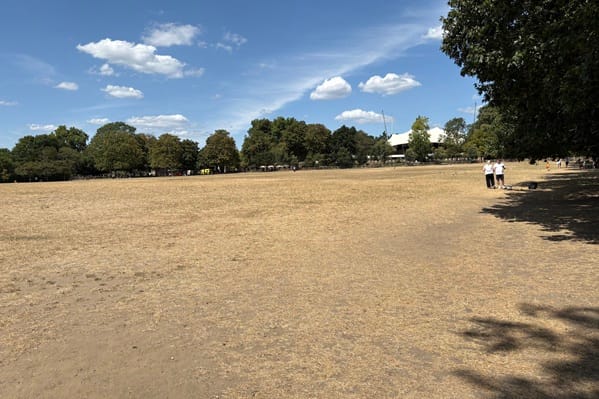
The UK government is preparing for a potentially severe extension of water restrictions as depleted reservoirs, extreme temperatures and persistent drought raise the prospect of tougher controls on households and businesses.
Ministers are examining measures that could prohibit activities including car washing, filling private swimming pools and cleaning windows under a “reasonable worst case scenario” drawn up by Whitehall officials, according to reports.
Restrictions could also extend to gyms and hotels with swimming pools and the watering of football pitches and other sports grounds. Water companies would be responsible for enforcing the measures.
The scale of the potential intervention highlights the pressure on England’s water system despite forecasts of rain in parts of the country. Officials and water experts warn that short periods of rainfall may do little to replenish reservoirs after an exceptionally hot and dry summer.
About 27mn people in England are already living under hosepipe restrictions, while 12 of 31 reservoirs across England and Wales are reported to have low water levels.
The heat has added to the strain by driving up demand and contributing to infrastructure problems and leakage. With forecasts suggesting further periods of unusually high temperatures could emerge later in the year, ministers are preparing for the possibility that the crisis will persist beyond the immediate summer peak.
Prime Minister Andy Burnham has met Met Office experts as the government intensifies its drought planning. The Department for Environment, Food and Rural Affairs and the Environment Agency have also established weekly meetings of the National Drought Group, bringing together officials, water companies, weather experts and environmental organisations.
The government said it was preparing for multiple scenarios and expected water companies to follow drought plans while accelerating efforts to reduce leakage.
It also renewed its criticism of the water industry, arguing that companies had failed to provide infrastructure capable of coping with increasing pressure.
Ministers are pursuing record investment in water infrastructure and changes to planning rules designed to facilitate the construction of nine new reservoirs.
The immediate crisis, however, is already feeding into wider economic concerns.
Agricultural producers have warned that the combination of heatwaves and drought across Britain and Europe is threatening supplies of fruit, vegetables and grains. The Food and Drink Federation expects crop shortages to place additional pressure on food prices into 2027.
That comes as consumer price inflation is expected to accelerate to 2.9 per cent in July from 2.6 per cent in June, driven in part by higher energy costs.
The combination of energy, food and water pressures creates a difficult backdrop for the government as it seeks to restore household confidence while managing the effects of geopolitical instability and climate volatility.
The water crisis is therefore becoming more than a seasonal inconvenience. It is exposing the growing economic cost of an infrastructure system struggling to absorb increasingly extreme weather.
For ministers, the immediate challenge is to prevent emergency restrictions from becoming a recurring feature of Britain’s summers.


Leave a Comment