
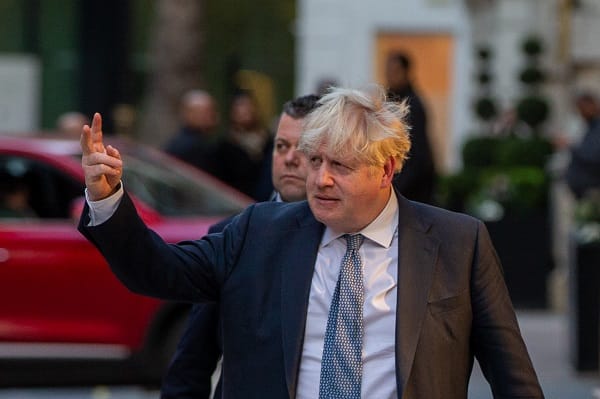
A bitter transatlantic argument over immigration, identity and the future of Western societies has erupted after Boris Johnson dismissed JD Vance’s warnings of “civilisational erasure” as “b******s” — while simultaneously acknowledging that Britain has failed to address growing concerns over integration.
The clash between the former British prime minister and the US vice-president exposes one of the deepest political divides sweeping Western democracies: whether large-scale migration represents a threat to national identity or whether the real failure lies in governments’ inability to manage integration.
Vance has become one of the most outspoken critics of Europe’s immigration policies, arguing that mass migration and what he describes as “anti-Western” political thinking are accelerating a cultural crisis.
He has warned that Europe is facing “civilisational suicide” unless leaders confront what he sees as uncontrolled migration and declining confidence in Western values.
The Republican politician reignited the debate following the murder of Henry Nowak, arguing that the tragedy reflected wider failures by European governments to deal with migration pressures.
His comments triggered a furious response from Downing Street, which accused outside politicians of attempting to interfere in British political debate and inflame tensions.
But Johnson, while rejecting Vance’s argument, also delivered a more complicated message.
Speaking to Sky News, the former prime minister argued that immigration levels in major Western cities do not automatically represent cultural collapse, pointing to similarities between London and New York.
“In America, about 30% of people are either first or second generation immigrants,” Johnson said.
“The statistic I used to cite was that 40% of our population was born abroad.”
He added: “All this raving about civilisational erasure, ‘Britain’s going down the tubes’ — I think it’s b******s.”
The demographic reality is stark. Around 41% of London residents were born outside the UK, according to the 2021 census, while foreign-born residents make up a significant proportion of New York’s population.
Yet Johnson’s intervention was not a full defence of current migration policy.
He argued Britain had been too hesitant in demanding integration, warning that political correctness had prevented governments from addressing legitimate concerns.
“I think the UK hasn’t been tough enough in insisting on basic British norms of behaviour,” he said.
“It is totally unacceptable that you should have populations of women who don’t speak English. That’s absolutely appalling.”
The remarks highlight the difficult political territory facing governments across Europe and North America.
The debate is no longer simply about immigration numbers. It is increasingly about whether societies can absorb rapid demographic change while maintaining shared language, civic values and social cohesion.
Vance has positioned himself as a defender of Western identity, arguing that governments have ignored public frustration for too long. He has also defended controversial British activist Tommy Robinson, saying it is legitimate for citizens to want to protect their culture and decide who enters their country.
Critics argue that such rhetoric risks deepening divisions and turning complex social issues into cultural conflict.
For Johnson, the answer appears to lie between the two extremes: rejecting predictions of national decline while accepting that Britain must do more to ensure successful integration.
The political battle over immigration is unlikely to fade.
As Western societies continue to change, the question confronting leaders is becoming increasingly unavoidable: how do countries preserve social cohesion in an era of unprecedented movement across borders without turning fear of change into a battle over identity itself?


Leave a Comment