
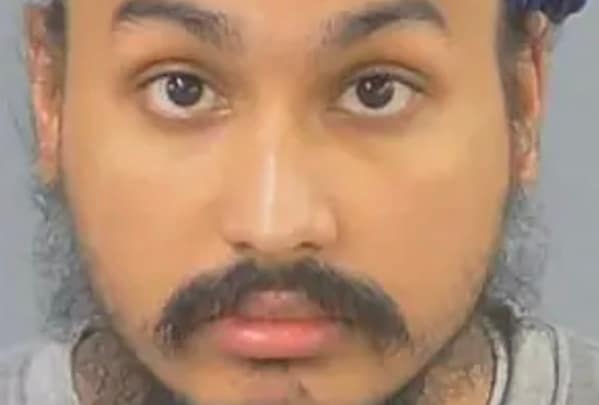
The killer of Henry Nowak could face a longer prison sentence after ministers bowed to mounting public pressure and referred the case to the Court of Appeal.
In a significant development that will be welcomed by the murdered teenager’s family, Solicitor General Ellie Reeves has ordered a review of the sentence imposed on Digwa under the Unduly Lenient Sentence scheme, declaring that the case had “horrified” her.
The move opens the door to judges increasing the punishment handed to the killer following widespread anger over what many viewed as an inadequate sentence for a brutal and senseless murder.
Digwa was sentenced to life imprisonment earlier this month and ordered to serve a minimum term of 21 years for the murder of the 18-year-old university student in Southampton last December.
But the sentence immediately sparked fierce criticism, with campaigners, politicians and members of the public questioning whether it reflected the gravity of the crime.
Now the Court of Appeal will decide whether the punishment falls outside the range that a reasonable judge could have imposed and whether it should be increased.
Announcing the referral, Ms Reeves acknowledged the depth of public concern surrounding the case.
“This case horrified me, and I know that feeling is shared by the British public,” she said.
Read more related news:
‘Move along now’ as police watchdog urges public not to believe their own eyes
Police face Article 2 scrutiny over Henry Nowak death as coroner orders full jury inquest
Fresh questions for Hampshire Police over Henry Nowak ‘cover-up’ claims
160,000 sign petition demanding manslaughter charges against the police in Henry Nowak case
It is right that difficult questions need to be answered about the way the police handled Henry Nowak’s murder, while my role is to review Digwa’s sentence for his crimes.
“After careful consideration, I have taken the decision to refer this case to the Court of Appeal.”
The intervention marks a dramatic new chapter in a case that has generated national outrage and reignited debate about policing, justice and public confidence in the criminal justice system.
Mr Nowak was killed after being repeatedly stabbed with a Sikh ceremonial blade during a confrontation in Southampton.
The horror of the attack was compounded by the disturbing events that followed.
Police officers responding to the incident were told by Digwa that he had been racially abused by the teenager, a claim that was later exposed as false.
Yet it was the release of body-worn camera footage that transformed the case into a national controversy.
The footage showed Mr Nowak repeatedly telling officers he had been stabbed and struggling to breathe.
As he lay dying, handcuffed on the ground, he pleaded for help.
At one stage, an officer responded: “Don’t think you have, mate.”
The teenager was restrained face down with his hands cuffed behind his back while officers spoke to him and read him his rights.
Moments later, he lost consciousness.
The images provoked widespread anger and prompted renewed scrutiny of police conduct during the incident.
Beyond the questions surrounding the officers involved, attention quickly shifted to the sentence imposed on Digwa.
Among those leading calls for a review was Nigel Farage, who argued that the punishment failed to reflect what he described as a “sustained, aggressive, murderous assault.
The Reform UK leader formally referred the case to the Attorney General under the Unduly Lenient Sentence scheme and accused authorities of failing Henry and his family.
Mr Farage also linked the case to wider concerns about what he called “two-tier policing”, arguing that public confidence in the justice system had been severely damaged.
Speaking after the sentencing, he called for a broader cultural change, warning that perceptions of unequal treatment under the law were becoming increasingly entrenched.
The referral means senior judges will now examine the original sentence and determine whether it was unduly lenient.
If they conclude that it was, the Court of Appeal has the power to increase the minimum term Digwa must serve before becoming eligible for parole.
For Henry’s family, the decision offers a fresh opportunity to secure what they believe is a punishment that better reflects the devastating loss they have endured.
“No sentence can ever undo the devastation that Henry’s family have suffered, or fill the void left by his loss,” Ms Reeves said.
“But I hope this referral goes some way towards bringing them the justice they deserve.”
The coming weeks will now see the case return to court once again.
For many, however, the issue extends far beyond the length of a prison sentence.
The killing of Henry Nowak has become a symbol of broader concerns about policing, accountability and justice.
Whether the Court of Appeal ultimately increases Digwa’s sentence or not, the questions raised by the tragedy show little sign of fading.
And for a grieving family still seeking answers, the fight for justice is not yet over.


Leave a Comment