
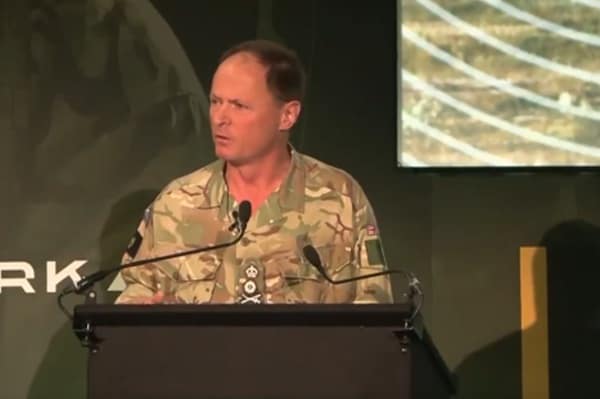
Russia’s ambitions extend far beyond Ukraine and are aimed at weakening the security architecture of Europe, the head of the British Army has warned, as Nato’s northern flank steps up co-operation in response to the threat from Moscow.
General Sir Roly Walker said the Kremlin wanted to drive a wedge between the US and its European allies, fracture the continent and establish a sphere of influence in which Russia could exert control over neighbouring countries.
“In short, the goal is to destabilise, divide and dominate,” he said during a visit to Finland, where he met senior commanders of the Finnish Defence Forces.
The warning underlines growing concern among European military leaders that Moscow’s confrontation with the west is not confined to the battlefield in Ukraine.
Read more related news:
‘Reservists first, then conscription’ as ex-army chief outlines potential UK draft for war
‘Millions could be called up’ for war as US army rehearses for mass casualties
Ex Army chief warns Burnham ‘the lack of strategic urgency is shocking’ as Putin says he’s ‘ready for war’
The challenge, Walker suggested, is to prepare for a prolonged contest in which industrial strength, economic resilience and the ability to sustain military production may prove as important as troop numbers.
“Deterrence is not just the number of soldiers on the frontline. It is about our ability to renew, produce and endure,” he said.
“Russia watches our factories as closely as it watches our ports. That is why industry and finance must become our fourth branch.”
Walker’s remarks came during discussions on strengthening military co-operation between Britain and Finland, which shares a long border with Russia and has become an important part of Nato’s northern defence posture.
The talks covered lessons from Ukraine and how they should shape readiness, operational planning and military capabilities along the alliance’s eastern flank. Both sides also discussed opportunities for joint development, procurement and training.
Walker used the visit to bid farewell to Lieutenant General Pasi Välimaki, who is leaving his post as commander of the Finnish Army, praising his leadership in Finland and Nato.
Välimaki said the British Army’s “20-40-40” vision was influencing how Finland approached the renewal of its own forces.
The strategy reflects a wider shift towards a military built around a combination of traditional equipment, autonomous systems and expendable technologies.
For European governments, the message is increasingly clear: military deterrence cannot be built solely through defence budgets or deployments. It also depends on whether industry can manufacture equipment at scale, supply chains can withstand disruption and economies can sustain a prolonged confrontation.
Walker’s warning places those questions at the centre of Europe’s response to Russia — and suggests that the contest over the continent’s security will be fought in factories and financial systems as well as on the front line.


Leave a Comment