
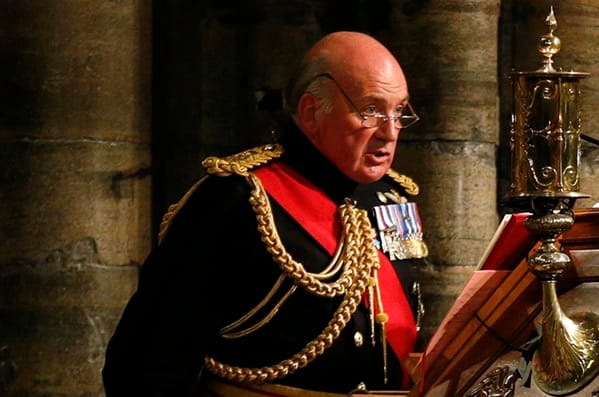
Retired army chief Lord Dannatt says reservists would be mobilised before ministers considered a wider draft, while defence experts warn Britain is ill-prepared to expand its forces if a major European conflict erupts.
Britain could turn first to army reservists, recalled former service personnel and younger adults if a major war forced the government to introduce conscription, according to military experts warning that the country must prepare now for the possibility of a prolonged conflict in Europe.
The prospect of a compulsory draft remains hypothetical, and the UK has announced no decision to introduce conscription. But growing concern over Russia’s military ambitions, uncertainty about the future of US support for NATO and pressure on European allies to strengthen their defences have intensified questions about how quickly Britain could expand its armed forces in a crisis.
Lord Dannatt, the former head of the British Army, has outlined the likely sequence of mobilisation if the government needed to generate additional military manpower, telling the Express that existing military personnel would be called upon before a broader civilian draft was considered.
Read more related news:
‘We’ll be under someone else’s rule’: Former officer delivers terrifying warning over the lack of UK’s defences
UK braces for war as ministers admit gaps in tracking 95,000 former troops
Brits told ‘our nation is going to need you’ as Britain prepares for war and the ‘unthinkable’
‘The first day of war’ Putin may well attack Britain’s cables before war begins
“I would expect to see the Army Reserve mobilised first, then Regular Reservists recalled to active service, and then His Majesty’s Government would need to consider conscription, starting with 18-24-year-olds,” he said.
The distinction is significant. Britain would not necessarily begin by compelling civilians with no military experience to join the armed forces. Reservists and former service personnel would provide an initial pool of people with military training, although recalling them at scale would present substantial logistical challenges.
Only if the government judged those measures insufficient would it need to consider a wider system of compulsory service, a decision that would carry major political, economic and social consequences.
Anthony Glees, emeritus professor at the University of Buckingham, has argued that Britain should begin planning for compulsory national service before a crisis makes such preparations unavoidable. He believes the experience of the second world war offers a possible precedent for how a national mobilisation programme could be organised.
“This would mean that all males from 18-41 would have to do military or national service,” he said, describing the approach adopted after Britain declared war on Germany in September 1939.
The historical comparison is not a blueprint for current policy. The age limits and obligations Glees describes relate to wartime legislation, and any modern conscription scheme would require decisions about eligibility, exemptions, training, roles and the length of service. There is currently no announced UK policy requiring young adults to undertake compulsory military service.
Glees nevertheless argues that preparation itself could serve as a deterrent, signalling to Moscow that Britain would be capable of sustaining a prolonged confrontation rather than relying solely on its existing professional forces.
“We need a nation that is fighting fit and ready to fight but that doesn’t necessarily mean ‘with guns and bombs and bullets’, it could mean using laptops and smartphones to push Russia back into its box,” he said, in comments reported by North Wales Live.
His argument reflects the increasingly blurred boundaries between military and civilian capabilities. Cybersecurity, communications, logistics, infrastructure protection and other technical functions could all contribute to national defence without requiring every person called up to serve in a frontline combat role.
Glees has pointed to Ukraine as an example of a country that has had to mobilise substantial manpower since Russia’s full-scale invasion in February 2022. He argues that Britain should learn from Kyiv’s efforts to sustain its defence against a larger adversary.
“We need to learn from that amazing country,” he said, advocating preparations that would enable Britain to expand its military contribution if a wider European conflict developed.
He also cited polling from Ipsos, which he said found that only 11 per cent of people aged 18 to 27 were prepared to fight for their country. Glees argued that this represented a potential pool of 154,000 young volunteers and proposed financial incentives to encourage participation, including help with university costs, student debt and housing.
The proposals would amount to a significant shift in the relationship between the state and young adults. Whether financial incentives could attract enough volunteers, or whether compulsory service would be politically acceptable, remains uncertain.
Glees has also criticised what he considers insufficient progress in expanding the armed forces. He contrasted the number of traffic enforcement officers with the number of soldiers, while acknowledging that the wider armed forces include personnel across the Royal Navy, Royal Air Force and other services.
But the more immediate challenge may lie not in deciding whom to call up, but in whether the state could identify, contact, equip and train enough people quickly enough.
Research by the Royal United Services Institute (RUSI) warns that Britain’s ability to mobilise at scale is constrained by a lack of preparedness. Reservists and former military personnel would be important to any expansion, but tracing former service members and establishing effective systems for recalling them would be difficult.
“With Russian military expansion and modernisation, and a growing rift between the US and European members of NATO, the risk of protracted conflict in Europe has grown,” a RUSI research paper said. “To deter such a conflict, or deal with the risk if deterrence fails, the UK’s armed forces must be ready to mobilise and expand.”
The warning comes as NATO members face growing pressure to take greater responsibility for Europe’s defence. A potential reduction in the level of American support would increase the burden on European allies, while any prolonged conflict would require not only trained personnel but also sufficient equipment, ammunition, transport and industrial capacity.
RUSI cautioned against assuming that Britain could manage a major conflict with a relatively small force or postpone detailed mobilisation planning until war began.
“The latest UK government’s Strategic Defence Review has already implied greater mobilisation through its framing of the Russian threat, its commitment to the British Army providing a Corps to NATO, and the need to make use of the Strategic Reserve,” the paper said.
It added that preparing for mobilisation would have implications well beyond the military, requiring industry to be ready to expand production and support the armed forces in a crisis.
That is the central difficulty facing any future draft: conscription can increase the number of people available, but it cannot instantly produce trained soldiers, functioning equipment or the infrastructure needed to sustain them.
For now, Britain remains without compulsory military service, and the scenarios described by Dannatt and Glees are proposals and assessments rather than an announcement of government policy. Yet the warnings expose a broader defence question confronting the UK and its European allies: whether their forces could expand rapidly enough if deterrence failed.
The first people called upon in such a crisis would likely be those with existing military experience, Dannatt argues. Any move towards compulsory service for younger adults would come later, requiring a major decision by ministers.
The challenge, experts warn, is ensuring that Britain does not wait until a conflict begins to discover how difficult mobilisation would be.


Leave a Comment