
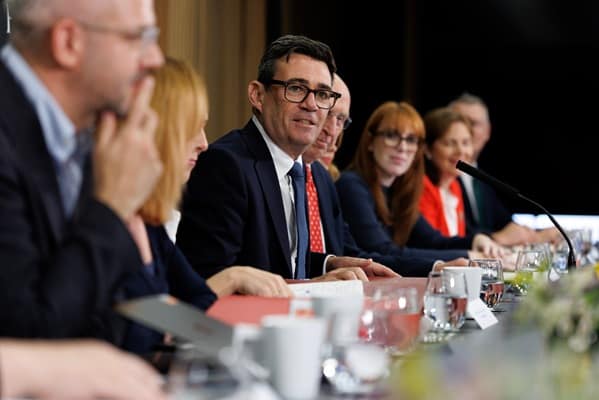
Andy Burnham is considering sweeping changes to Britain’s sprawling system of public bodies, including the possible abolition of the driving licence regulator, as the Government prepares a fresh assault on what it regards as wasteful and unaccountable bureaucracy.
The Prime Minister’s proposed 10-year plan for Britain is expected to place arm’s-length bodies under scrutiny, with government departments instructed to identify quangos whose responsibilities could be abolished, streamlined or transferred to regional mayors.
A so-called “rewiring the state commission” has been sent to departments, urging officials to examine whether the powers of public bodies could be absorbed into devolved regional structures.
Among the proposals reportedly being considered is a merger of the Driver and Vehicle Licensing Agency (DVLA), which issues driving licences, and the Driver and Vehicle Standards Agency (DVSA), which oversees driving tests and MOTs, according to The Telegraph.
The move would represent a significant intervention in the machinery of government, bringing two major transport agencies under a single structure. Both have faced criticism over their performance.
The DVSA has come under fire for persistent driving test delays, with average waiting times previously exceeding 19 weeks. Although waiting times fell in September, the agency has insisted it is making “real progress” in tackling the backlog.
The DVLA, meanwhile, has repeatedly missed its target of assessing whether motorists are medically fit to drive within 50 days, raising questions about its ability to deliver essential services promptly.
Burnham has pressed his devolution agenda in Downing Street, arguing for greater powers to be handed to regional mayors. The proposals form part of a wider effort to reshape Whitehall and reduce the number of responsibilities controlled centrally.
The initiative revives the Government’s earlier ambition to dismantle NHS England, described as the world’s largest arm’s-length body, which was announced by Wes Streeting last year as a way to “reduce complex bureaucracy”.
But that reform quickly encountered difficulties. An initial plan to transfer NHS England staff into the civil service unravelled because managers at the agency were paid more than their counterparts in the Department of Health and Social Care.
Instead, ministers established a new quango, allowing staff to retain their existing employment contracts — an outcome that raised questions about how much bureaucracy the restructuring would actually remove.
One source told The Telegraph that Sir Keir Starmer’s plans to transform Whitehall were “kind of being resurrected” by Burnham.
Starmer had previously condemned the proliferation of public agencies, arguing that governments had created them as a “knee-jerk response to difficult questions, to difficult lobbies”, rather than exercising “active government”.
Health Secretary Yvette Cooper has described the latest NHS structure as a “temporary arrangement that will support the transition to a more devolved model”.
Burnham’s 10-year plan speech, originally expected towards the end of this year, is now likely to be delayed until January. He told The Economist: “We may go into the new year – to be honest, there is that. December or January – I think we will need to leave that open.”
Starmer said in July that the plan would establish a route from “where we are now to where I believe we all want Britain to be”.
Whether the latest proposals deliver a leaner state or simply replace one layer of administration with another will be the test of the Government’s promised overhaul.


Leave a Comment