
More than 2,500 prisoners are due to be released onto the streets before Christmas under an accelerated early-release programme, according to a Whitehall timetable that highlights the continuing pressure on the UK’s prison system.
The Ministry of Justice plans to release 1,350 prisoners over two days in October, followed by a further 650 in November and 550 in December, as the government seeks to prevent prisons from running out of available capacity.
The releases will come as some prisoners become eligible for release after serving as little as one-third of their sentence, following changes to the rules governing fixed-term custodial sentences.
Under the current system, some prisoners can be released after serving 40 per cent of a fixed-term sentence, rather than the usual 50 per cent.
The Sentencing Act 2026, which became law earlier this year, allows that threshold to be reduced from 40 per cent to one-third.
The legislation also provides for prisoners serving standard determinate sentences of more than four years for certain violent and sexual offences to have their automatic release point reduced from two-thirds of their sentence to half.
At the end of August, Prime Minister Andy Burnham said prisoners convicted of offences including manslaughter, causing death by dangerous driving, and causing or allowing the death of a child would be excluded from the changes.
The accelerated timetable has nevertheless drawn criticism from the opposition over the pressure it could place on the probation service.
Nick Timothy, the shadow justice secretary, told the Telegraph: “The public will pay the price, before these changes, each tranche was set to be released a month apart.
“Now the first two will be released within two weeks of each other. Over 2,500 criminals will be back on the streets by Christmas. Labour’s shambolic early release scheme is to blame.”
The head of the Youth Justice Board, Phil Bowen, separately warned that the government’s decision to keep 18-year-olds in young offender institutions rather than moving them into adult prisons could increase risks within the youth custody system.
“There is a real risk that this decision could have unintended consequences for the safety and wellbeing of both children and staff,” he said.
The government says the prison measures are necessary to manage a severe capacity crisis, but the scale and pace of the planned releases have intensified concerns over whether the probation service and other parts of the criminal justice system can cope.
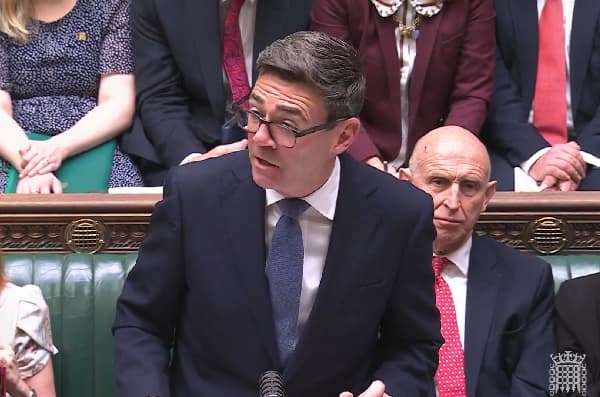
Speaking in the Commons on Wednesday, Burnham acknowledged the “anguish” experienced by bereaved families as a result of changes to the early-release programme, but stopped short of issuing an apology.
Plaid Cymru MP Ann Davies had called on the prime minister to apologise to victims and their families who feared offenders responsible for serious crimes could be released earlier.
Davies, MP for Caerfyrddin, cited the case of Aaron Jones, 38, who died in the village of Llanpumsaint in Carmarthenshire in December 2024.
Daniel Wyke, a driver from Carmarthen, admitted causing Jones’s death and was sentenced to four-and-a-half years in prison earlier this year.
Davies asked: “Will the Prime Minister now apologise to victims and their families put through significant distress throughout this process? Can he also assure them that, unlike the Labour precedent, there will be no Government U-turn on this?”
Burnham replied: “I do understand their anguish…I listened to what they were saying, I came in and asked for changes to the early release scheme, and we excluded rape, grooming and child sex offences.
“But hearing those voices, I wasn’t satisfied and I pushed the system to go further. And as a result of that, we are going further and excluding death by dangerous driving and other manslaughter offences.
“So, I hope now she can give that certainty to the family, give them also my best wishes. I believe we’re coming to the right position and I can assure her that the Justice Secretary (Alex Norris) will be on top of this situation, so that we ensure we are never in this position again.”
The debate illustrates the increasingly difficult balance facing the government as it attempts to reduce pressure on overcrowded prisons while maintaining confidence in the wider criminal justice system.
The accelerated release schedule also raises questions about the capacity of probation services to monitor thousands of additional offenders entering the community over a concentrated period.
For ministers, the immediate imperative is to create enough prison capacity to avoid the system reaching its operational limits. But the political costs could increase if the accelerated timetable is followed by failures in supervision or further serious offences involving released prisoners.
The government’s decision to exclude a wider range of offences from the scheme may ease some of those concerns, but it leaves unresolved the underlying capacity problem that has driven the early-release policy.


Leave a Comment