
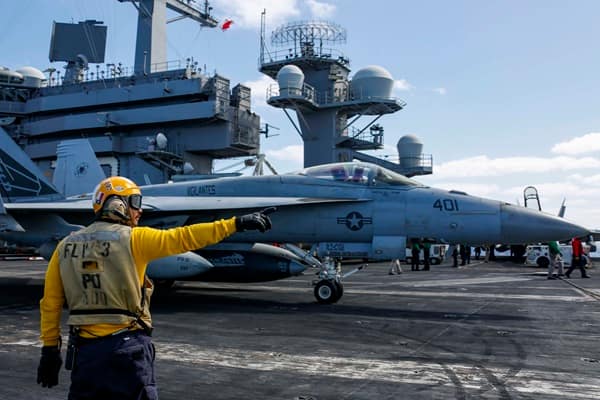
The USS Abraham Lincoln has become the focus of mounting scrutiny over the strain of prolonged wartime deployment after a sailor was recovered from the sea, amid reports from military families of multiple attempts by crew members to jump overboard.
The aircraft carrier, carrying more than 5,000 sailors and Marines, has spent more than 200 days deployed in the Middle East following the outbreak of war with Iran.
Its latest crisis emerged as Admiral Brad Cooper, the senior US commander overseeing Middle East operations, visited the carrier during a 10-day tour of the region.
Cooper described the current deployment as the “most operationally intense and consequential of the modern era”, before addressing the entire Lincoln crew and thanking them for their “dedication and courage”.
The Navy confirmed that at least one sailor had been recovered from the water after CNN reported the incident. The sailor was located by an air-search-and-rescue helicopter, treated aboard the carrier and subsequently transferred elsewhere for further care.
The USS Abraham Lincoln has been at sea for more than 250 days, pushing its crew to the limit. Sailors report exhaustion, deteriorating living conditions, shortages of basic supplies and serious food problems: small portions, poor-quality meals and periods of depleted stocks. The… https://t.co/iWYaeKchzU pic.twitter.com/C4cheR4N2M
— Tom Antonov (@Tom_Antonov) August 13, 2026
The incident has intensified concerns raised by relatives of personnel aboard the ship, who have told military publications that there had been multiple attempts to jump overboard, with some allegedly prevented by fellow sailors.
One military spouse told Stars and Stripes that her husband had sent her a message saying he hoped he would “not wake up tomorrow”.
Another, Annabelle Loma, appealed directly to Acting Navy Secretary Hung Cao after her husband reportedly feared receiving a dishonourable discharge because he was “burnt out”.
The White House has rejected suggestions that the deployment has become untenable.
Asked whether the carrier had been deployed for too long, Donald Trump replied: “No, not nearly long enough.”
Pete Hegseth, the defence secretary, said the situation had been “completely misrepresented” by the media, insisting that the military was providing crews with the support available to them.
Mr Cao said the Lincoln would soon return home after its sailors had “crushed their deployment”, while accusing the media of portraying service personnel as victims.
WATCH: A sailor's viral video shows filthy bathrooms on what's reported to be the USS Abraham Lincoln.
Stained showers, grimy floors, and clogged toilets.
"Join the Navy, though, right?" he says sarcastically.
pic.twitter.com/ItjvNpDX0o— Clash Report (@clashreport) August 16, 2026
He nevertheless acknowledged that a “small number” of mental-health cases had been treated, while meal plans had been changed and telephone calls home had been limited.
The disclosures have triggered demands for congressional scrutiny.
Senator Ruben Gallego, a former Iraq serviceman, called for an “oversight investigation into this horrible situation”. California Representative Mike Levin separately alleged deteriorating living conditions aboard the carrier, including mouldy showers, broken toilets, prolonged shortages of hot water and severely reduced meals.
The Navy disputed the broader characterisation, saying it had not observed an increase in suicidal thoughts or attempts aboard the ship.
But the USS Lincoln’s predicament illustrates the human cost of an unusually long and intense deployment. For sailors living for months aboard a floating city in a war zone, the question is no longer simply how long a carrier can remain operational.
It is how long its crew can be expected to endure it.


Leave a Comment