
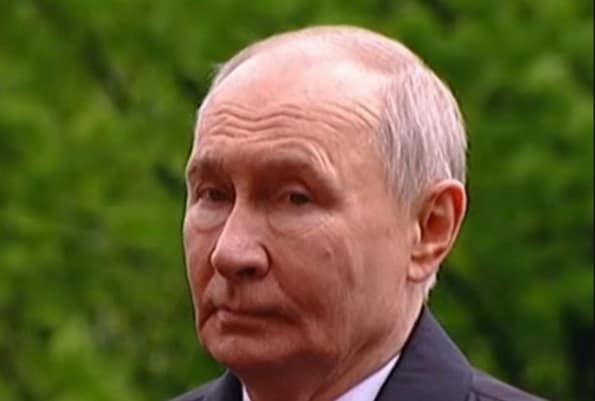
Vladimir Putin once promised Russians a swift victory. Now he is being forced to admit “problems” as Ukrainian strikes deep inside Russia expose the mounting cost of his war.
For years, the Kremlin projected an image of control. The battlefield was distant, Russia’s military was supposedly unstoppable, and ordinary citizens were shielded from the consequences.
But that illusion is beginning to fracture.
Ukraine’s long-range drone campaign has taken the fight deep into Russian territory, hitting refineries, fuel facilities and critical infrastructure. The war is no longer just on the front line — it is appearing at petrol stations, power networks and industrial centres.
In a rare admission, Putin conceded that Russia was facing challenges from attacks on infrastructure. “We see the problems, we are aware of them and are responding to them,” he told supporters.
Read more related news:
Macron warns Putin France is ready to fight ‘even at the cost of our blood’
Explosions rock Moscow as Ukraine strikes deep inside Russia
Ukraine launches deep strike blitz on Russian refineries, tankers and supply routes
Russia’s ‘mighty’ defences are a joke as Ukraine drones fly 1,500km and burn Putin’s fuel empire
The carefully worded statement revealed a growing pressure point for the Kremlin. Every refinery fire, fuel shortage and damaged facility undermines Putin’s image of an untouchable superpower.
Reports of petrol queues and fuel restrictions have raised concerns over the strain placed on Russia’s energy network. For many Russians, the war is no longer something seen only on state television — it is beginning to affect everyday life.
Kyiv’s strategy is not simply about destroying targets. It is about increasing the cost of the conflict. Every successful strike forces Moscow to make difficult choices: move more air defences away from the battlefield, spend billions protecting infrastructure, or accept that the war is creating problems at home.
Russia’s vast territory, once considered an advantage, has become a major challenge. The Kremlin now faces the impossible task of defending thousands of miles of economic and military assets.
Estonian Foreign Minister Margus Tsahkna claimed support for Putin’s war is weakening among parts of Russia’s elite.
Tsahkna said: “Even among the oligarchs, more and more are doubting Putin’s war.
“Many who spoke of victory a year ago no longer believe it.”
He added: “It’s just as possible that one day he’ll jump out of a window with his family. After all, things like that happen in Russia.”
Any serious challenge to Putin remains uncertain, with the Kremlin maintaining tight control over political opposition and public debate. But history shows that powerful regimes can appear stable until internal confidence begins to disappear.
The pressure is particularly visible in Crimea, which Russia illegally annexed in 2014.
Authorities have declared an emergency situation amid power cuts and fuel shortages, forcing residents to reduce energy use. For a region presented by Putin as a symbol of Russian strength, the disruption carries a powerful message. The war he launched to project power is increasingly bringing instability back to Russia itself.
The greatest threat to Putin may not be one individual attack or battlefield setback. It is the gradual erosion of confidence. Wars depend not only on weapons, but belief — among soldiers, elites and the public. Ukraine’s drone campaign is targeting that belief.
The Kremlin will continue to insist Russia remains strong.
But behind the speeches and propaganda lies an uncomfortable reality: The war Putin started to demonstrate Russia’s power is increasingly exposing its weaknesses.


Leave a Comment