
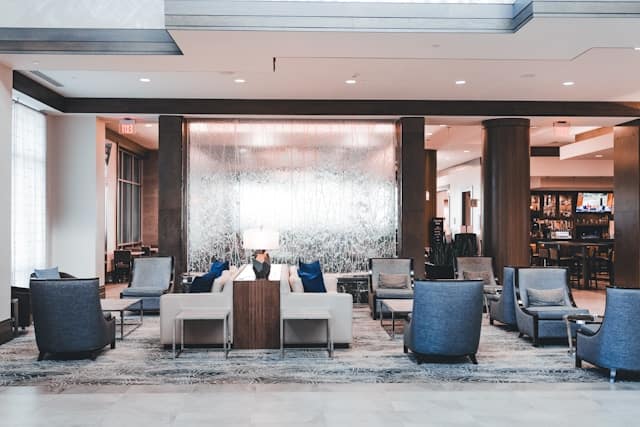
London’s hotel sector is in the middle of one of its most significant design resets in a generation. A wave of openings, refurbishments and brand repositionings is reshaping the look, feel and function of the capital’s hospitality estate ahead of 2027, and glass, long a quiet workhorse of hotel design, is increasingly at the centre of the commercial conversation. From acoustic-engineered partitions in heritage suites to structural feature walls in lobbies and rooftop bars, what is specified for hotels in 2027 will look nothing like 2017.
The numbers behind the shift
PwC’s UK Hotels Forecast 2025 to 2026 expects around 6,300 new rooms in London between 2026 and 2028, on top of roughly 3,000 launched in 2025; AM: PM tracked 60 projects scheduled to open in 2025 alone. Central London ADR continues to outperform pre-pandemic benchmarks, PwC forecasts RevPAR growth of 1.8 per cent into 2026 with occupancy above 81 per cent, and Knight Frank and Savills have separately reported London’s strongest year for hotel deal volumes since 2018, with UK hotel investment hitting roughly £5bn. Mandarin Oriental, Raffles, Peninsula, Ruby, citizenM, The Standard, Nobu and Soho House are all expanding their London footprints. Investors are increasingly treating design as a yield driver rather than a cost line: PwC has flagged a widening performance gap between repositioned assets and properties that fail to reinvest, with better-designed hotels delivering measurable RevPAR and occupancy uplift.
For specialist suppliers working with major UK hotel groups, the shift is highly visible. Abbey Glass, a UK glass manufacturer with 30+ years’ experience supplying hospitality projects for groups including Hilton, Marriott, Premier Inn and Curio Collection, has watched specification trends move sharply over three years, with design teams asking very different questions about glass than at the start of the decade.
A more demanding brief
The capital’s stock is unusually mixed: listed Georgian and Victorian buildings sit next to post-war stock and ground-up new-builds, each with different design and compliance challenges. Sound, fire, privacy and accessibility regulations have all tightened alongside rising guest expectations, while BREEAM, MEES and lender-led ESG criteria push harder on material specification at every layer. Heritage buildings face mounting pressure to modernise without compromising listed fabric integrity. Cost pressures mean groups need materials performing across acoustic, thermal and design criteria, not single-purpose specs, and Build-to-Rent and lifestyle hotels are blurring traditional categories, demanding interiors that flex across new use cases.
The seven shifts shaping 2027
What unites the changes is one commercial logic: each answers a guest expectation that didn’t exist a decade ago, and most are migrating from the luxury tier into mainstream specification. Acoustic glass is the clearest example. The J.D. Power 2025 North America Hotel Guest Satisfaction Index found that when guests experience a problem during a stay, including noise, satisfaction collapses by more than 200 points. Hotels are answering with acoustic-rated partitions, suite divisions and bathroom enclosures that let historic London properties deliver modern soundproofing without altering listed fabric. Structural glass follows the same logic into front-of-house architecture, with frameless walls, atria and feature stairs replacing partitioned spaces and turning lobbies into restaurant, bar and co-working zones. Curved and bespoke glass arrives as a status signal, used by lifestyle brands like citizenM, The Standard and Mama Shelter, competing on personality, not uniformity.
Bathrooms have become a brand differentiator in their own right: walk-in wetrooms, half-height shower screens and frameless enclosures form part of the photographable Instagram appeal of a stay, with shower glass co-developed alongside hotel branding rather than left to fit-out contractors. Mirror and decorative glass mark a clear pivot from minimalism to expression, with London restaurants like San Carlo Cicchetti, The Ivy Asia, Sexy Fish and Bocconcino leading and hotels following. Sustainability is no longer optional: recycled content, low-iron glass and locally manufactured stock are now standard in client briefs, sharpened by BREEAM and MEES requirements. Privacy and switchable glass have entered the mainstream, too, with on-demand opaque suite walls, switchable conference partitions for flexible event use, and premium suites adding switchable glass as a differentiator.
The London commercial picture
Geography matters. Mayfair, Knightsbridge and Belgravia are seeing heritage refurbishments where glass has to integrate with the listed fabric. Soho, Covent Garden and Shoreditch host lifestyle and boutique openings using glass as a brand-defining element. The City and Canary Wharf drive acoustic and structural demand from corporate and conference-led design, while King’s Cross and South Bank new-builds set the pace on full-height structural glass and biophilic design. Outer London and commuter-belt mid-market hotels are now adopting premium glass treatments at scale.
Inside the design briefs
According to Angela Worgan, Managing Director of Abbey Glass UK, the change is fundamental rather than cosmetic. “Hotel groups are asking very different questions now compared to even three years ago. Acoustic performance, sustainability and bespoke design lead the conversation, and cost has become an outcome rather than the starting point. Bespoke and structural glass is moving from the luxury tier into mainstream specification across mid-market openings, and London’s combination of heritage stock and high-end pipeline is creating one of the most demanding hospitality design landscapes in the world.”
What it means for owners and investors
Specification decisions made now will define guest experience and asset value through 2030. Single-criteria procurement, the cheapest panel meeting safety, is increasingly outdated; multi-performance briefs are the new standard, and design teams should be specifying glass at the schematic stage, not fit-out. Groups benefiting most are those treating glass as a strategic material alongside lighting, soft furnishing and joinery, not a commodity. Investors should be reading hotel design briefs alongside financial models, since material decisions are increasingly visible in operating performance, and as bespoke specification rises, in-house manufacturing capability is becoming a real differentiator among suppliers.
The 2027 picture
London’s 2027 hotel landscape will be defined by quieter, lighter, more flexible, more individual interiors. Glass, once a commodity material, has become one of the clearest expressions of how hospitality design is evolving, and getting the specification right is no longer a back-of-house procurement decision; it is a commercial one. The hotels that win London in 2027 won’t just be the ones with the best beds. They’ll be the ones with the smartest interiors.




Leave a Comment