
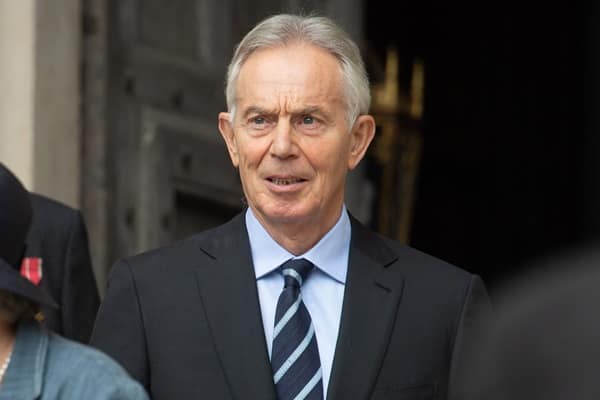
Britain should overhaul its energy strategy to prioritise cheaper electricity for households and businesses, Tony Blair’s think tank has urged, arguing that Labour’s drive towards net zero risks losing public support unless the transition delivers tangible savings for consumers.
In a report published ahead of the Budget, the Tony Blair Institute for Global Change called on Chancellor John Healey to use the fiscal statement to begin shifting policy away from an overriding focus on decarbonising the electricity grid towards what it described as a “cheaper power mission”.
The intervention adds pressure on a government already grappling with persistently high energy costs, growing concerns about industrial competitiveness and renewed volatility in international gas markets as conflicts involving Iran and Ukraine disrupt energy supplies.
British energy bills remain among the highest in Europe and the G7, partly because natural gas frequently sets the wholesale price of electricity even when cheaper renewable sources are generating power. The institute argues that Britain’s challenge is no longer simply to build clean energy capacity, but to ensure that the resulting electricity reaches consumers at a competitive price.
“Clean energy remains Britain’s future, but the test should be whether we can turn it into cheaper, reliable power that households and businesses can access,” said Tone Langengen, the institute’s director of climate and energy policy.
The report proposes replacing the government’s Clean Power 2030 strategy with a mission that places affordability, energy security and electrification at the centre of implementation, while retaining net zero as the long-term objective.
One immediate measure would reward businesses that shift electricity consumption to off-peak periods and locations where the grid has spare capacity. Such incentives could help absorb surplus renewable generation, reducing the need to pay wind farms to curtail output when the network cannot accommodate the electricity they produce.
“Britain is paying wind farms to reduce their output at the same time as businesses are struggling to get the electricity they need,” Langengen said. “That is a clear sign that our energy strategy needs to change.”
The institute also wants the government’s proposed 10-year plan to accelerate connections for energy projects offering the greatest economic value and address structural weaknesses in Britain’s electricity networks and markets.
A further recommendation is to reopen the debate over zonal electricity pricing, under which wholesale prices would vary according to location. Supporters argue that the model could lower costs in Scotland and other areas with abundant generation, although opponents warn it could increase prices in parts of south-east England. Former prime minister Sir Keir Starmer previously rejected the proposal amid concerns about its regional consequences.
The report echoes criticism previously levelled at the government by its founder, former prime minister Tony Blair. In a 5,600-word essay earlier this year, Blair urged ministers to “remove those parts of the net-zero agenda which prioritise clean energy over cheaper energy”.
Recent approval of drilling at the Jackdaw gas field in the North Sea suggests the government is already facing difficult choices over domestic supply and its transition away from fossil fuels.
The institute’s argument is that Britain need not abandon its climate ambitions to address the affordability crisis. But it must demonstrate that decarbonisation can strengthen the economy rather than impose a lasting competitive disadvantage.
For Labour, the political stakes are considerable. Net zero remains a central policy commitment, yet households and businesses confronting high bills may judge the energy transition less by emissions targets than by what they pay.
The coming Budget will offer an early test of whether the government is prepared to make cheaper power a defining objective of its energy policy.


Leave a Comment