
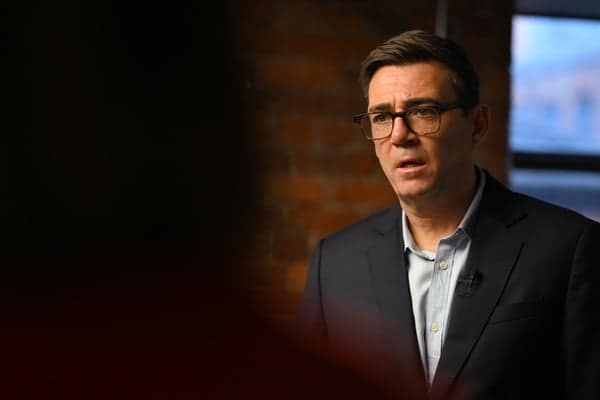
Council leaders warn villages could lose libraries, bus services and other essential amenities under Labour’s new funding formula, with rural authorities claiming the system fails to reflect the cost of serving scattered communities.
Andy Burnham has faced accusations of waging a “war on the countryside” after Labour unveiled a new local government funding formula that is set to divert billions of pounds towards urban authorities while leaving rural councils facing millions of pounds in cuts.
Under the changes, councils in Britain’s shires and vales are expected to lose £61mn over the next three years, while urban authorities stand to receive an additional £2.9bn. The government argues that funding should be directed towards communities with the greatest need, but rural leaders say the redistribution risks undermining essential services in areas already struggling with rising inflation and mounting social care costs.
The dispute has exposed a growing divide over how public money should be allocated between densely populated towns and cities and the villages and rural communities that often face higher costs in delivering services over greater distances.
One council leader warned that villages could “die” if libraries, bus services and other amenities disappear, leaving residents increasingly isolated and making rural communities less attractive places to live.
The row also comes amid wider tensions between Labour and rural Britain, following criticism of inheritance tax changes affecting farmers.
An analysis by The Telegraph, based on Office for National Statistics figures, found that rural councils would receive just 2p from the government for every £1 increase in their costs. Urban authorities, by contrast, would receive 42p for every £1 increase, according to the County Councils Network.
Rural leaders argue that the formula places insufficient weight on the challenges of serving sparsely populated areas, where residents may live considerable distances from schools, health services, libraries and public transport.
Steve Broadbent, Conservative leader of Buckinghamshire Council, which faces a £44.5mn funding cut over three years, warned that reductions in services could leave residents leading “much more isolated lives”.
Children growing up in rural communities were no less deserving of support than those in cities, he said, as councils faced mounting pressure to meet demand while balancing increasingly difficult budgets.
The warning comes as local authorities across the country grapple with the rising cost of social care and other statutory responsibilities. Rural councils say that spreading services across large geographical areas makes savings particularly difficult: fewer residents may use an individual facility, but the cost of maintaining access does not necessarily fall in proportion.
For Jeff Brooks, Liberal Democrat leader of West Berkshire Council, the funding changes feel like a “cash grab”.
“It feels like the Government is waging war on the countryside,” he said.
West Berkshire faces a £22mn shortfall. Its government grants have fallen by £4.5mn, while the proportion of business rates it can retain is set to decline from 30 per cent to 17 per cent.
Mr Brooks warned that libraries could face cuts, while repairs to leisure centres and potholes might be postponed.
“We have lots of villages and they could die because of the lack of services available to them and because people don’t want to move there,” he said.
“If a village that lost its post office years ago suddenly loses its council public library … the village shrinks to nothing.”
The prospect of losing a library or a bus route illustrates the stakes for communities where public amenities can serve as more than simply local services. They can provide access to information, transport and social contact, particularly for people without cars and those living far from larger population centres.
Jonathan Brooks, Liberal Democrat leader of Westmorland and Furness Council, said a £32mn reduction in government funding over three years also felt like “an attack on rural Britain”.
He warned that services supporting communities in the Lake District and Yorkshire Dales were at risk.
Steve Flitter, leader of Derbyshire Dales Council, urged Mr Burnham to “consult rural communities before making any rash decisions”.
Dan Thomas, leader of South Hams Council, described the changes as a “postcode tax”, arguing that the redistribution risked making countryside living increasingly difficult.
“No one disputes that some urban cities were left behind, but it’s gone too much the other way so now all the support has been taken away from rural communities,” he said.
The government’s approach reflects a different calculation: that local authority funding should be weighted towards areas with greater deprivation, cheaper property values and higher demand for social services. Under that rationale, directing more money towards poorer urban communities is intended to address disparities in local resources and need.
But rural councils contend that deprivation and service costs cannot be assessed through population and property values alone. Long travel distances, limited public transport and dispersed settlements can make the provision of basic services expensive, even where headline measures suggest that an area is relatively affluent.
The challenge for ministers is to reconcile those competing demands without leaving some communities facing a narrowing range of public services.
Mr Burnham has promised to deliver “good growth in every postcode”. Rural council leaders say the funding changes risk undermining that ambition if villages lose the facilities and connections that allow residents to remain in their communities.
The immediate dispute is over the distribution of public money. The longer-term question is whether the new formula can meet the needs of urban areas without weakening the services that sustain rural Britain.


Leave a Comment