
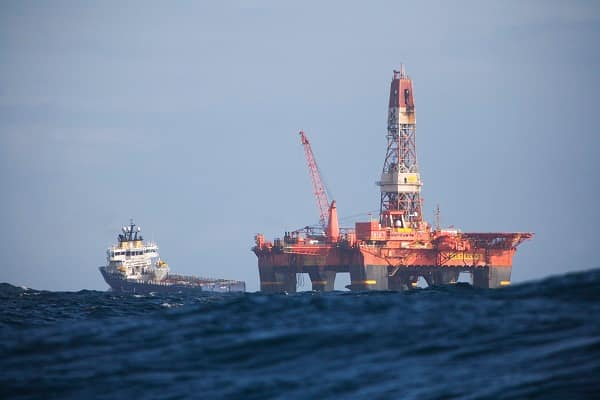
Labour is likely to reject development of the giant Rosebank oilfield despite giving the green light to the smaller Jackdaw gasfield, exposing fresh tensions over the government’s approach to energy security, economic growth and its climate commitments.
Energy Secretary Miatta Fahnbulleh is not expected to approve Rosebank, according to sources cited by The Guardian, which first reported the likely decision.
The move would draw a distinction between new domestic gas production and an oilfield whose output is expected to be largely exported.
Fahnbulleh said the rationale for approving Jackdaw did not apply to Rosebank, which her political mentor Ed Miliband once described as “climate vandalism”.
“One is a gasfield that caters for the domestic market, while the other is an oilfield that is mainly for export,” she told the newspaper.
“It is right that we judge each application in its own right, and it is absolutely critical that the decision is consistent with our climate obligations, our carbon budgets and the end destination we need to get to with the energy transition.”
The distinction is likely to intensify the political argument over whether Britain should extract more of its own fossil fuels as ministers attempt to balance energy security with the transition to cleaner sources of power.
Rosebank would generate around seven times the carbon emissions of Jackdaw, according to the figures cited in the reporting. Fahnbulleh is also understood to believe the oilfield would do little to strengthen Britain’s energy security because most of its output would be exported.
One Labour source described the approach as pragmatic, saying the Energy Secretary was “putting up a fight” by approving Jackdaw while resisting Rosebank.
But the decision could create difficulties within Labour. Chancellor John Healey told ITV he expected revenues from both “oil and gas” to contribute to a new energy health fund, raising questions over how the government would reconcile its ambitions for the fund with a potential refusal to approve one of the North Sea’s largest undeveloped oilfields.
Andy Burnham would be expected to make the final decision if ministers were unable to resolve the disagreement.
The prospect of Rosebank being rejected has also drawn criticism from Conservatives, who argue that refusing new oil production could weaken Britain’s energy position and leave European countries more dependent on imports from Russia.
Donald Trump, the US president, welcomed the approval of Jackdaw, describing it as “great news for the wealth and prosperity of the United Kingdom, and the wonderful region of Aberdeen”.
Lord David Frost, the former Brexit minister, has nevertheless accused Labour of failing to confront the scale of Britain’s energy challenge.
Writing in The Telegraph, Frost said it was “suspicious” that ministers had approved Jackdaw without also giving the go-ahead to Rosebank.
“They could have approved Rosebank too. They didn’t,” he wrote. “If it’s approved in future, they will get another day of criticism from the cranky green Left that they could have avoided.”
He added: “The real charge against ministers is not that they have abandoned their net zero policy. It is that they have not.”
Andrew Bowie, the Conservative shadow energy secretary, has also urged Fahnbulleh to approve the oilfield immediately.
“Every barrel of oil the UK exports to Europe is one less barrel they would buy from Russia,” he wrote on social media. “Revenue. Security. Common sense. Approve Rosebank now.”
The dispute highlights a difficult calculation facing the government. Ministers can argue that gas destined for the domestic market offers a more direct contribution to energy security than oil largely intended for export. Opponents counter that refusing Rosebank risks sacrificing potential revenues and domestic production while Europe continues to consume oil.
For Labour, the political stakes extend beyond a single licensing decision. Approving Jackdaw while rejecting Rosebank would signal that new fossil-fuel projects will be judged individually against their contribution to energy security and their environmental consequences, rather than treated as an all-or-nothing question.
Whether that distinction satisfies either the oil and gas industry or climate campaigners remains uncertain. What is clear is that the North Sea is becoming a test of the government’s ability to reconcile competing promises on growth, energy security and decarbonisation.


Leave a Comment