
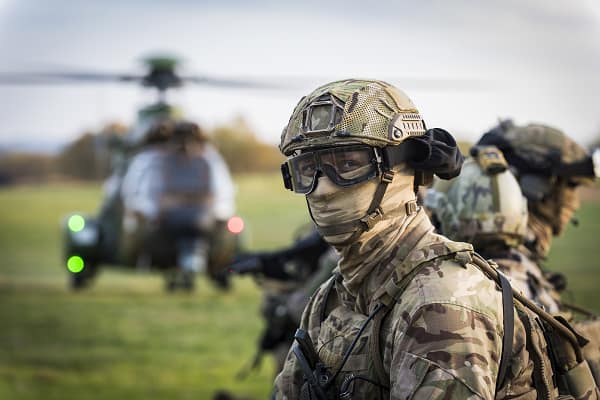
Thousands of British, French, German and Polish personnel will rehearse deploying to Ukraine after a ceasefire, as Wes Streeting seeks to bolster Kyiv’s future security while Donald Trump refuses to blame Vladimir Putin for starting the war.
Britain is preparing to rehearse the deployment of troops and vital supplies into Ukraine after a potential ceasefire, as European allies step up plans to guarantee Kyiv’s security amid growing friction with Donald Trump.
Defence Secretary Wes Streeting announced that thousands of personnel would take part in a major NATO exercise in Poland next month, involving British, French, German and Polish forces. The drill will test the practical challenges of supporting Ukraine once the fighting ends, including the movement of troops, food and fuel into the country.
The exercise, first agreed at a Coalition of the Willing summit in July, forms a central part of Britain’s efforts to lead European planning for Ukraine’s postwar security.
Read more related news:
Streeting warns Britain faces unprecedented risk of war with Russia
Ellwood warns UK cannot rely on Trump and sees a pre-war world taking shape
NATO chief warns Russia we are ‘ready to fight tonight’ as ex-general raises conscription alarm
Speaking during his first visit to Washington in the role, Streeting framed the preparations as a commitment to defend the principles at stake in Russia’s invasion.
“Ukraine is the front line for freedom everywhere, and it’s absolutely vital that they prevail against Putin’s aggression,” he said.
“We’re planning for the peace and freedom we want to see through our leadership of the coalition of the willing.”
He added: “Next month thousands of personnel will take part in a major exercise in Poland to ensure we are ready to support the military training and post-war rebuilding that Ukraine will need.”
The planning highlights the scale of the logistical challenge facing any multinational force tasked with supporting Ukraine after a ceasefire. Moving personnel and essential supplies across borders, coordinating military training and sustaining a long-term presence would require close co-operation among European governments.
But the exercise is unfolding against a worsening political divide across the Atlantic, with Trump increasingly at odds with European leaders over how to end the war — and whom to hold responsible for its outbreak.
The US president declined to acknowledge directly that Vladimir Putin initiated the conflict by ordering Russia’s full-scale invasion in February 2022.
“I know the details, OK, and at some point I’ll release the details,” Trump said as he left the White House for a campaign rally in Georgia. “But I don’t care anything except for one. I want that war ended.”
The remarks contrasted with the position consistently held by Britain and most NATO allies, which have blamed the Kremlin for launching the invasion.
Trump also renewed his criticism of Ukrainian President Volodymyr Zelensky, describing him as “not a big fan” and claiming he was “more difficult to deal with than Putin”. He has previously called for new Ukrainian leadership and suggested the Russian president was more willing to negotiate a settlement.
The rhetoric has heightened concerns in European capitals that Washington’s pursuit of a rapid agreement could place greater pressure on Kyiv than on Moscow, potentially leaving Ukraine vulnerable after a ceasefire.
Zelensky, attending a Brussels summit on Friday, has faced a series of disputes with the US administration. During a visit to London earlier in the week, he accused Trump of betraying Ukraine by restricting access to American-made Starlink satellite terminals, which are critical to Ukrainian military communications. Trump rejected the allegation, saying: “We didn’t do that. We didn’t slow it down at all.”
Energy policy has added another fault line. As fuel prices rise ahead of crucial US elections next month, Trump has increasingly blamed Ukrainian attacks on Russian oil infrastructure for the pressure on energy markets. Yet disruption to Middle Eastern oil flows through the Strait of Hormuz following the US-Israeli war against Iran has also contributed to volatility.
Trump’s agreement to purchase Russian diesel has drawn further criticism, with opponents warning that buying Russian energy could provide Moscow with revenue while its war against Ukraine continues.
For Britain and its European partners, the planned exercise offers a way to turn political pledges into practical preparations. A ceasefire alone would not settle questions over Ukraine’s long-term defence, the presence of foreign forces or the resources needed to rebuild its military capacity.
The challenge will be ensuring that any security arrangement is credible enough to deter renewed Russian aggression — while maintaining unity among allies whose visions for ending the war are increasingly divergent.
As European troops prepare to rehearse a possible deployment, the political question remains unresolved: whether Washington will support the security guarantees Kyiv’s allies are planning, or whether the widening transatlantic rift will complicate efforts to secure a lasting peace.


Leave a Comment