
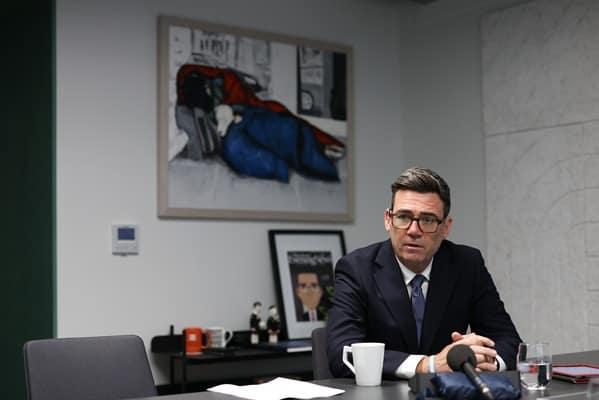
Andy Burnham’s call for Britain to consider a closer long-term relationship with the European Union has exposed divisions within Labour, after the Scottish party leader warned that full UK membership was unlikely to be a realistic prospect for a generation.
Burnham used his first Labour conference speech as prime minister to argue that Brexit had failed to deliver the greater control promised by its supporters and said he would set out options for Britain’s future relationship with Europe around the next EU-UK summit.
But Michael Marra, Scottish Labour leader, struck a more cautious tone, arguing that political instability across Europe meant the EU was unlikely to be receptive to a British application for membership on terms the UK might consider acceptable.
Asked about the prospect of Britain rejoining the bloc, Marra said there was not a “realistic prospect” of doing so under current conditions.
Speaking during Labour conference in Liverpool, he pointed to political changes in major European economies, including Germany and France, alongside wider economic and geopolitical pressures.
The EU, he argued, was not currently in a position to consider Britain’s return “on any terms we might think is reasonable”.
Marra nevertheless said he would support efforts to rebuild Britain’s relationship with the bloc if circumstances changed.
“What we do need is a closer relationship because we know the economic cost that’s resulted from Brexit,” he said. “I want to see us doing that on a case-by-case basis.”
He suggested that full membership could remain politically unrealistic for “a generation or more”, reflecting the scale of change that would be required both in Britain and within the EU.
Burnham has stopped short of explicitly committing his government to seeking EU membership. Instead, he has said he wants to examine the range of options available to Britain and seek a broader political consensus over the country’s long-term relationship with its European neighbours.
“I will take the opportunity around the summit to lay out to you, to lay out to the country, what I believe the different options are for Britain’s long term relationship with our European partners,” Burnham said.
“There are different options and I will see if we can find consensus around one, which will give us clarity about our position and the future of the continent that we live in.”
The debate marks a significant change in tone from the immediate post-Brexit period, when successive Conservative governments focused on maintaining Britain’s separation from EU institutions while negotiating new trading arrangements.
Burnham has argued that Brexit did not ultimately give Britain the control its supporters had promised, but instead contributed to a loss of control over immigration and created economic costs.
His comments have also reopened a politically sensitive question inside Labour. Some senior figures have advocated closer integration with Europe, while others have warned against reopening the divisions associated with the 2016 referendum.
The London mayor, Sadiq Khan, has called for Britain to rejoin the EU customs union and urged Labour to commit to eventual EU membership if it wins the next election. Ken Skates, the new Welsh Labour leader, has also backed closer European integration.
Jonathan Reynolds, the business secretary, has cautioned against such a move, warning that Britain risks returning to the political “paralysis” associated with the Brexit debate.
For Burnham, the immediate challenge is therefore less about announcing a return to the EU than defining what a post-Brexit relationship should look like.
The forthcoming summit is likely to provide an early test of whether Labour can build consensus around a closer relationship with Europe without reopening the political divisions that accompanied Britain’s departure.


Leave a Comment