
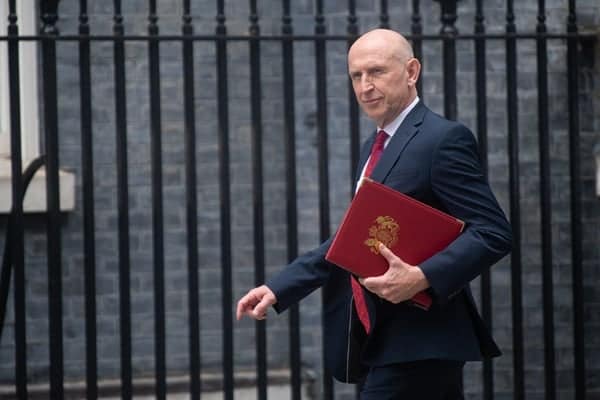
Households holding property, investments and substantial pension savings are facing renewed uncertainty ahead of Chancellor John Healey’s first Budget, with parliamentary voting records suggesting the government could look towards wealth and assets for additional revenue.
An analysis by pension provider PensionBee of the voting histories of five ministers expected to shape the October 28 fiscal statement found the strongest alignment around measures targeting capital, property and wealth.
The group includes Prime Minister Andy Burnham, Chancellor Healey, Chief Secretary to the Treasury Emma Reynolds, Work and Pensions Secretary Pat McFadden and Pensions Minister Torsten Bell.
Labour’s manifesto commitment not to raise the headline rates of income tax, VAT or employee National Insurance leaves ministers with fewer conventional options if the Treasury needs to increase receipts. Wealth, property and capital taxes therefore remain among the areas most closely associated with the ministers’ previous parliamentary positions.
Burnham has repeatedly opposed welfare reductions while supporting higher taxation of high earners and capital gains. Healey has backed proposals including a mansion tax and increases in capital gains tax, while opposing VAT rises.
Reynolds has also consistently supported increases in capital gains tax and stamp duty, according to PensionBee’s analysis.
The voting record of McFadden, who oversees the welfare budget, points in a different direction on spending, with a long-standing tendency to oppose reductions in benefits. That could make changes to eligibility, administration or the structure of welfare spending more politically difficult.
Bell’s parliamentary record is particularly relevant to pension savers. He has supported increases in capital gains tax and stamp duty and defended the £2,000 salary-sacrifice pension cap introduced in the 2025 Budget when the House of Lords sought to increase the threshold.
Taken together, the voting histories provide clues about the ministers’ previous positions but offer no guarantee of the measures that will appear in October.
Becky O’Connor, head of pensions at PensionBee, warned against treating historic votes as a blueprint for government policy. Backbenchers can vote according to principle without bearing the same political costs associated with implementing a tax measure in government.
The uncertainty is particularly acute for pension savers, who could be affected indirectly by changes aimed at wealthier households.
O’Connor said attempts to redistribute wealth through taxation could have unintended consequences, potentially affecting people who have accumulated assets through years of saving without belonging to the very wealthiest group.
The warning reflects a broader dilemma for the Treasury. Raising additional revenue from assets may appear politically distinct from increasing taxes on earnings or consumption, but the economic incidence can be considerably more complicated.
For households, the message from PensionBee is to resist making major financial decisions based on speculation.
The Office for Budget Responsibility’s fiscal forecasts, published alongside the Budget, will determine the room available for tax and spending decisions.
Until then, the precise scale and direction of any measures remain unknown.
For savers and property owners, the October 28 statement will therefore matter less for what ministers have previously voted for than for the decisions they ultimately choose to put into law.


Leave a Comment