
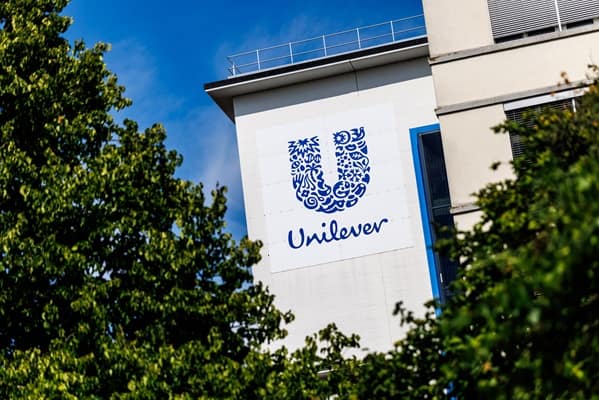
The economic fallout from the Iran war is reaching deeper into household budgets, with Unilever raising prices on everyday consumer goods as the cost of making and selling its products climbs.
The consumer goods giant, whose brands include Dove soap and Lynx deodorant, said pricing had “stepped up” in the third quarter as soaring commodity costs put pressure on its business. Home and personal care products were particularly affected, underscoring how geopolitical turmoil can filter through supply chains and ultimately land on supermarket shelves.
Unilever reported underlying sales growth of 5.2 per cent in the three months to September 30, with higher prices contributing 2.3 percentage points. The figures reveal a company balancing two competing pressures: protecting margins against rising costs while persuading consumers to keep buying its products at increasingly expensive prices.
The move follows a similar announcement from Reckitt Benckiser, the household goods group behind brands including Dettol and Finish, which said on Tuesday that prices across Europe had risen by 4 per cent in the third quarter as inflationary pressures intensified amid the Middle East conflict.
Together, the announcements point to a renewed challenge for consumer goods companies: the ability to pass on higher costs without undermining demand.
For households already confronting elevated living costs, further price increases risk adding to the pressure on essential spending. For manufacturers, absorbing the increases instead could squeeze profitability.
Unilever, however, signalled that its performance was not being driven by pricing alone. The group raised its outlook for volume growth, saying it now expected sales volumes to increase by “at least” 3 per cent across 2026, compared with previous guidance of around 3 per cent.
It also upgraded its forecast for underlying sales growth in the second half of the year to about 5 per cent, from a previous range of 4 to 5 per cent.
Chief executive Fernando Fernandez said the company had delivered “another quarter of competitive growth”, supported by continued strength in volumes and higher prices to offset rising commodity costs.
The updated forecasts offer some reassurance that Unilever is managing to maintain demand despite a more difficult cost environment. But the balance between price and volume will remain critical: sustained increases can support revenue in the short term, yet risk testing consumers’ willingness to pay if inflation persists.
The wider economic consequences will depend on how long the conflict continues, how far it drives up input costs and whether manufacturers can continue passing those increases on without weakening sales.
For now, Unilever is signalling that it intends to protect its business against the pressure rather than allow rising costs to erode its performance.
Alongside the pricing moves, the group is pressing ahead with a major restructuring of its portfolio, as it prepares to separate its food business through a joint venture with US rival McCormick.
The £33.8bn deal, announced in March, is set to bring together brands including Unilever’s Marmite with McCormick’s French’s mustard, creating a sizeable food business outside Unilever’s core consumer goods operations.
The company said the transaction remained on track for a “timely closing”, expected by the middle of 2027.
Separation and integration work was progressing through dedicated project teams involving more than 200 employees across 20 cross-functional teams, Unilever said. Regulatory filings had been submitted on schedule, with the group reporting progress across the jurisdictions involved.
The deal marks a significant step in Unilever’s efforts to reshape its business while managing immediate pressures on costs, pricing and consumer demand.
The challenge is that the two agendas are unfolding against the same uncertain backdrop. As the company prepares to redraw its corporate boundaries, it must also navigate a conflict-driven inflation shock that threatens to make everyday essentials more expensive.
Unilever’s latest results suggest it has so far been able to combine price increases with continued volume growth. Whether that balance can hold will depend increasingly on the trajectory of commodity costs — and on how much more consumers are prepared to pay.


Leave a Comment