
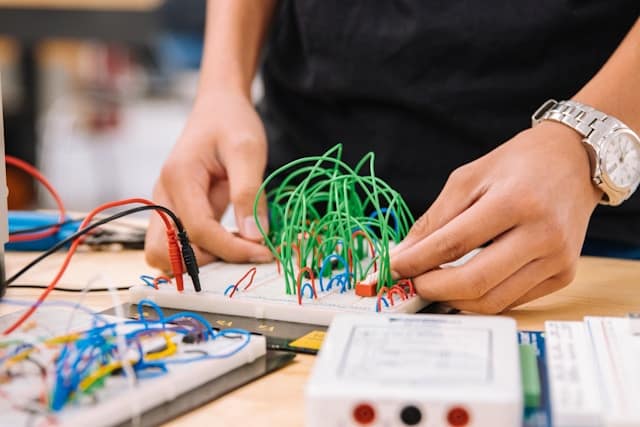
Classrooms across the country are shifting toward hands-on learning models. Teachers are stepping away from traditional lectures to give students direct experience with complex concepts.
New tools and methods are transforming how young minds approach science and math. These developments help students think critically and build practical skills for future careers.
Open-source science frameworks
Traditional science instruction often relied on rigid textbooks and repetitive memorization. Modern schools are moving toward open-access materials that let teachers adapt lessons for their specific student groups. This shift lowers costs for districts while keeping study materials current.
Teachers across the country are seeking ways to bring real inquiry into science instruction. Adopting the OpenSciEd Curriculum gives schools a structured approach to hands-on learning without high costs. Students work together to figure out phenomena instead of memorizing facts. This setup creates an active environment where every student participates.
Shared resources allow educators to collaborate across district lines. Teachers can trade feedback, tweak unit designs, and refine lab exercises quickly. This joint effort—built on teacher input—keeps classroom activities aligned with current scientific practice.
Integrated project-based learning
Combining science, math, and engineering into single projects helps students see how concepts connect. Rather than studying subjects in isolated blocks, learners solve multifaceted challenges. Working on complete projects mirrors how technical professionals operate daily.
A recent state education update showed that 8th-grade students using structured open science interventions showed clear growth in science achievement and proficiency compared to traditional instruction. These gains were measured on statewide assessments, proving the value of interactive learning models. Active investigation yields better comprehension than passive listening.
Group projects encourage open discussion and critical thinking. Teams assign roles, test different ideas, and rework designs when initial attempts fail. Learning to handle unexpected setbacks builds resilience alongside technical understanding.
Generative AI and interactive simulations
Interactive digital software lets students run virtual experiments that might be impossible in a basic school lab. Advanced software models simulate physical and chemical reactions, planetary orbits, and biological systems.
Teachers rely on digital tools to support daily lesson plans:
- Digital simulations demonstrate complex scientific concepts in real time.
- Adaptive software adjusts problem difficulty based on individual student progress.
- Virtual lab software allows safe testing of chemical reactions.
Instant feedback helps students correct mistakes before bad habits take root. Automated programs offer immediate hints when a student struggles with a calculation. This immediate assistance frees up time for teachers to assist students needing extra guidance.
Experiential extracurricular enrichment
Learning extends far beyond the final school bell. After-school clubs, robotics teams, and math competitions give students space to explore technical interests without classroom pressure. These programs attract learners who might feel disconnected during standard periods.
Extracurricular activities offer room for creative trial and error. Students build working prototypes, program basic software, and test designs against peer teams. Winning or losing a competition matters less than the problem-solving journey required to build a functioning project.
Community mentors step in to guide these teams. Engineers, programmers, and local technicians share real-world experience directly with students. Hearing from working professionals helps young people imagine their own future in technical fields.
Industry-aligned space and aviation programs
Aerospace topics captivate young learners and serve as an ideal entry point for technical subjects. Schools are introducing lessons built around flight mechanics, space exploration, and satellite engineering. Bringing real space science into classrooms raises student interest levels.
Industry-aligned initiatives connect classroom theory to actual space missions. Students examine real flight data, study propulsion mechanics, and analyze environmental samples from field tests. Connecting schoolwork to space exploration turns abstract formulas into exciting discoveries.
Teachers receive specialized training to lead these flight and space units. Hands-on workshops equip educators with aerospace knowledge and interactive lab supplies. Well-prepared teachers bring high energy and accurate context to every lesson.
Problem-solving across curriculums
Modern classrooms stress logical thinking over simple rote memory. Instructors design assignments that force students to evaluate evidence, spot errors, and explain their reasoning. This focus turns passive listeners into active thinkers.
Cross-disciplinary assignments connect reading and writing directly to technical fields. Students write detailed lab reports, present project findings, and defend technical decisions before their peers. Clear communication is just as crucial as numerical accuracy in technical fields.
Tackling open-ended problems teaches students that most questions have multiple solutions. Teams evaluate competing ideas based on efficiency, cost, and safety. This practice prepares young minds to tackle unpredictable problems in any career path.
Targeted career pathways and workforce initiatives
Schools are partnering with regional employers to build direct pathways from high school into technical careers. Internship programs, workplace shadowing, and specialized certifications give students a head start on professional development.
Federal employment reports project that employment in the technical workforce will grow by 6% from 2024 to 2034, with science and engineering jobs expanding by 9%. Highlighting these trends helps students select courses aligned with expanding job sectors. Early career awareness connects daily classwork with long-term financial stability.
Vocational tracks now run parallel to traditional college preparation plans. Students earn industry credentials alongside their high school diplomas, opening immediate employment options after graduation. Having multiple paths helps every student find a fitting career route.

Image by Sunrise from Pixabay
Classroom teaching methods are adapting to meet modern demands. Hands-on tools, open curriculums, and real-world connections give students the skills needed for future success.
By focusing on practical problem-solving and technical experience, schools are preparing young people for an evolving workforce. These innovations make technical learning more practical and accessible for every student.


Leave a Comment