
Russia’s foreign intelligence service has claimed, without evidence, that Britain is covertly directing Ukrainian drone strikes on occupied Crimea as part of a 19th-century “revenge” narrative — an assertion Western officials dismiss as propaganda aimed at reframing battlefield losses.
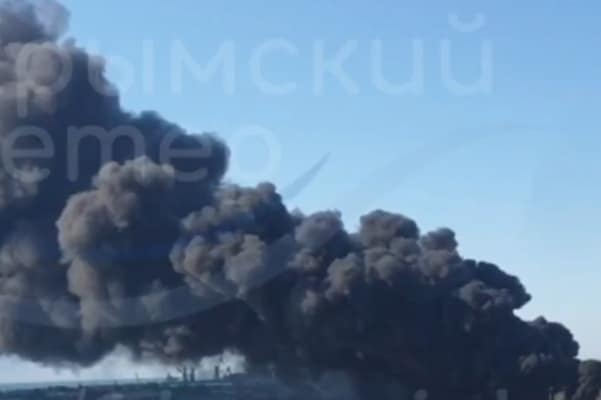
The allegation, made by the SVR — the successor to the KGB — centres on a Ukrainian strike on the Sevastopol Defence Museum, which Moscow says was orchestrated by British “puppet masters” using Ukrainian systems as cover.
The claims come amid an escalating Ukrainian campaign of long-range attacks on Russian-held territory in Crimea, which has increasingly disrupted military infrastructure, logistics routes and energy supply lines across the peninsula, the Express reported.
The SVR alleged that British advisers had “uploaded mission data” to Ukrainian weapons systems and suggested the strike was symbolically motivated by Britain’s historical defeat in the Crimean War of 1853–56, including the Charge of the Light Brigade.
Western officials and intelligence analysts reject the claims, describing them as part of a broader Russian information strategy that seeks to externalise military setbacks and attribute Ukrainian capabilities to Western control.
A Western source familiar with intelligence assessments said the narrative reflected “an increasingly detached propaganda line”, noting that Russia has repeatedly framed the UK as the principal driver of Western military support for Kyiv.
The SVR is headed by veteran Russian security official Sergey Naryshkin, a close ally of President Vladimir Putin and frequent proponent of conspiracy-driven messaging about the war.
Analysts say the shift towards historically themed accusations reflects Moscow’s growing reliance on symbolic narratives as Ukrainian strikes place sustained pressure on occupied Crimea, including repeated attacks on military infrastructure and energy facilities.
Ukraine has stepped up its long-range strike capability over the past year, targeting depots, air defences and logistical hubs across Russian-controlled territory in Crimea and southern Ukraine. The campaign is intended to stretch Russian defensive capacity and disrupt supply chains supporting frontline operations.
The resulting strain has contributed to intermittent blackouts and transport disruption across the peninsula, underscoring the vulnerability of infrastructure that Russia has sought to integrate into its wider war economy since its 2014 annexation of Crimea.
Moscow has increasingly responded to such strikes through information operations, attributing Ukrainian actions to direct Western control rather than domestic Ukrainian planning and execution. Western governments reject that framing, maintaining that Ukraine operates independently in selecting targets, even as it receives extensive military assistance.
The latest SVR statement also referenced the Crimean War as a supposed historical grievance motivating UK policy, a claim Western officials describe as unfounded and indicative of Moscow’s tendency to draw on imperial-era symbolism to interpret contemporary conflict dynamics.
Despite the rhetoric, the operational reality in Crimea has shifted in recent months, with Ukrainian forces demonstrating an expanding ability to strike deeper into Russian-held territory and impose recurring disruption on fixed infrastructure.
For Moscow, the challenge is increasingly twofold: sustaining defensive coverage across a widening rear area while managing domestic narratives that seek to explain repeated security breaches in politically palatable terms.
As the war enters a more attritional phase, Crimea has re-emerged as both a strategic and psychological focal point — and a reminder that control over territory is now being contested as much through infrastructure pressure and information warfare as through conventional front lines.


Leave a Comment