
Russia is embedding military training into the lives of children in occupied Crimea, teaching school pupils to operate drones, handle firearms and prepare for combat, as the death of an 18-year-old Russian soldier fuels questions over the Kremlin’s willingness to send barely adult recruits to the front.
The developments expose two sides of Moscow’s increasingly militarised society: the cultivation of a generation raised to regard military service as normal, and the human cost of a war that continues to claim young lives.
According to Ukraine’s Main Intelligence Directorate, about 50 schoolchildren aged between seven and 18 in Sevastopol advanced to the regional stage of the “First Movers” competition and a so-called drone racing federation in late October 2026.
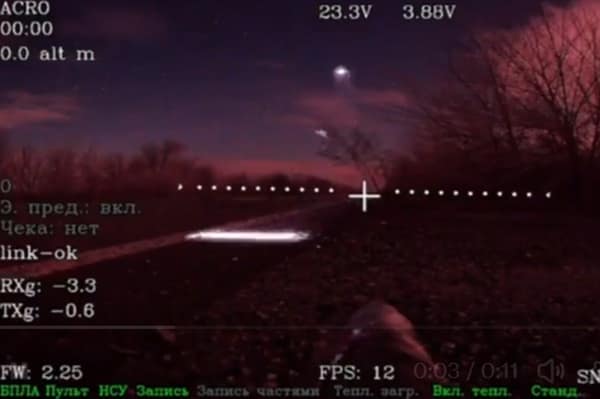
The agency says pupils are also receiving practical instruction in operating unmanned aircraft, using simulators alongside real drones and equipment employed by the Russian occupation army.
The training forms part of what Ukrainian intelligence describes as a broader policy to militarise young people in occupied territories. Schools are reportedly organising marksmanship classes, lessons in dismantling Kalashnikov assault rifles and military drill exercises.
Read more related news:
‘The risk of being killed is very high’ Russian children sent to the front as Putin’s war grinds on
Putin’s ‘attacks are spreading’ as 280,000 Ukrainian homes left without electricity after strikes
Putin issues chilling threat to Britain ‘we are ready for war’ as Russia and NATO edge closer to conflict
Military-patriotic events and quests featuring participants in the war against Ukraine are also being promoted, while pupils are encouraged to learn songs by Russian performers whose music is used in propaganda.
The programme extends beyond classrooms. Occupation authorities are expanding recruitment campaigns for Russian security forces, promoting contract service in the military’s unmanned systems units and appointing veterans of the war against Ukraine to senior positions in local administrations. Schools are also installing memorial plaques honouring Russian soldiers killed in the conflict.
Ukraine’s intelligence directorate argues that the objective is to make war and military preparation appear an ordinary part of civilian life. Its account could not be independently verified.
The wider military infrastructure is also expanding. Reports say Russia is enlarging a drone launch base in Crimea and constructing dozens of shelters, while 12,000 North Korean workers have reportedly been enlisted in Russia to help manufacture Iranian-designed Shahed attack drones.
The drive to normalise military service among the young has taken on a more immediate significance following the reported death of Alisher Svirin, from Pavlovsky Posad, east of Moscow.
Svirin is believed to be the first Russian soldier born in 2008 to have been killed in the war. He was reportedly deployed as a machine gunner with a motorised rifle brigade within days of turning 18 — the same conflict that began when he was just 14.
His death has prompted grief and anger among residents, with some questioning how a teenager with little or no combat experience could have been sent into battle.
“Why?! A young soldier who’d never seen combat… Still just a child,” local resident Svetlana Serezhkina wrote on social media.
Another resident, identified as Andrei, questioned why the young man had been allowed to enlist. “It’s such a shame they let him sign a contract,” he wrote.
A psychologist working with Russian adolescents told The Moscow Times that young people often underestimate the dangers of combat, particularly when surrounded by messages that glorify military service.
“The risk of being killed is very high, but young people don’t think about that,” the expert said. “When you’re young, you feel like life will last forever, like you’re invincible. Teenagers lack the networks that could help them think critically about the war.”
The psychologist also warned that state propaganda had helped create a culture in which human life was treated as expendable, pointing to television presenter Vladimir Solovyov’s declaration that “life is greatly overrated”.
For Moscow, the recruitment of young men and the cultivation of military loyalty among schoolchildren serve the wider project of sustaining a prolonged war. For critics, Svirin’s death illustrates the distance between patriotic messaging and the consequences borne by those persuaded to fight.
In occupied Crimea, children are being taught to operate the machines of modern warfare. In Russia itself, the death of a teenager has prompted a more basic question: how young is too young to be sent to die?


Leave a Comment