
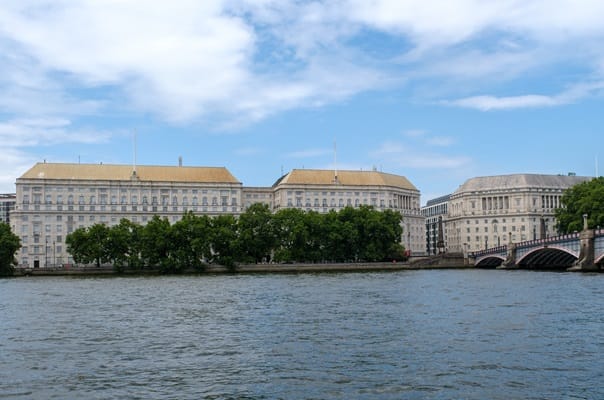
MI5 director general Sir Ken McCallum has warned that Britain faces a more complex national security threat than at any point since the September 11 attacks, urging the country to “build defences” against both radical Islamic extremism and hostile states.
In an unprecedented intervention marking 25 years since 9/11, McCallum said the terrorist threat had endured while being joined by increasingly sophisticated threats from state actors including Russia and China.
Writing in The Independent, he said: “The MI5 I lead in 2026 contends with a threat landscape markedly different to 2001’s.
“Sadly, mass-casualty terrorist ambition endures… but the terrorist threat now sits alongside strategic national security threats posed by capable States.”
McCallum invoked an analogy used by former CIA director James Woolsey, who after the Cold War said the West had defeated a “large dragon”. In the current environment, the MI5 chief argued, Britain must contend with both “dragons” and “snakes”.
The “dragons” represent powerful states such as Russia and China, capable of espionage, sabotage, cyber attacks and covert interference. The “snakes” are smaller non-state actors, including radical Islamic extremists, which possess fewer resources but can potentially receive backing from hostile governments.
“This is my call to arms after 25 years: government, business, academia, and the public must treat national security not as the specialist concern of a handful of agencies, but as a shared national endeavour,” McCallum wrote.
Britain’s terrorism threat level is currently rated “severe”, meaning an attack is considered highly likely. The designation was raised on April 30 following the stabbing of two Jewish men in Golders Green, north London, having remained unchanged for four years.
The warning comes on the anniversary of the 9/11 attacks, in which 2,977 people, including 67 British citizens, were killed.
McCallum recalled watching the Twin Towers collapse and hearing an MI5 colleague identify Osama bin Laden as the likely culprit. What followed, he said, was a “gargantuan multinational effort” to dismantle al-Qaeda.
“Al-Qaeda had to be not just taken on, but taken down. A gargantuan multinational effort, powerfully spearheaded by the US, devised new capabilities to dismantle the core of the organisation in Pakistan’s federally administered tribal areas, into which it had been pushed by the Afghan campaign.
“It worked. Al-Qaeda remains a threat today, but its capabilities are a fraction of 2001’s. That rolling back was not inevitable; it was forced.”
But McCallum warned that the success against al-Qaeda should not encourage complacency.
State-backed aggression now presents a fundamentally different challenge, he said, requiring a “whole nation response” rather than relying solely on intelligence and security agencies.
“Contending with rising state-backed aggression – whether sabotage subcontracted to criminals, or covert interference in our democracy, or destructive cyber attacks on power stations – demands new laws as well as new tradecraft.”
He pointed to Russia’s use of the full spectrum of such operations against Britain over the past 15 years, including state-sponsored murder.
“We cannot wait for the next shock to discover who owns the vulnerability, who has the authority to act, or who was supposed to pick up the phone.”
The responsibility increasingly extends into the private sector. “In 2026, unlike 2001, many of the assets, systems and services under threat sit in private sector hands,” McCallum wrote.
“This means many of the most critical decisions will be taken not in Cobra meetings but in boardrooms.”
He concluded by paying tribute to the victims of September 11, arguing that Britain and its allies “owe” them and “those who will otherwise become the victims of tomorrow’s attack… something more than remembrance”.


Leave a Comment