
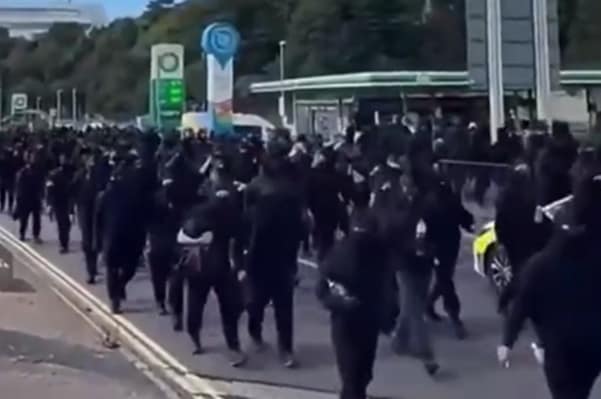
Home Secretary Shabana Mahmood has ordered police chiefs to make greater use of face-covering bans and surveillance technology as forces prepare for further anti-migration protests this weekend, following disorder that disrupted major ports in southern England.
Mahmood summoned senior police officers from across southern England to the Home Office on Thursday and demanded assurances that forces were “learning the lessons” from demonstrations in Dover and Portsmouth last weekend.
Police have been instructed to make “full use” of new powers allowing officers to prohibit face coverings at protests for up to 24 hours. The Home Secretary also called for increased deployment of facial recognition, CCTV, automatic number plate recognition and body-worn cameras to identify suspects and collect evidence.
“These scenes have caused disruption for people and, given that people are dressed in black wearing balaclavas, there is a fear factor and obvious malign intent being communicated to our residents,” Mahmood said.
“This makes it different from other protests, so we need to make sure we are learning lessons.”
The tougher stance follows demonstrations linked to Patriot Platform, led by Danny Tommo, after hundreds of masked protesters descended on Dover last Saturday and blocked roads around the Port of Dover, causing significant disruption at Britain’s busiest ferry port.
The following day, demonstrations were held in Portsmouth after 120 migrants rescued in the Channel were brought ashore by two RNLI lifeboats. Protesters attempted to prevent coaches transporting the migrants away for processing.
Police officers were injured and vehicles damaged during the resulting disorder, prompting investigations into alleged assaults and criminal damage.
Tommo has described the Dover demonstration as a “dummy run”, raising concerns among police that further protests could be organised elsewhere.
The Crime and Policing Act, passed this year, gives forces powers to impose a 24-hour ban on face coverings during protests. Senior officers have subsequently established what the Home Office described as an “enhanced and co-ordinated approach” to intelligence gathering and operational planning.
Andy Mariner, the National Police Chiefs’ Council lead for public order, said forces had increased national-level preparations.
“We have stepped up activity this week at a national level, supporting local forces to ensure we have the right information, support and operational capacity in place to respond should we need to,” he said.
“This includes ensuring commanders are ready to use every power at our disposal, from arrests and dispersal orders to more recent powers which can help police manage protests, where it is proportionate and necessary to do so.”
“Our priority is to keep people safe, maintain public order and support the right to peaceful and lawful protest.”
“While people are entitled to express their views, anyone committing criminal offences can and should expect police action.”
The response follows questions over Kent Police’s handling of the Dover demonstration. The force has acknowledged that it failed to act on information received on Friday night about plans for the protest the following morning.
Matt Jukes, deputy commissioner of the Metropolitan Police, described protesters wearing masks as “sinister” in an interview with Times Radio and said forces should use the new powers available to them.


Leave a Comment