
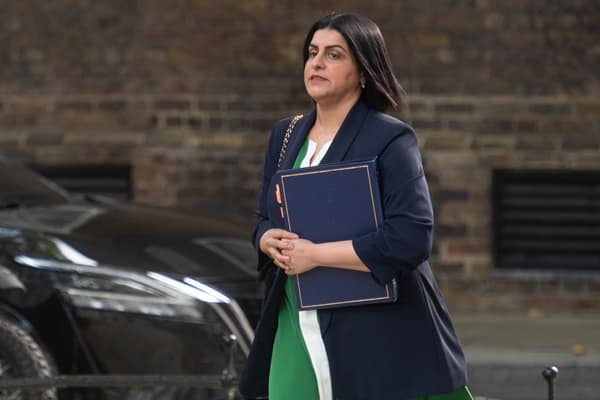
Shabana Mahmood has been accused of abandoning her promised crackdown on permanent migration after figures showed that more than 1,100 people were granted the right to settle permanently in Britain on every working day during the spring.
The Home Secretary announced plans last November to overhaul the route to indefinite leave to remain, including doubling the standard qualifying period from five to 10 years for most migrants.
But almost a year later, the measures were absent from the latest update to the immigration rules, prompting Conservative claims that Labour had retreated in the face of opposition from its own MPs.
Chris Philp, the Shadow Home Secretary, accused Ms Mahmood of having “chickened out” of the reforms.
“She talked a tough game on ILR reform but has delivered nothing,” he told the Daily Mail, the criticism comes as the number of migrants securing permanent settlement continues to rise sharply.
Some 73,775 applications for indefinite leave to remain were approved in the three months to the end of June, a 38 per cent increase on the previous quarter. The figure equates to more than 1,100 successful applications for every working day during the period. Across the year to June, 199,628 applications were approved, up 24 per cent compared with the previous 12 months.
Under the proposals outlined by Ms Mahmood last November, most migrants would have been required to spend a decade in Britain before becoming eligible for permanent settlement, double the existing standard five-year route. Those who entered the country illegally faced the prospect of waiting 30 years before becoming eligible for settled status.
Migrants who committed criminal offences, claimed benefits or made lower tax contributions could also have faced longer qualifying periods. Perhaps most controversially, the changes were intended to apply retrospectively to around two million migrants who had arrived in Britain since 2021. That proposal triggered an increasingly vocal backlash within Labour.
Thirty-five Labour MPs signed an open letter in February opposing the plans, arguing that it would be unfair to alter the terms under which migrants had entered and established lives in Britain.
Opposition intensified further in June when Angela Rayner, then a backbencher before becoming Housing and Communities Secretary, described the proposals as “un-British” and “wrong”. The reforms were subsequently absent from Labour’s immigration Bill published in June. Officials indicated at the time that the changes would instead be implemented through secondary legislation.
However, last week’s immigration rules update contained no reference to the settlement reforms.
Mr Philp accused the Home Secretary of retreating because she was “terrified of her own left-wing Labour backbenchers who want to see open borders and citizenship for anyone who turns up on our shores”.
The issue is becoming increasingly urgent for the Government because of the large number of migrants approaching eligibility for settlement. The Home Office has estimated that annual applications could reach between 359,000 and 620,000 by 2028 as migrants who arrived during the post-pandemic surge begin reaching the qualifying threshold. Long-term immigration reached 1.47 million in 2023, when net migration hit a record 944,000.
Ms Mahmood’s consultation paper acknowledged that most of the approximately two million migrants potentially affected by the reforms arrived from 2022 onwards, meaning significant numbers will begin reaching the current five-year settlement threshold from 2027. That creates a narrowing window for ministers if they intend to implement changes before the anticipated surge in applications.
Asked about the apparent delay, the Home Office insisted that the proposals had not been abandoned.
A spokesman said: “Last November, we set out reforms to double the standard qualifying period to ten years for most migrants, with shorter routes for those who contribute most to the UK.
“A consultation on elements of those reforms has now closed, and we will set out our response in due course.”
For the Conservatives, however, the absence of a timetable offers an opportunity to argue that Labour’s rhetoric on immigration is running ahead of its willingness to confront internal opposition.
The figures also underline the scale of the challenge facing Ms Mahmood: even as ministers promise to tighten the immigration system, hundreds of thousands of people already living in Britain are moving towards permanent settlement — and the political battle over whether to change the rules is becoming increasingly difficult to postpone.


Leave a Comment