
Argentina’s renewed claim over the Falkland Islands has returned to the centre of international attention after President Javier Milei declared Buenos Aires was moving closer to “recovering” sovereignty over the disputed territory.
The comments, delivered after a political storm surrounding Argentina’s World Cup celebrations, have reignited one of the world’s most enduring territorial disputes and placed fresh strain on relations between London and Buenos Aires.
Milei accused critics of overreacting to a banner displayed by Argentine players following their semi-final victory over England, which read “Las Malvinas son Argentinas” — the Argentine claim that the Falkland Islands belong to Argentina.
In a sharp social media post, Milei insisted his government was pursuing the issue through diplomacy.
“Every day we are getting closer to the recovery of the Malvinas Islands, Georgias, and South Sandwich Islands,” he said.
The remarks underline a broader strategy from Buenos Aires: keeping the sovereignty dispute alive through international diplomacy rather than military confrontation.
The Falklands issue is rooted in history, but its modern significance extends beyond symbolism.
The islands sit in a strategically important area of the South Atlantic, surrounded by valuable maritime resources and located near major shipping routes.
For Argentina, sovereignty remains a deeply emotional national issue and a recurring political theme.
For Britain, the position is equally firm: the future of the islands should be determined by the wishes of their residents, who have repeatedly expressed support for remaining a British Overseas Territory.
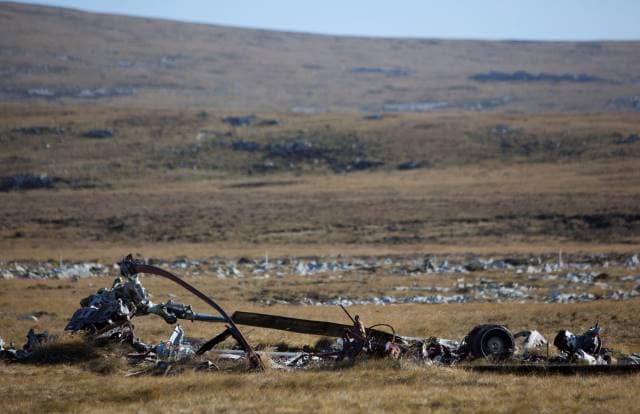
The dispute has remained frozen since the 1982 war, when Argentine forces invaded the islands and were defeated by a British military task force.
The conflict claimed more than 900 lives, including 255 British personnel, 649 Argentine servicemen and three Falkland Islanders.
The latest confrontation was triggered not by government action, but by sport.
The banner displayed by Argentine players after defeating England created outrage among British politicians, who accused the squad of turning a sporting event into a political statement.
Business Secretary Peter Kyle described the stunt as inappropriate and called for action from FIFA.
The Prime Minister’s spokesperson delivered an uncompromising response:
“The World Cup might not be ours, but the Falkland Islands definitely are.”
FIFA is reviewing the incident under its disciplinary framework, which prohibits political messaging during matches.
Argentina has previously faced punishment for similar displays, including a fine in 2014 over the same slogan.
Milei’s approach reflects a delicate balancing act.
The Argentine leader has sought closer economic ties with Western markets while also embracing nationalist themes popular with domestic audiences.
The Falklands issue remains one of the few topics capable of uniting Argentina’s often divided political landscape.
However, escalating rhetoric carries risks.
Britain remains a major diplomatic and security partner for many Western countries, while any attempt to internationalise the dispute could create friction at a time when Argentina is seeking investment and economic stability.
More than four decades after the war, the Falklands question remains unresolved.
Military conflict is no longer the path pursued by either side, but the political battle continues.
Milei insists Argentina will pursue sovereignty through diplomacy.
Britain insists the matter has already been settled by the principle of self-determination.
The latest row shows that the Falklands are not simply a historical dispute.
They remain a powerful symbol — one capable of turning a football celebration into an international diplomatic confrontation overnight.


Leave a Comment