
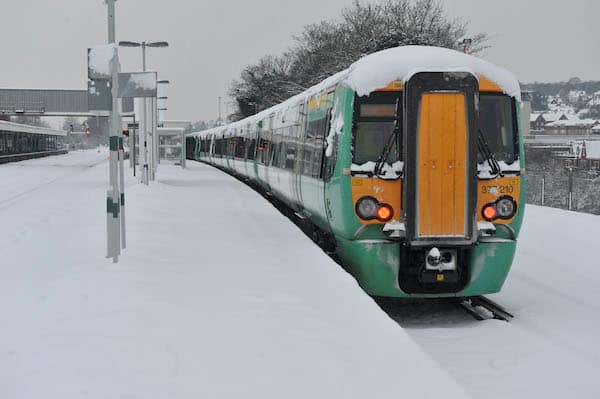
Britain is facing an unusually early disruption high above the Arctic that could increase the risk of a bitter winter, prompting renewed attention to extraordinary government contingency plans for a national power blackout in which homes could be left without electricity, heating or internet access.
The stratospheric polar vortex, a vast circulation of powerful winds that normally helps contain freezing air around the North Pole, has become unusually stretched and weakened.
The Met Office says the disturbance is being driven by an exceptionally strong atmospheric pattern known as “wave two” activity, in which two large waves push into the vortex from opposite directions.
Forecasts suggest the vortex could become increasingly displaced from the North Pole, potentially producing a sudden stratospheric warming event at an exceptionally early point in the season.
The development has raised the prospect of colder Arctic air moving south towards Britain later this month and into winter. But meteorologists have stressed that a disrupted polar vortex does not automatically mean widespread snow, freezing temperatures or a prolonged cold spell.
The Met Office said: “The stratospheric polar vortex is already unusually stretched, with the disturbance associated with so-called ‘wave two’ activity, when two large atmospheric waves push into it from opposite directions.
“This wave two activity is considerably stronger than average for the time of year. Forecasts suggest the vortex will subsequently become increasingly displaced from the North Pole.”
The significance lies in what could happen next. A weakened vortex can disrupt the jet stream, the high-altitude current of air that helps steer weather systems across the Atlantic. If the resulting atmospheric pattern allows high pressure to build in the right locations, colder northerly or easterly winds could bring Arctic air towards the UK.
The timing is particularly unusual. The Met Office has warned that a major sudden stratospheric warming, should it develop, could be the earliest of its kind on record. Such disturbances can take several weeks to influence weather at ground level, meaning any consequences may not be immediate.
The uncertainty has not stopped attention turning to the Government’s preparations for an even more extreme scenario: a national electricity failure lasting for days.
The Department of Health and Social Care has published emergency public health scripts prepared by the UK’s four chief medical officers for use during a total power outage affecting Great Britain. The plans envisage communications becoming severely restricted as mobile networks, internet services and television are disrupted.
Rather than relying on online announcements, emergency advice would be broadcast over BBC Radio 2 and Radio 4, with people needing battery-powered, wind-up or car radios to receive it.
The scripts are designed for an extraordinary national emergency, not as a warning that such an event is expected this winter. They cover essential public health risks, including keeping warm, maintaining food supplies and ensuring access to safe water and sanitation.
One proposed broadcast would begin: “We have planned in case this extraordinary situation happened and this advice has been created by doctors and scientists to help keep you and your family healthy.”
It would then warn that babies, young children, pregnant women, older people and those requiring care are particularly vulnerable to extreme cold.
The advice is strikingly practical. Households would be urged to wear several thin layers of clothing, keep their feet raised when sitting and get up to move around at least once an hour. Families would be advised to gather in one room to share warmth, block draughts beneath doors and close curtains and blinds after dark.
People would also be told to watch for signs of hypothermia, including persistent shivering, cold and dry skin, blue or grey lips, slurred speech, slow breathing and confusion.
The guidance devotes particular attention to the dangers of improvised heating during a prolonged blackout. Portable gas heaters approved for indoor use should be operated in well-ventilated rooms and strictly according to manufacturers’ instructions.
Generators must be kept outdoors, at least six metres from buildings, with exhaust fumes directed away from windows and doors. Wood burners and other non-electric stoves also require adequate ventilation to reduce the risk of carbon monoxide poisoning.
The scripts warn against leaving fires, generators or portable heaters unattended. They also explicitly prohibit burning household rubbish, old furniture, pallets or fence panels, or using petrol, diesel and lighter fluid as alternative fuels, because of the danger of explosions, fires and toxic fumes.
The Government says the material has been developed by the chief medical officers as independent public health advice, with input from the UK Health Security Agency and public health agencies across the four nations. It is not a declaration that a nationwide blackout is imminent.
Nevertheless, the contingency plans illustrate how quickly a prolonged electricity failure could become a public health emergency. Without power, households could lose heating, communications, water supplies and the ability to make electronic payments. Vulnerable people would face particular risks if disruption continued for several days.
For now, the immediate concern is the unusual behaviour of the polar vortex, rather than any forecast of a national crisis. The Met Office says the atmospheric disturbance warrants close monitoring, but the eventual impact on British weather remains uncertain.
A cold winter is not inevitable. Yet the combination of an exceptionally early disruption above the Arctic and the Government’s detailed blackout preparations offers a reminder of the risks that can emerge when severe weather and critical infrastructure failures coincide.


Leave a Comment