
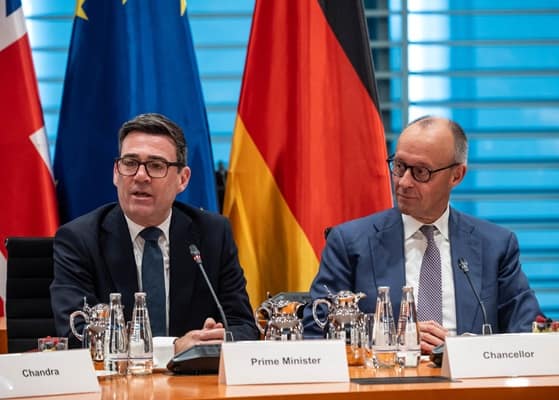
Prime Minister Andy Burnham has warned that Britain has been too slow to expose Russian interference in its democratic processes, reigniting the controversy over the Brexit referendum as his Government seeks closer relations with Europe and leaves open the prospect of rejoining the European Union.
Burnham said he had received confirmation after entering Downing Street that Moscow had interfered in the 2016 referendum, arguing that successive governments had failed to adequately inform the public about attempts by hostile states to influence British politics.
But his intervention prompted an immediate clarification from Foreign Office minister Stephen Doughty, who insisted there was no evidence that Russia had succeeded in changing the outcome of British elections.
Burnham said the country had been insufficiently prepared to confront foreign interference and needed to be more transparent about the threat.
“I think we’ve been too much on the back foot on that actually and we haven’t informed people sufficiently about the extent to which people are seeking to disrupt the political process from overseas,” he said.
The Prime Minister previously told The Rest Is Politics podcast that he had specifically asked officials about possible Russian involvement in the Brexit referendum after arriving in Downing Street.
He said he had received “the clear answer that yes, there was”.
The comments represent a significant intervention in the continuing debate over the 2016 referendum, in which 52 per cent of voters backed leaving the European Union. However, Burnham has not publicly disclosed the intelligence underpinning his assessment or provided details about the nature and extent of Moscow’s alleged activities.
Doughty sought to draw a distinction between attempts to interfere and successfully changing an election result.
“I don’t think they’ve succeeded in their efforts to undermine our elections,” he said.
The minister maintained that Russia had attempted to interfere in democratic processes but argued that this should not be confused with evidence that the referendum result had been manipulated or overturned.
The distinction is politically significant. Burnham’s warning raises questions about Britain’s vulnerability to foreign influence, but does not establish that Russian activity determined the outcome of the Brexit vote.
A 2020 parliamentary Intelligence and Security Committee report had already criticised the Government for failing to fully assess the potential impact of Russian state-controlled media and online accounts on the referendum campaign.
Burnham has also sought to place Britain’s experience within a wider European security debate. During a recent visit to Berlin, he discussed the threat posed by Russian disinformation with German Chancellor Friedrich Merz, particularly allegations of links between Moscow and the far-right Alternative for Germany party.
He has argued that exposing foreign interference is important not only for Britain but also for voters in France and Germany, where concerns about political polarisation and hostile information campaigns are growing.
The intervention comes as Burnham attempts to reshape Britain’s relationship with Brussels after Brexit, arguing that the current arrangements have failed to deliver the economic benefits promised by supporters of leaving the bloc.
He has said he would like Britain to rejoin the European Union “in my lifetime”, although he has ruled out pursuing membership during the current parliamentary term and insisted that any future decision must have public backing.
The Prime Minister has instead advocated practical improvements to relations with Brussels, including closer co-operation on trade, food standards and immigration. A forthcoming UK-EU summit is expected to provide an opportunity to advance that agenda.
His comments have nevertheless reopened a politically sensitive debate over the consequences of Brexit, with opponents likely to question whether allegations of Russian interference are being used to strengthen the case for closer European integration.
For Burnham, the argument is that democratic security and Britain’s international relationships are increasingly connected. Hostile states can exploit political divisions, while closer co-operation with European allies could help counter disinformation and other forms of hybrid warfare.
But the Government faces a delicate task: exposing Russian interference without undermining confidence in the referendum result itself.
Doughty’s intervention makes clear that ministers want to acknowledge the threat while maintaining that Britain’s democratic institutions and voters ultimately determined the outcome. The challenge for Burnham will be providing greater transparency about the intelligence behind his claims without reigniting the political divisions that have defined British politics since 2016.


Leave a Comment