
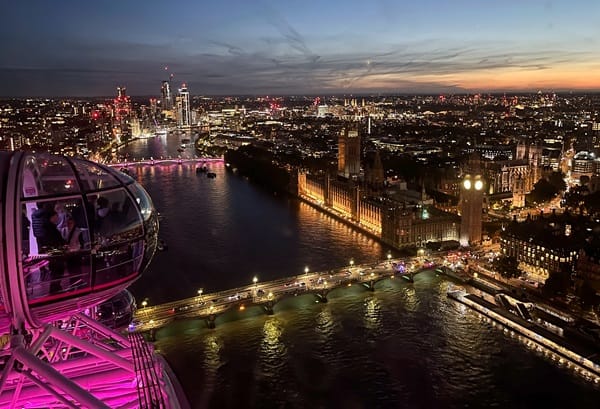
Lord Sadiq Khan’s authority to intervene in borough council licensing decisions came into force on Tuesday, 3 November 2026, granted by Andy Burnham’s administration. The powers allow the Mayor of London to call in and make final decisions on licensing applications deemed strategically important to the capital, covering everything from music venues and late-night operators to major public events. The sector those decisions govern, according to the Evening Standard, contributes more than £21 billion to London’s economy each year.
London’s physical night-time economy seen through a Lithuanian lens
Martynas Norvilas, a sports journalist and betting industry expert who follows the Lithuanian market closely, sees the new mechanism as a signal of how differently two European capitals treat their night-time economies. London’s approach, he notes, keeps the full spectrum of licensed venues anchored as physical, regulated presences inside a formal governance structure.
Under the powers that took effect this week, the Mayor can call in applications involving large venues, live music, later opening hours, and major events where those applications are considered strategically important to London. For Norvilas, that legal architecture matters. Betting and gaming outlets sit within the night-time economy this framework governs, and the mayor-level call-in mechanism ensures they remain subject to consistent, city-wide oversight rather than the variable judgements of individual boroughs.
The contrast with Lithuania is sharp. There, the same activity has moved substantially away from the high street and onto digital platforms, and Lithuanian bettors routinely turn to a comparison guide such as Lazybu Guru LT to locate and compare licensed operators in that online environment.
London is building a governance layer around its night-time economy that keeps these businesses embedded in the physical city. In Lithuania, betting has largely gone online, and the infrastructure that supports bettors there is a digital one. These are two genuinely different models.
How the Mayor’s call-in mechanism works
The scope of the new powers is specific. Applications touching large venues, live music programming, extended opening hours, and major events can be called in where the Mayor judges them strategically important to London. Once called in, the Mayor makes the final decision on the application rather than leaving it with the borough council.
The comparison drawn in political circles is to the powers held by the Mayor of New York, positioning London’s arrangement as an international precedent rather than an improvised local fix.
Alongside the call-in powers, Khan is also to formally consider the responses gathered through consultation on his draft London-wide Strategic Licensing Policy. That policy is designed to create a consistent, supportive licensing framework across culture, hospitality, events, and nightlife. A final version is expected later in 2026. Together, the call-in mechanism and the strategic policy represent a two-track effort to bring coherence to a system that has historically produced inconsistent outcomes across London’s 33 boroughs.
The pressures that made intervention necessary
The case for centralised oversight has been accumulating for years. Hospitality businesses have faced compounding cost pressures, including rising business rates, increases in the national minimum wage, higher national insurance contributions, and rises in alcohol duty. Those costs fell on an industry already spending heavily on licensing processes that operators widely described as lengthy and expensive.
Noise-related disputes added a further layer of friction. Venues, particularly those programming live music or operating late, became entangled in complaint-driven processes that consumed resources and created uncertainty. The frustration among operators was significant and well-documented.
The most visible flashpoint was in Soho, where the Mayor and Westminster City Council clashed directly over licensing policy. Westminster proposed measures to discourage what it termed vertical drinking outside pubs and other licensed premises. That conflict illustrated precisely the kind of borough-level decision that, under the new arrangement, could now be subject to mayoral scrutiny when the stakes are judged to be sufficiently high.
Khan, Rayner, and Nicholls mark the powers coming into force
Lord Khan described the day the powers came into force as a turning point for the capital’s venues.
Today is a hugely significant moment and marks the beginning of a new era for London’s nightlife. As Mayor I have always tried to be pro-jobs and pro-business and I’m determined to build on this. These new licensing powers create an opportunity to further champion London’s amazing venues, particularly our hospitality industry. From today, thanks to the Government, I can step in and make decisions on licensing applications of particular importance for our economy, reputation and nightlife – allowing me to back the venues that make our high streets and communities thrive and help cement our city’s nightlife reputation – while keeping people safe and listening to communities.
Angela Rayner, Secretary of State for Housing, Communities and Local Government, framed the powers as economic infrastructure rather than cultural sentiment.
Nightlife is about so much more than a good night out. The musicians on stage, the staff behind the bar, the small businesses that depend on them – that’s jobs, that’s growth, and a big part of what makes London the world-famous city it is. So, we’re giving the Mayor of London historic new powers over licensing decisions that have the biggest impact on the capital. It’s about backing the venues and events that keep London buzzing.
Kate Nicholls, Chair of UK Hospitality, confirmed both the sector’s scale and her own role in bringing these changes about.
This is a significant moment for London’s world-class hospitality sector and I’m delighted to back the Mayor’s pro-jobs approach, which will support a sector already employing half a million Londoners. I was pleased to lead the Government’s licensing sprint which recommended these changes and it’s encouraging that some of the most significant are being introduced so swiftly. We look forward to working with the Mayor to deliver on his commitment to support the hospitality sector in London.
Nicholls’s confirmation that the most significant recommendations from the licensing sprint are being introduced quickly leaves the new powers as an enacted reality. The policy architecture is already in motion.
Please play responsibly. For more information and advice visit https://www.begambleaware.org
Content is not intended for an audience under 18 years of age


Leave a Comment