
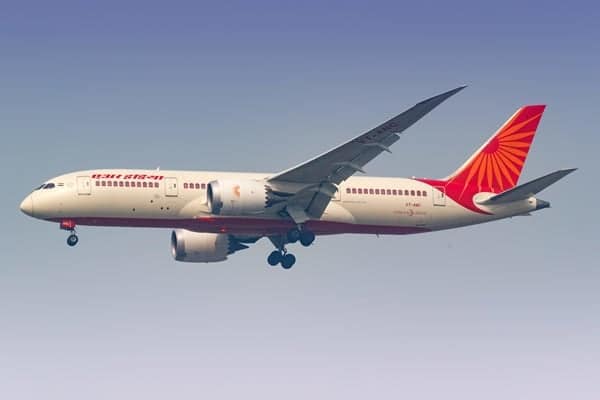
Frankfurt-to-Delhi flight forced to land in Jaipur as armed security teams launch emergency checks — but officials say the alert may have been triggered accidentally, with no confirmed hijacking.
An Air India Boeing Dreamliner carrying 306 passengers was diverted to Jaipur after its cockpit transmitted an internationally recognised hijacking alert, triggering an emergency security operation and raising fears of a potential threat aboard the aircraft.
Flight AI2030, travelling from Frankfurt to Delhi on Wednesday, was redirected after the pilot reportedly transmitted Squawk 7500 — the transponder code used to signal a hijacking or other unlawful interference with an aircraft.
The Boeing 787-9 landed safely at Jaipur International Airport at approximately 9.45am before being moved to an isolation bay. Security personnel began inspecting the aircraft and passengers’ luggage as police and specialist bomb-disposal teams mobilised to establish what had happened.
All 306 passengers and crew were reported safe. Passengers were evacuated and taken to a designated holding area inside the terminal while the aircraft underwent security checks.
Personnel from the Central Industrial Security Force, local police and the Bomb Detection and Disposal Squad took part in the operation. The pilots were reportedly removed from the aircraft under security protocols, while a National Security Guard team in Delhi was placed on standby.
The scale of the response reflected the seriousness of the alert. Squawk 7500 is an internationally recognised signal that can indicate an aircraft has been hijacked, although its transmission does not, by itself, prove that an attack or takeover has occurred.
By Wednesday, officials were indicating that the incident might have a less sinister explanation.
Jaipur airport head Charan Singh said the pilot may have “activated the alert by mistake”, with an investigation under way to establish the precise circumstances.
An airport official told the Hindustan Times: “It was a hijacking rumour, not a bomb threat. It’s too early to comment officially on the matter. An investigation is underway.”
Initial checks found the aircraft’s operations to be normal, and no injuries were reported. After passengers had undergone security screening, they reboarded the aircraft ahead of its onward journey to Delhi.
Air India confirmed that the flight had been diverted because of a perceived security concern and that the relevant authorities had cleared the aircraft and crew.
“The aircraft landed safely in Jaipur,” the airline said in a statement carried by Indian news agency ANI.
“All passengers were disembarked, underwent security checks, and have since reboarded the aircraft.”
The airline apologised for the disruption, adding that passenger and crew safety remained its “highest priority”.
Initial information indicated that the 7500 code had been transmitted while the aircraft was travelling through the Mumbai Flight Information Region, before it was diverted from its intended destination.
The incident comes just one day after another European passenger flight transmitted the same distress code, prompting a military response.
A Corendon Airlines service travelling from Corfu to Nuremberg triggered the scrambling of German Eurofighter jets after air traffic control temporarily lost radio contact with the cockpit. The airline subsequently said the signal had been sent in error because of a radio-system malfunction and that passengers had not been in danger.
The two incidents do not establish a common cause. But they underline how quickly an aircraft emergency signal can trigger a major security response, with authorities required to treat a potential hijacking seriously until the circumstances are understood.
For the passengers aboard AI2030, the immediate danger appears to have passed. The central unanswered question is why the cockpit transmitted a code associated with unlawful interference — and whether the alert resulted from human error, a technical problem or another cause.
Until the investigation is complete, officials have not confirmed that an attempted hijacking took place.


Leave a Comment