
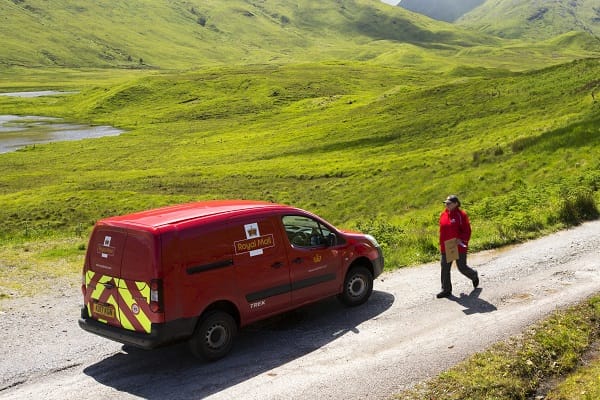
Royal Mail faces a festive season fraught with disruption as soaring parcel volumes, a controversial overhaul of delivery rounds and a mounting exodus of workers threaten to overwhelm an already strained postal service.
Royal Mail is heading towards a potentially disastrous Christmas, with postal workers warning that a radical restructuring of deliveries is leaving staff overstretched, mail delayed and customers facing a festive season of frustration.
Around 400 workers are now leaving the business every week, according to the Communication Workers Union (CWU), up from approximately 330 before the introduction of a new delivery system earlier this year. The union fears the accelerating departures, combined with rising parcel volumes and increasingly demanding workloads, could push the service towards breaking point just as Christmas deliveries reach their annual peak.
At the heart of the dispute is DM26, Royal Mail’s overhaul of its delivery operations. The system groups postal workers into teams of three and changes their walking routes, while reducing second-class letter deliveries to alternate weekdays. First-class letters and parcels are still supposed to be delivered daily.
The programme is already operating in approximately 1,000 of the company’s 1,200 delivery offices. Royal Mail insists the changes will make the service more efficient and financially sustainable. But workers on the ground describe a system struggling to cope with its own ambitions.
The danger is that a restructuring intended to improve productivity could instead undermine the reliability on which Royal Mail’s reputation depends — with the consequences becoming painfully visible when households and businesses rely on the postal service most.
Workers across the country say workloads have become unmanageable, with parcels continuing to take priority over letters and staff losing valuable time separating first-class and second-class mail.
One postal worker in the West Midlands described how the backlog had left first-class deliveries untouched during a shift.
“I didn’t take any first class mail out on my last shift because I was on a road that’s been behind for weeks,” the worker said.
The employee added that a manager might nevertheless have recorded the first-class mail as delivered.
The account raises uncomfortable questions about the gap between Royal Mail’s stated service commitments and the experience of workers responsible for fulfilling them. If staff cannot clear the mail assigned to their rounds, the company faces more than a staffing problem: it faces a challenge to its ability to deliver the service customers are paying for.
The physical demands are also intensifying. Eight workers who tracked their steps after the introduction of DM26 recorded increases of between 25 and 33 per cent, with some walking around 25,000 steps a day.
The figures underline the union’s central complaint: the new model is asking fewer people to do more work, while leaving little room to absorb disruption, staff absences or a seasonal surge in parcels.
Bryn Dymott, who delivered post in Wootton, Bedfordshire, for nine years, decided he had had enough. He resigned in July rather than face what he expected would be another “shambolic” Christmas.
“People put things in the post for them to be delivered, not for them to be delayed because Royal Mail hasn’t got the systems in place and enough people to get them delivered,” he said.
Dymott said he had spoken out after leaving because serving postal workers felt unable to explain publicly what was happening. He accused the company of attempting to make three employees do the work previously handled by four.
“Proving it’s impossible to have four people’s work done by three people. It shouldn’t really come as a surprise,” he said.
His concerns are echoed elsewhere. An East Midlands postman offered a bleak assessment of the coming festive period: “We all think this Christmas will be the worst ever, for us and our customers.”
The CWU has instructed its members to stop any further implementation of DM26 until Royal Mail agrees to a plan addressing the programme’s failings.
The union acknowledges that the system is working well in around 500 offices, but says hundreds of others are experiencing serious difficulties. It argues that expanding the model before resolving those problems risks spreading operational disruption rather than fixing it.
“Put simply, if a boat is already taking on water, adding more passengers is unlikely to solve the problem,” said Martin Walsh of the CWU.
The union says most departing workers are recent recruits employed on part-time contracts, although increasing numbers of longer-serving employees on older contractual arrangements are also leaving.
That trend could make the Christmas challenge harder to manage. Temporary recruitment can add capacity during the festive rush, but it cannot necessarily replace the experience, local knowledge and familiarity with delivery rounds lost when established staff walk away.
A group of MPs is due to meet communications regulator Ofcom on Wednesday to discuss concerns about Royal Mail’s performance, adding political scrutiny to an increasingly fraught operational dispute.
Royal Mail, which employs around 83,000 people, rejects the suggestion that the rollout is fundamentally off course. It maintains that DM26 remains on schedule for implementation across all delivery offices before Christmas.
The company says the proportion of UK addresses it reaches daily has risen to 95 per cent, from 88 per cent before the changes were introduced. It has also confirmed plans to recruit 22,000 temporary workers for the festive period, in line with previous years.
Those figures provide Royal Mail with a defence of its strategy: the company argues that it is reaching more addresses daily while reshaping its operations to secure a more sustainable financial future.
But aggregate performance figures do not necessarily settle the questions raised by workers about delayed mail, mounting backlogs and the practical demands of individual delivery rounds. Nor do plans to recruit thousands of seasonal staff guarantee that the business can absorb peak demand without disruption.
The immediate test will be whether Royal Mail can translate its claimed improvements into reliable deliveries at the point when the network faces its heaviest pressure.
The regulator says it has required Royal Mail to produce an improvement plan and has overhauled the obligations placed on the company.
A spokesperson said Ofcom would “continue to hold it to account using the full extent of the powers available to us”.
Postal Services Minister Kate Dearden described Royal Mail’s improvement plan as “a step in the right direction”, but warned that the company must deliver tangible improvements for customers. The government, she said, would continue to hold it to account on performance.
The intervention raises the stakes for a company already under pressure to demonstrate that its new operating model can deliver both financial sustainability and acceptable service standards.
Royal Mail’s predicament is a familiar one for businesses attempting to cut costs while maintaining labour-intensive services: reducing the resources needed for each job may improve efficiency on paper, but only if the remaining workforce can reliably handle the workload.
With Christmas approaching, there is little time for prolonged experimentation. A system that works in some offices but struggles in others may prove particularly vulnerable when parcel volumes rise and customers expect gifts, purchases and important correspondence to arrive on time.
For the CWU, the answer is to stop extending DM26 until its problems have been addressed. For Royal Mail, abandoning or delaying the rollout could undermine a restructuring it says is necessary to secure the company’s future.
The risk is that neither side gets the outcome it wants. Royal Mail could enter its busiest season with depleted staffing and unresolved delivery problems, while customers bear the cost through delays and uncertainty.
The company insists its daily reach is improving and that thousands of temporary workers will bolster the network. But as weekly departures climb and staff warn of an approaching Christmas nightmare, the decisive question is no longer simply whether DM26 can be rolled out before December.
It is whether Royal Mail can prove the system works when the pressure is at its highest — before a seasonal surge turns today’s warnings into a nationwide delivery crisis.





Leave a Comment