
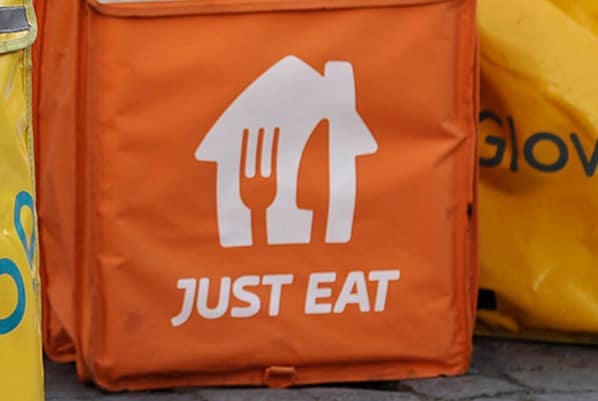
Just Eat Takeaway.com has returned to year-on-year order growth for the first time in almost five years, marking a significant milestone in Prosus’s efforts to revive the food delivery business after its £3.6bn acquisition late last year.
Orders across Just Eat Takeaway, or JET, increased 0.1% year-on-year in September, according to Prosus, sharply reversing the 9% decline recorded when the technology investor completed its acquisition in December.
The modest increase brings an end to 55 consecutive months of year-on-year order declines, according to Prosus, and provides an early indication that investment in technology, logistics, product development, customer retention and marketing may be beginning to stabilise the business.
Fabricio Bloisi, chief executive of Prosus, described the return to growth as an important milestone but cautioned that the company remained at an early stage of its turnaround.
“Obviously this is just the first step and we expect to keep expanding growth, but getting back to growth marks an important milestone, and the team has earned it.
“We worked on technology, logistics, product, retention and marketing – and I expect these results to compound over time.
“We will keep working a lot to make every order more profitable.”
The challenge for Prosus now is to convert a marginal recovery in order volumes into a more durable improvement in the economics of the business.
The group has indicated that it is willing to accept weaker profitability in the short term in exchange for building a larger and more defensible business over time. That strategy reflects the difficult economics of food delivery, where competition for customers, discounts and the cost of last-mile logistics can place sustained pressure on margins.
Bloisi said Prosus was investing in both JET and its Brazilian food delivery business iFood, deliberately sacrificing some short-term profitability to accelerate growth.
The strategy, he said, was aimed at creating a “stronger, more defensible, and faster-growing business longer term”.
He added: “The early evidence – orders returning to growth at JET, market share holding at iFood with efficient economics, all companies growing and profitable – tells us we are on the right track.”
The acquisition of Just Eat Takeaway represented a major expansion for Prosus, which is majority-owned by South African technology and media group Naspers. The investor also owns iFood in Brazil and the Dutch online marketplace OLX.
The latest figures follow a strong set of annual results for Prosus. In June, the group reported an 84% increase in adjusted earnings to $1.3bn (£1bn), while revenue rose 57%, helped by acquisitions.
Just Eat Takeaway generated revenue of $1.9bn (£1.44bn) during the six months following its acquisition in December 2025 and recorded adjusted earnings of $83m (£62.8m), according to Prosus.
The turnaround nevertheless comes against a highly competitive backdrop for online food delivery, where scale alone does not guarantee profitability. Prosus is therefore focusing not simply on restoring order volumes but on improving the economics attached to each transaction.
That distinction is reflected in Bloisi’s emphasis on making every order more profitable rather than pursuing growth at any cost.
Prosus is also increasing investment in artificial intelligence as it seeks to improve the performance of its technology businesses. The group has developed its own version of the AI agent OpenClaw, although the technology has faced data privacy concerns in Europe.
For Just Eat, however, the immediate test is whether September’s return to growth can be sustained.
A 0.1% increase is modest, but after more than four years of falling orders it represents a potentially important change in direction. The next stage of Prosus’s strategy will be to demonstrate that the reversal is not simply a temporary stabilisation, but the beginning of a sustained recovery in both volumes and profitability.
For the investor, that would transform the £3.6bn acquisition from a bet on a declining delivery platform into a test of whether disciplined technology and operational investment can restore growth to one of Europe’s best-known food delivery businesses.



Leave a Comment