
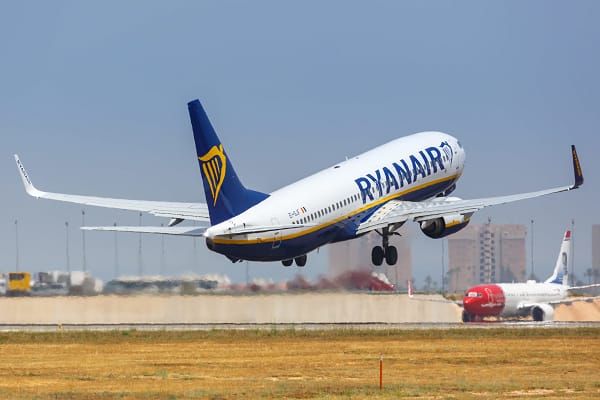
Ryanair has blamed a series of air traffic control failures in Britain for contributing to more than 1,000 flight cancellations in September, intensifying pressure on the country’s aviation regulator after widespread disruption across European airports.
The Irish budget airline said its cancellations last month were partly caused by two separate air traffic control incidents in Britain within the space of a fortnight. The disruption was compounded by strikes by air traffic controllers in Belgium and flight restrictions across Europe following volcanic ash clouds generated by eruptions from Mount Etna.
The latest figures underline the scale of the disruption facing airlines during a month in which thousands of flights were cancelled or delayed, affecting hundreds of thousands of passengers.
Ryanair has been particularly vocal in its criticism of National Air Traffic Services, the UK air navigation provider, and has called for its chief executive Martin Rolfe to resign.
Rolfe has faced growing pressure following a series of failures that disrupted flights across the UK and beyond.
The most recent incident was caused by a “connectivity issue” at Nats’ Prestwick centre in Scotland. The problem came less than two weeks after a separate air traffic control software fault on September 8 triggered widespread disruption.
The incidents have prompted questions about the resilience of Britain’s aviation infrastructure and the ability of the air traffic control system to cope with increasing demand.
Transport Secretary Heidi Alexander has sought discussions with Nats over the problems. She is due to meet the organisation’s chairman, Sir Warren East, the former chief executive of Rolls-Royce, in the coming weeks.
The government is under pressure to establish why failures at critical infrastructure have been able to generate disruption extending far beyond the immediate locations affected.
For airlines, the consequences extend beyond cancelled flights. Air traffic control restrictions can force aircraft to be rerouted, create lengthy delays and disrupt aircraft and crew schedules, generating additional costs throughout an airline’s network.
Ryanair’s September traffic figures showed the scale of its operations. The airline operated more than 111,700 flights during the month and carried 20.1 million passengers, an increase of 4 per cent from a year earlier.
The figures suggest that demand for low-cost European travel remains robust despite a more difficult operating environment.
Rival Wizz Air also reported strong passenger growth. The airline carried 7.78 million passengers in September, 24 per cent more than a year earlier, while capacity increased 25.3 per cent.
But the broader outlook for European aviation has become more challenging. Wizz Air recently announced plans to reduce its flight programme by 5 per cent during the second half of 2026, citing wider pressures on the travel sector arising from the Iran war and sharply higher fuel costs.
The competing pressures illustrate the increasingly difficult environment for European airlines. Passenger demand remains strong, but carriers are simultaneously facing higher fuel bills, geopolitical disruption, strikes and vulnerabilities in air traffic control infrastructure.
For Ryanair, the September cancellations have provided another opportunity to press its case for changes at Nats. The airline has argued that failures in an essential part of the aviation system impose costs not only on carriers but also on passengers and the wider economy.
The pressure on Nats is therefore unlikely to disappear with the immediate disruption. As European airlines expand capacity and passenger numbers recover, the reliability of the infrastructure underpinning the region’s aviation network is becoming an increasingly important constraint on growth.


Leave a Comment