
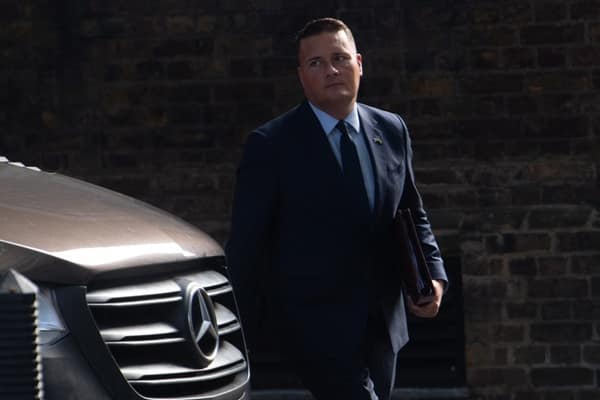
Wes Streeting has urged Britons to keep supplies of bottled water, tinned food and cash at home as the government pushes for a “whole society approach” to preparing for war, natural disasters and other national emergencies.
The Defence Secretary said households should prepare for disruptions including power cuts, loss of access to online banking, flooding and wildfires, warning that Britain faces a “greater risk of war” with Russia than at any point in his lifetime.
Streeting described the request as a “simple ask” ahead of the Labour Party conference, arguing that individual preparedness should form part of a wider national resilience strategy.
Read more related news:
Streeting warns Britain faces unprecedented risk of war with Russia
A second NATO country is preparing emergency evacuations as Europe braces for war
British bosses given secret Whitehall briefings on Russian attacks
Poland tells citizens how to survive air attacks as Russia ramps up strikes
He told The Sun: “Do they have what they need indoors, should they lose access to their online banking for a period? Should they have a power cut?
“If there was a risk of wildfire, if there was a risk of flooding, sometimes it feels like even in communities that experience those sorts of events periodically, we’re not as prepared as we should be.”
The Defence Secretary said households should have basic supplies available in case essential services were temporarily disrupted.
“It’s having some cash at home, having a supply of bottled water indoors, having some tinned goods that you can access if your electric goes and you’re not able to cook on the hob or in the microwave,” he said.
“These are basic things, and of course, you know, a lot of people just have that in their cupboard naturally.”
Streeting’s comments come as ministers place greater emphasis on civilian resilience alongside conventional military preparedness.
He said individuals should consider how they could respond to “acts of nature, acts of terror, or indeed in extreme acts of war”.
“That can only be a good thing for national resilience,” he said.
“I want people. We’ve got to get the balance right. I want people to be alert, not alarmed.”
The government has also been accelerating elements of its wider plans for responding to national emergencies.
Certain elements of Britain’s home defence programme, previously scheduled for completion by 2035, have reportedly been brought forward to 2030, reflecting growing concern over the UK’s ability to withstand prolonged disruption during a major crisis.
Streeting has repeatedly identified Russia as the principal military threat facing Britain, arguing that Moscow is seeking to probe the resilience of the UK and its NATO allies.
He said Vladimir Putin was “constantly testing” British and NATO defences, while reiterating the government’s commitment to what it describes as the “biggest sustained increase in defence spending since the end of the Cold War”.
The preparedness campaign extends beyond individual households.
Security Minister Dan Jarvis is due to brief critical infrastructure companies in closed-door meetings on the methods allegedly being used by Moscow to target British organisations, including cyber intrusions, physical sabotage and coordinated information operations.
The meetings are intended to give businesses access to intelligence on potential threats and strengthen their ability to protect essential services.
Jarvis said: “Strong defences are built on a clear understanding of the threat.
“That’s why I’ll be chairing this briefing, to share world-class intelligence with some of the most important organisations in the country to ensure they understand and are prepared for the threats we face.”
The focus on resilience reflects a broader shift in British security planning, in which the government is increasingly treating national defence as extending beyond the armed forces.
Under the emerging approach, resilience would involve the military, government departments, critical infrastructure operators, businesses and households being capable of continuing to function during periods of disruption.
The immediate preparations do not mean ministers are predicting an imminent attack on Britain. Streeting has framed household preparedness as relevant to a wide range of emergencies, from extreme weather and power failures to terrorism and, in the most serious scenario, war.
But the language surrounding Russia reflects a markedly more serious assessment of the security environment than was common before the full-scale invasion of Ukraine.
For households, the government’s message is relatively simple: maintain basic supplies, keep some cash available and have a plan for periods when normal services are disrupted.
For the state, the challenge is considerably larger — ensuring that Britain’s infrastructure, military forces and population can withstand a crisis that could extend well beyond the battlefield.


Leave a Comment