
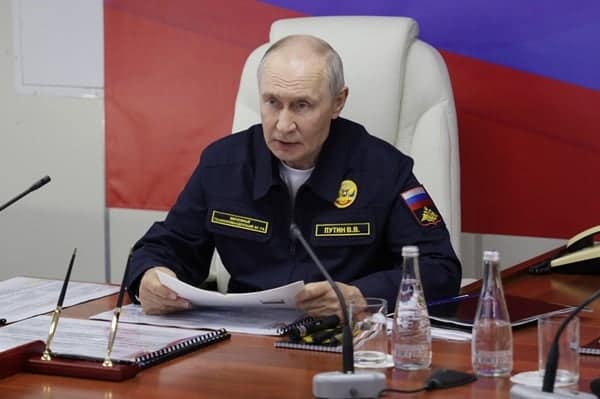
A Ukrainian resistance movement has claimed responsibility for hacking into Russia’s emergency services application and sending residents fake warnings that nuclear warheads had been launched against the country, in an apparent escalation of the cyber conflict between Moscow and Kyiv.
ATESH, a resistance network understood to operate in Russian-occupied Ukrainian territories and inside Russia, allegedly infiltrated the Emergency Situations Ministry’s application overnight on November 2, distributing fabricated nuclear attack warnings to residents.
A screenshot circulating on social media purportedly shows a notification sent to residents of Voronezh Oblast at 2.47am, announcing that nuclear warheads had been launched towards all Russian regions.
The message urged people to stockpile food for three weeks and seek shelter in basements, ending with an expletive-laden warning of the consequences of ignoring the instructions.
Russian media and regional authorities subsequently confirmed that the Emergency Ministry’s services had been hacked, although the precise circumstances of the incident and ATESH’s claimed involvement have not been independently established.
The alleged intrusion followed a similar episode in Ukraine hours earlier, when users of the country’s Air Raid Alert application received false notifications warning of nuclear, radiation and chemical threats, alongside reports of potential street fighting.
Ukrainian officials moved quickly to reassure residents that the messages were fabricated. The Kyiv City State Administration said there was no radiation threat to the capital and confirmed that the Kyiv Digital application and the city’s warning infrastructure were operating normally.
Unauthorised interference with the alert service was among the possible explanations for the incident.
The apparent tit-for-tat attacks illustrate how digital infrastructure has become another front in the war, with emergency notification systems offering hackers a means of spreading panic and undermining public confidence without launching a conventional military strike.
The implications extend beyond Ukraine and Russia. A cyber risk assessment of the UK economy, conducted by Moody’s insurers on behalf of Labour MP Graeme Downie, warned that Russian state-sponsored cyber operations could impose substantial costs on Britain.
The analysis suggested there was a 10 per cent annual probability of a Russia-linked cyberattack costing the UK economy at least £4bn, with Russia accounting for as much as 80 per cent of losses attributed to state-sponsored cyber threats.
Downie warned that the economic consequences of Moscow’s cyber operations amounted to a hidden financial burden on British households.
“A single Russia-linked cyberattack could cost the UK more than £4 billion. That’s based on a serious but realistic attack, the sort with roughly a one-in-ten chance of happening in any given year.”
He described the financial exposure as a “hidden Putin tax”.
The latest incidents underline the vulnerability of civilian communications networks during wartime. While the alleged Russian breach has yet to be independently verified in full, the targeting of emergency alert systems demonstrates how cyber operations can turn essential public infrastructure into instruments of psychological pressure.


Leave a Comment