
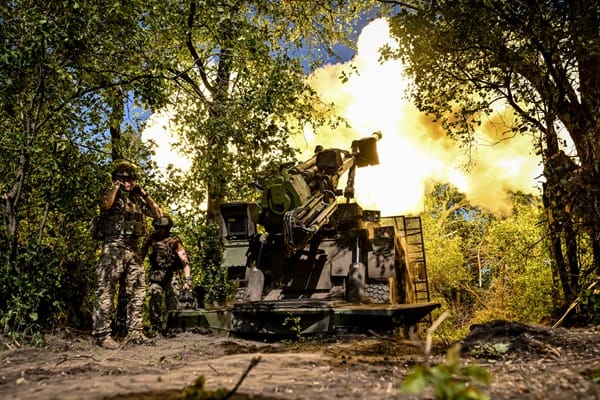
Ukrainian forces have regained the battlefield initiative in 2026, virtually erasing Russia’s net territorial gains since March and launching counteroffensive operations across several strategically important sectors, according to the Institute for the Study of War.
The assessment marks a significant shift in the dynamics of the war.
ISW analysts said Ukrainian forces had, for the first time since the August 2024 Kursk offensive, demonstrated an ability to counter Russia’s battlefield initiative consistently during late 2025 and throughout 2026.
Since March, Ukrainian forces have “virtually eliminated” Russia’s net territorial gains while conducting counteroffensive operations around Kupiansk, Oleksandrivka and Lyman.
Read more related news:
Kushner has ‘no diplomatic experience’ and wants Ukrainians to ‘surrender’ their homes
Russia turns Ukraine into a nationwide killing zone on civilians
Explosions rock Poland as Russian ‘missile drones’ cross the border
The operations have disrupted several Russian plans and forced Moscow’s forces to devote increasing resources to defending positions they had previously captured.
In the Dnipropetrovsk direction, Ukrainian counteroffensives halted Russian attempts to penetrate the region. Around Kupiansk, Ukrainian forces retook positions in the city and surrounding areas and subsequently repelled Russian efforts to regain them.
The fighting around Lyman has also produced a potentially significant strategic shift. Ukrainian operations destroyed a Russian salient that had threatened the northern flank of Sloviansk and the wider Donetsk defensive belt.
The developments suggest that Russia’s numerical and material advantages have not translated into sustained territorial momentum, even as Moscow continues to commit substantial forces to offensive operations.
The battlefield remains contested, however, and ISW identified areas where Russian forces continue to make progress.
Russian troops have achieved limited but strategically important gains in and around Kostiantynivka, while also advancing east of Sloviansk and Kramatorsk.
But those advances have come at a high operational cost, with Russian forces required to expend considerable resources to maintain their momentum.
ISW therefore assessed that the battlefield remains highly dynamic, with neither side having secured lasting control of the initiative.
The pressure on Russia’s military command is reportedly contributing to renewed discussions around mobilisation.
Russian commanders are believed to be pressing President Vladimir Putin to authorise a large-scale mobilisation in an attempt to restore the army’s ability to capture territory and sustain offensive operations.
The potential impact of another mobilisation remains uncertain. While additional personnel could provide Moscow with greater capacity to sustain attacks, it is unclear whether a larger force would resolve the structural problems that have limited Russia’s ability to convert manpower into significant territorial gains.
Moscow has meanwhile continued to deploy increasingly conspicuous methods of supporting troops.
The Russian Orthodox Church recently sent a fragment of the relics of medieval prince Dmitry Donskoy to the front, saying the relic would “spiritually strengthen” Russian troops and improve morale.
At the same time, Russian forces are reportedly concentrating personnel and equipment around Lyman ahead of a possible intensification of offensive operations.
The resulting picture is one of a war in which Russia retains substantial military capacity but is struggling to translate it into sustained territorial gains, while Ukraine has demonstrated an increasing ability to disrupt Russian operations and recover ground.
For Kyiv, the key question will be whether these counteroffensive successes can be converted into a durable shift in the balance of initiative before Russia can regenerate its forces and launch another major offensive.


Leave a Comment